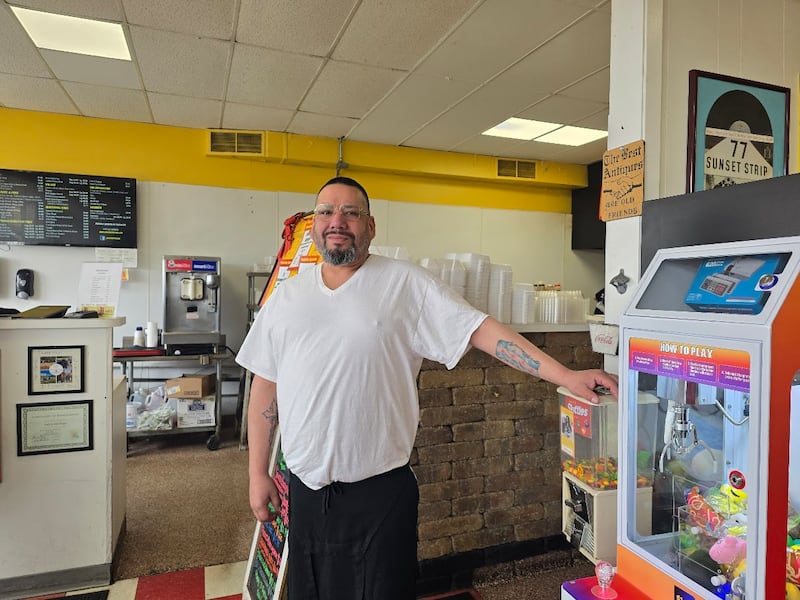
Several Will County restaurants closed their doors in 2025.
The Curator’s Cafe and Magpie’s Joy of Eating, both in Joliet, closed approximately two years after they opened.
Jitterhead Brunch & Coffee Co. in Crest Hill closed within months of its opening and less than a month after announcing plans to expand its hours.
Bolingbrook’s beverage-focused CosMc’s closed– and McDonald’s also discontinued the CosMc’s app.
Restaurants that want to survive in 2026 need plenty of “creativity and adaptability,” according to the National Restaurant Association.
That’s because restaurants are grappling with the “same elevated food and labor costs, ongoing supply chain disruptions, and policy-driven pressures they did in 2025,” according to research from the National Restaurant Association.
“You’re at the mercy of the economy,” said Frankie Radochonski, a multi-unit Pop’s Beef owner operating locations in Romeoville, Joliet, and Shorewood. “If the economy isn’t doing great, you’re not doing great. People’s food budgets to go out to eat shrink when costs rise.”
:quality(70)/cloudfront-us-east-1.images.arcpublishing.com/shawmedia/QIXCU2LC2FD47O6T7GABZUVOAA.jpg)
Struggles to make it
Opening a restaurant is not for the fainthearted.
Most restaurants fail in the first year, according to the Perry Group International, a group of hotel and restaurant experts for the hospitality industry.
Of those that survive that first year, 70% fail in the next three to five years, according to the Perry Group International.
“If you can get to three years, your chances go way up,” Radochonski said. “Now you’ve developed trust with the community. But it does take those three years.”
Still, last year 42 percent of restaurant operators nationally reported their restaurant was not profitable – with more than 9 in 10 operators naming food, labor, insurance, energy, and swipe fees as “significant challenges,” according to the National Restaurant Association.
:quality(70)/cloudfront-us-east-1.images.arcpublishing.com/shawmedia/VVNT6MDWYBC4VD6GQBXHG5DIDM.JPG)
“You purchase an item one day at one price and it’s double the next time. But we cannot change our menu prices just like that,” Dimitroulas said. “You have to be able to pay for your menu items without losing your quality. You know when prices come down, you’ll bounce back. It’s a game we play every day.”
Nevertheless, Miguel Villarreal, owner of Jody’s Hot Dogs in Joliet and Fritz’s Pour House in Crest Hill, recently closed The Grill at The Office in Channahon.
“It’s hard to do three,” Villarreal said. “We weren’t hitting projected numbers, and it was taking a toll on me and my mental health. I decided it was just a little bit too much.
‘Some businesses overgrow’
Joe Zolecki and his wife Kelly started Smokin’ Z BBQ in 2014 and Cookin’ Z Kitchen in 2021, at 1026 Industry Road in New Lenox, which is a “fully-equipped, shared-use commercial kitchen for rent by the hour,” according to its website.
In the early years of the food truck and catering business, the Zoleckis hosted barbecue camps to teach attendees the basics of good barbecue.
Today, the couple focuses less on public events and more on private events, due to “too many trucks, too much duplication and too many fees,” Joe Zolecki said.
:quality(70)/cloudfront-us-east-1.images.arcpublishing.com/shawmedia/UTU65EZC75FDZHSEAX6H2FLTV4.jpg)
For success, “you need to listen to your business,” from standpoints of growth, operations and expense management, Zolecki said.
“Some businesses overgrow,” Zoleci said. “They build too many locations and everything gets diluted at that point. There’s not enough staff, not enough cash flow, and stress on your P&L.”
Growing slowly and organically is better than borrowing to pay operating expenses, he said.
Challenges bring growth opportunities
Overall, the restaurant industry should experience “modest growth” in 2026, because – even with inflation – “consumers have strong pent-up demand for restaurant experiences,” according to the National Restaurant Association’s 2026 State of the Restaurant Industry report.
But challenges also provide opportunities for improvement, as Michael McGreal, chair of the culinary arts department at Joliet Junior College, said in 2021 when agreeing that the restaurant industry took a hit during the COVID-19 pandemic.
For instance, restaurant carryout increased by 60% to 70% and McGreal expected that to impact the construction of future restaurants, such as more drive-thru areas and payment by QR codes so customers don’t have to “hang out the window,” he said.
“COVID gave us the opportunity we didn’t expect to transform our businesses into brand-new models,” McGreal said.
Radochonski said customers’ expectations often change over time, so it’s important to “keep customers happy” while maintaining consistency and value while also testing new products.
“You have a lot of freedom at Pops to add to the menu or take off from the menu,” Radochonski said.
:quality(70)/cloudfront-us-east-1.images.arcpublishing.com/shawmedia/RCHH6RT75JGRTDE4YXSIPAOZ2Q.jpg)
Villarreal praised Karges Real Estate agent Brian Bessler for starting the Joliet Area Bar & Restaurant Guide Facebook Group, which allowed Jody’s and the community to support each other.
“My team showed up every day and we started doing $5 first responder meals,” he said, adding they produced more than 5,000 meals during that time. “Not all heroes wear capes. Sometimes they wear aprons.”
Radochonski said that, while “change is hard,” staff will adapt once they understand why change – such as tap to pay – is necessary.
Perspective also matters, Villarreal said.
“Sometimes I need to take a step back and look at it from my employees’ view,” he said.
Why people stay in the industry
When Villarreal was growing up, his older sister landed a restaurant job to help their financially struggling single mother – and cared for Villarreal in the back of the house during work hours.
By fifth grade, Villarreal was sweeping floors and filling ice bins; later he called out orders. He can’t imagine not working in the industry.
“I love the people,” Villarreal said. “We don’t make much money, but I love working in the community.”
:quality(70)/cloudfront-us-east-1.images.arcpublishing.com/shawmedia/T6UWIV3OBFEXPKNSFOBTCGSEAQ.jpeg)
Radochonski said his father Frank grew up working in restaurants and opened the original Pop’s store in 1980 in Palos Heights. Radochonski started working for the family business at age 15 and went to college at his father’s insistence.
He studied hospitality and tourism management at Purdue University and worked for Jimmy John’s as a full-time manager, and was considering buying a Jimmy John’s franchise when his father asked him to return to Pops, he said.
“My dad is one of my heroes,” Radochonski said. “And I always wanted to do what my dad was doing.”
:quality(70)/s3.amazonaws.com/arc-authors/shawmedia/59304215-cb18-46db-bced-9941d9413236.jpg)