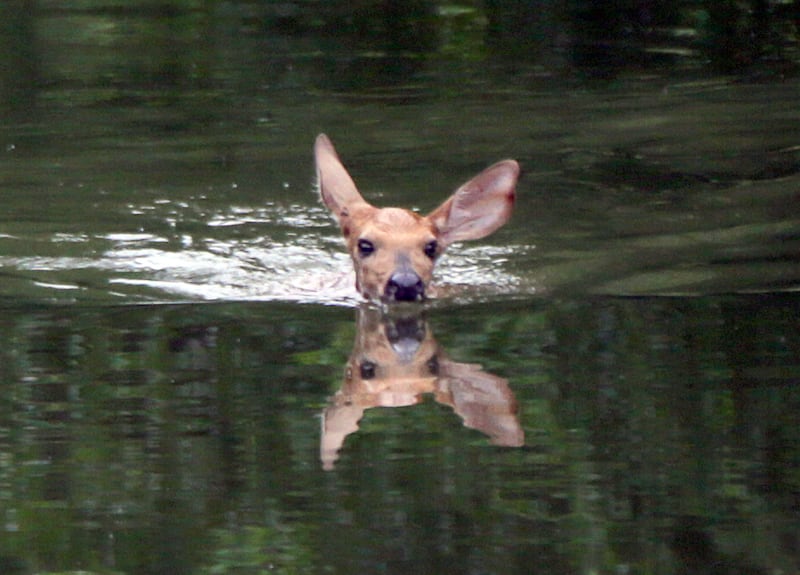
As the weather warms up and more people head outside, the Illinois Department of Natural Resources is reminding everyone to leave young birds and other animals alone when they encounter them in the wild.
People may think they’re helping by taking possession of young animals that appear to be orphaned or abandoned, but, in nearly all cases, human intervention does more to hurt animals than to help, the IDNR said in a news release.
Young birds and animals are still being fed and cared for by their parents, who usually stay away from nests and dens if humans are nearby, the agency said.
“The most helpful thing people can do for wildlife is to enjoy the animals through observation, not interference,” IDNR Director Natalie Phelps Finnie said. “If you really care about the animals, just leave them alone when you come across them in nature.”
Wildlife generally have more offspring than habitats can support. This means it’s normal for many offspring not to survive,
Most species continue to thrive even if more than half of their young don’t survive to adulthood, the IDNR said.
“We understand that the desire to help wildlife is strong, but it often comes at a cost,” IDNR wildlife chief Mike Wefer said. “Survival rates for relocated wildlife are very low, and the risk of accidentally moving diseases from one place to another is high.”
Wildlife protections
The Illinois Wildlife Code provides legal protection for wildlife.
Keeping wild animals as pets or raising wild animals believed to have been abandoned is prohibited, the IDNR said.
Most wild birds are protected by the Wildlife Code. This includes protection of eggs, nests and feathers.
Migratory birds are also protected by the U.S. Fish and Wildlife Service through the Migratory Bird Treaty Act and the Bald and Golden Eagle Protection Act.
:quality(70)/cloudfront-us-east-1.images.arcpublishing.com/shawmedia/YY4VFCFUXZASZGTPM7LR5BWLFE.jpg)
Rules for feeding
Anyone with questions about caring for possibly abandoned wildlife should contact a licensed wildlife rehabilitator before removing or relocating wildlife, the IDNR said.
There are strict rules on feeding wildlife in areas where wild deer are present, as laid out in Illinois Administrative Code 17-635.
In general, it is best to limit feeding wildlife species. To limit nuisance activity at residences:
• Do not leave pet food outside at night
• Clean up under bird feeders,
• Secure the lids on garbage cans to keep raccoons and other wildlife out
• Don’t feed Canada geese in urban or suburban areas.
Health threats
Handling wild animals can result in the handler being bitten.
The U.S. Centers for Disease Control and Prevention advises that wild mammals that bite a person should be euthanized immediately and tested for rabies.
Many species of wildlife can also carry zoonotic diseases, which are diseases that can be passed on to people and can be serious and even fatal, according to the CDC.
Illinois experienced multiple Highly Pathogenic Avian Influenza (bird flu) mortality events in wild birds, mostly waterfowl, over the winter, the IDNR said.
The general public should not handle “or attempt to capture waterfowl or other wild birds displaying signs of illness,” the IDNR said. Go online at www.illinois.gov for more information.
To learn more about orphaned animals, potential wildlife conflicts, and keeping people, pets, and wildlife safe, visit Wildlife Illinois.
:quality(70)/author-service-images-prod-us-east-1.publishing.aws.arc.pub/shawmedia/8832388b-fc0a-47f3-aa56-fba06c9d2015.jpg)