The November ballot is providing the Yorkville School District 115 an opportunity to “right size” its referendum for new and expanded buildings, including two new schools to help solve an overcrowding crisis.
Before the district designs a new, less-expensive ballot proposal this August, it is reaching out to residents to gain feedback on the failed $275 million bond proposal, that 67.53% of voters rejected on March 17.
The district is conducting a survey to help better align the future of the rapidly growing district with the property tax increases the public is willing to shoulder.
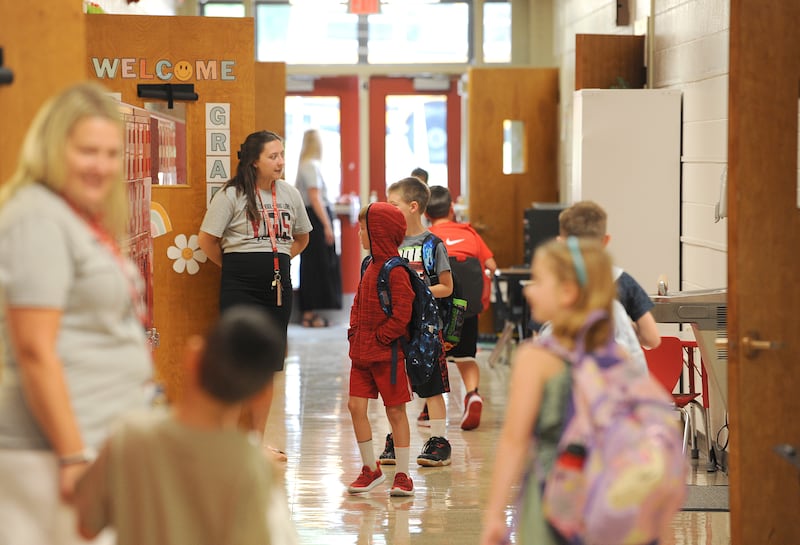
While the future of the district’s construction is not certain, Superintendent Matt Zediker previously said what is certain is the district’s “packed classrooms” are “unsustainable” going forward.
:quality(70)/cloudfront-us-east-1.images.arcpublishing.com/shawmedia/QBGDYWQI3JDRBDOYDRTSN5KFAU.jpg)
Zediker previously said extracurriculars and special education are currently taking place in areas ill-suited for proper education. Band classes are “literally taught in the hallway” because each building is out of space.
On the survey, the district says the facility upgrade process “has always been, and remains, driven by you.”
“We are asking you to share your perspective so we can refine our plan to address our critical facility and educational needs,” the district said. “Your honest feedback is the most valuable tool we have to ensure our next steps truly reflect the community’s priorities.”
The district said the survey responses will remain anonymous and will “directly guide the district’s future strategy.”
Questions being asked
• If you voted on the District 115 referendum, why did you vote the way you did? If you did not vote, why?
• How much did the total cost and related tax increase influence how you voted on the District 115 referendum, and why?
• How much did knowing there was another potential plan influence the way you voted on the District 115 referendum, and why?
• How much did the potential approval of data centers and the funding this could provide to the district influence the way you voted on the District 115 referendum, and why?
• Would you support a plan that maintains current tax levels to address overcrowding, even if the district does not complete all planned facility improvements?
How did we get here?
Across the district, enrollment has tripled in the past 20 years, with another 800 students expected to be added in upcoming years, according to the district’s demographer.
To help solve this enrollment crisis, the original referendum proposed a new middle school and a new elementary school.
A new academic wing was listed for the high school, enabling all the students at the Freshman Academy to be moved into the one main high school building. The plan also converted a current elementary school into an early childhood center.
Likely part of voters’ rejection of the proposal was allocating $60 million for a performing arts center and an athletic field house.
The new proposal for the November ballot is likely to leave out the performing arts center and the athletic field house.
Another possible factor was the announcement by the City Council that the district could be the recipient of $68,250,000 from the city in funds collected from up-front payments from the developers of the Project Cardinal data center and the Project Steel data center.
That money still is subject to full final approval on both projects.
Zediker said while the funds used for new facilities could “drastically reduce” the tax burden on homeowners and property owners, “the assumption that the data center money would be able to take care of all our needs was one that was pretty prevalent in the community.”
During a City Council meeting, Zediker said the district does not have the resources available on hand to make the necessary building upgrades to overcome the overcrowding issues.
“It is beginning to hamper the ability for us to provide the education opportunities and experiences that our kids and families deserve,” Zediker said.”
If the next proposal on the November ballot is approved, students will be using the new facilities by fall 2029 at the earliest.
:quality(70)/s3.amazonaws.com/arc-authors/shawmedia/0cef0bf9-a04e-4bb4-aea0-03d8ced01c00.jpg)