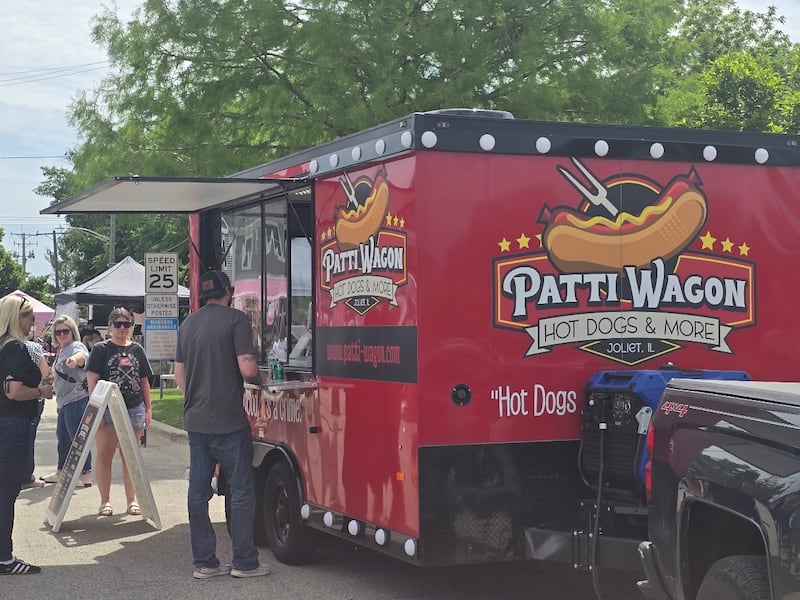
Attend any outdoor event in Will County this summer, and you’re likely to see food trucks.
“The general public loves having choices, so they love seeing food trucks lined up at events,” said Jen Howard, president at Joliet Region Chamber of Commerce & Industry.
But owning and operating a food truck is more than simply pulling up to an event and selling food, Howard said.
“Everyone thinks it’s going to be fun, easy and profitable,” Howard said. “But that isn’t always the case.
Joe Zolecki, who with his wife Kelly started Smokin’ Z BBQ in 2014 and Cookin’ Z Kitchen in 2021, at 1026 Industry Road in New Lenox, said, “There is nothing easy about food.”
“People think, ‘I’ll just go buy a food truck, set it up and become a millionaire,” Zolecki said. “Nothing could be further from the truth.”
:quality(70)/cloudfront-us-east-1.images.arcpublishing.com/shawmedia/UTU65EZC75FDZHSEAX6H2FLTV4.jpg)
Before buying
Howard said anyone wishing to start a food truck business should first talk to successful industry veterans.
At the very least, they should arm themselves with knowledge.
Before Patti Romero of Joliet began Patti Wagon Hot Dogs & More last year, she worked with a business advisor at Joliet Junior College Entrepreneur and Business Center.
Her goal? A small hot dog and beef sandwich shop in downtown Joliet.
Romero said she attended workshops and panel discussions on how to open a business and “listened to the journey of other entrepreneurs to learn from their struggles and accomplishments,” she said.
Her business advisor at JJC helped her write a business plan and then she worked with Huntington Bank and the Small Business Administration to make “her dream a reality,” she said.
But that dream didn’t work out, Romero said.
“I still wanted a hot dog business, so I went back to the drawing board with my JJC advisor and pivoted my business plan to a food truck,” Romero said.
:quality(70)/cloudfront-us-east-1.images.arcpublishing.com/shawmedia/3L77LRAXBVA6BHRH2I6ZOHBPMQ.jpg)
Zolecki said food truck owners need to understand business law, accounting and finance.
“All these things collectively lead to success or failure,” Zolecki said.
Howard, who supplemented her income stream with a food truck when she owned TCBY Shorewood, said running a food truck business without supplemental income is challenging.
“Summer and fall are the best times of the year for your food truck,” Howard said. “What are you going to do in the winter?”
Romero, who also works another job, said she didn’t know she couldn’t just park somewhere and sell food.
“I found out you need permission from the store owner or their corporate office,” Romero said. “and they sometimes will charge a fee to park there.”
Jamie Littell, owner of Moe Joe’s in Plainfield, said she bought the food truck during the COVID-19 pandemic “just to get out and have fun.”
:quality(70)/cloudfront-us-east-1.images.arcpublishing.com/shawmedia/KO5QFSZWDVDE5LGMW3HEZ2FE64.jpg)
“The food trucks saved us,” Littell said. “It cheered us all up, just to see the long lines of people laughing and smiling and enjoying your food.”
Because Zolecki’s corporate job is the family’s financial anchor, Smokin Z operates as a “separate, independent entity,” Zolecki said.
“We don’t draw anything from it. We don’t need to,” Zolecki said. “Businesses typically fail when they try to draw too much out of it. You need to keep building that pyramid, and build in those cash reserves and manage cash flow.”
Dollars and sense
The price of the food truck can be “hefty” – and wrapping the outside with logo and design can also be expensive, depending on the level of detail, Howard said.
But the cost is worth it, Romero said as she’s received many compliments on her trailer.
“I think people love the big window and can see in and watch their food being made,” she said.
:quality(70)/cloudfront-us-east-1.images.arcpublishing.com/shawmedia/X7MI3LCTVBEVNMSPML25GBXKCM.jpg)
Once the truck is operational, “solvency is key,” Zolecki said.
Although Smokin’ Z has only raised prices twice in 13 years and prides itself on being “fast, high-quality and always affordable,” owners must understand their costs when setting prices, he said.
Costs include food, event fees, gas and maintenance, employee payroll, and charging the appropriate tax rate for each municipality, Zolecki said.
Littell said each municipality, each health department and each festival organizer also charge fees, with no reciprocity among them.
Howard said fees can range from “a couple hundred dollars to $1,500 for one event.”
Zolecki said food trucks are “getting hit left and right with increased fees” – with some events tripling in price.
“Everybody has their hand out for a piece of the pie,” he said.
But Illinois House Bill 1052 – the Food Truck Freedom Act – “would support food trucks not getting dinged” by paying separate fees for each town it visits, Zolecki said.
Food truck owners need to determine “which events suit you best for your product,” Howard said.
Because “you can make a lot of money” at the right festival or party, Littell said.
:quality(70)/cloudfront-us-east-1.images.arcpublishing.com/shawmedia/YHIXXWDQ6ZFUPKXTSL4QEXXVKI.jpg)
“But if it rains, you’re out thousands,” Littell said. “The fees are not refundable. So you’re definitely gambling every single time.”
Zolecki said owners should “listen to their business” when managing operations, growth and expenses.
For instance, Smokin Z’ is doing fewer festivals and more corporate events due to market saturation and event planners overbooking trucks.
To stand out, food truck owners must be “really creative with their product,” Howard said.
“And have a novelty,” Howard said. “Set yourself apart from other food trucks.”
Zolecki said people don’t understand what’s involved when they ask, “Can you just come park the food truck and sell food to my guests?”
But three hours of serving food to 10 guests still means hours of buying food, stocking the truck, preparing food, cooking food and then cleaning up after the event, as well as paying employees, Zolecki said.
:quality(70)/cloudfront-us-east-1.images.arcpublishing.com/shawmedia/SPA5WFN7WBFJVKD2STSCROIQSY.jpg)
However, Littell said in certain circumstances – such as a dedicated customer’s birthday party – Mojoe’s will bring out the food truck.
“You totally will lose money,” Littell said. “But it’s advertising and is loyalty and it’s camaraderie and I just appreciate the fact they want us there.”
Is it worth it?
Absolutely, Littell said.
“It’s totally worth it,” Littell said. “As a team, we love – we literally love – to serve people. We love the smiles on people...nothing makes us happier than people who really, really want us there."
Making people happy is a big reward, Romero said. She said people thank her for making delicious Chicago-style hot dogs and post photos to social media
“It makes me feel so good to be able to provide a quick and affordable meal that people are enjoying,” Romero said.
Zolecki said renting kitchen space to other food businesses helps both with expenses.
“We’re very proud of what we built,” Zolecki said. “We’re very humble and willing to help other people.”
:quality(70)/cloudfront-us-east-1.images.arcpublishing.com/shawmedia/LRH6UN6JGZECZMNVHZ7YJ62NCI.jpg)
:quality(70)/s3.amazonaws.com/arc-authors/shawmedia/59304215-cb18-46db-bced-9941d9413236.jpg)