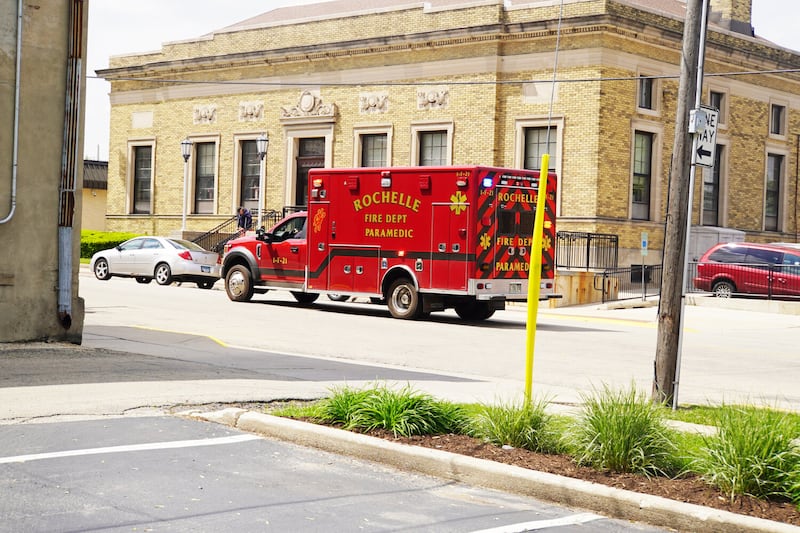
The Rochelle City Council has unanimously approved the $355,787 purchase of a new Horton all-wheel drive ambulance from Foster Coach Sales, Inc.
The ambulance will replace a current 2012 ambulance utilized by the Rochelle Fire Department. The Foster Coach Sales bid was the lone bid the city received.
Ambulances currently have a 36-month lead time, and the ambulance is expected to be delivered in fiscal year 2029. The city and RFD currently have another ambulance currently on order that is also seeing a 36-month wait time. RFD plans to receive that ambulance in October to replace a 2001 ambulance.
RFD Chief Dave Sawlsville said the order was placed due to the long lead time. A gas engine was selected due to cost effectiveness. A similar ambulance ordered by the city in 2020 cost $237,000 and the model ordered in 2023 cost $356,000.
“It’s been crazy to see how the wait times and prices have changed on ambulances,” Sawlsville said. “The price jumps we were seeing were huge, so we wanted to cut where we could. We’re very aware and conscious of the fact that taxpayers are paying for these things. We try to be good stewards of their money and control the things we can.”
RFD has seen its call numbers rise nearly every year, and expanded staffing in recent years to keep up with that volume. The department runs three ambulances, two of which are staffed around the clock. The third is staffed by paid on-call personnel when necessary.
Through its agreement with the Ogle-Lee Fire Protection District, RFD covers 135 square miles, a lot of which is rural.
“Hard miles go on our ambulances,” Sawlsville said. “In the last few ambulances we purchased, we switched to all-wheel drive because in the winter we’re out on country roads. We have a large district and our calls go up every year. This year we’re on track again to see an increase. There’s no indication that calls are going to slow down. It’s a service we’re happy to provide. We’re strategically located, staffed and trained.”
People that are transported to area hospitals by RFD ambulances pay a user fee, which primarily funds new ambulance purchases. About 80% of RFD’s call volume is made up of ambulance calls.
Sawlsville said long wait times for new ambulances are due to chassis for them being made by Ford or General Motors and ambulance vendors needing those to fill orders. The RFD chief said the current three ambulances RFD uses are “in good shape.”
“They get maintained daily and are safety inspected biannually,” Sawlsville said. “It’s all about upkeep. It’s reasonable to expect to get 10 years out of an ambulance, even at the volume that we run. The 2001 that is getting replaced was kept so long because it has such low miles. As far as reliability, we’re in good shape. But the purchases just take so long. It doesn’t take three years to build a building, so it shouldn’t take that long to build an ambulance. But that’s the world we live in.”
To serve its rural service area with sometimes-long transport times and without a major hospital nearby, RFD ambulances carry a large amount of patient care gear, including vital monitors that can transmit readings to the hospital.
“Not only are ambulances expensive to buy, but they’re also expensive to equip and maintain because there’s a lot of advanced technology that goes on inside of the ambulance,” Sawlsville said. “We just received a $24,000 grant from the state fire marshal’s office for a mechanical CPR chest compression device. Research is showing it’s really important to continue chest compressions and not interrupt them. This will allow compressions to continue while we’re taking people out of the home, transporting them and taking them into the ER.”
Due to its rising call volume, RFD often responds to two, three or four calls at once. Sawlsville said the department is “blessed” to have its third ambulance and a “dedicated” group of paid on-call staff to run it. With Rochelle’s proximity to Interstates 39 and 88, all three ambulances responding to one call for a car accident is not uncommon, he said.
Sawlsville said he’s seen ambulances in the EMS industry cost as much as $600,000. RFD has worked to keep its costs down on recent purchases while ensuring high-quality patient care, he said.
“We try to hold the line on cost as much as we can, but we also have a pretty important job,” Sawlsville said. “When somebody calls for help, we have to have reliable equipment. We don’t get the extras. We have good, safe, reliable top-of-the-line equipment, but we hold the line on all the bells and whistles and extras. We want to be able to do our jobs well and that requires reliable equipment. But we’re conscious of who is writing the check.”