There are three major Illinois House bills related to firearms currently moving through the legislative process. They are the Responsibility in Firearm Legislation RIFL Act (HB3320), the Serialization of Ammunition and Tax Bill (HB4414), and the GLOCK Ban Bill (HB4471).
The RIFL Act establishes a firearms manufacturer licensing program in the Department of Financial and Professional Regulation, with certain requirements, including that the sum of all fees for firearms manufacturer licenses shall be equal to the public health costs and financial burdens from firearm injuries and deaths.
The Tax Bill (HB4414) requires every round of hand gun ammunition to have a serial number stamped on the cartridge case, a tax of 5 cents per round used to fund the state police administration of the law and the ownership of ammunition without a serial number to be a misdemeanor violation.
HB4471 says that it is unlawful for a person or company to manufacture a convertible pistol (such as Glocks, Sig P365s, and Smith & Wesson M&P pistols). A convertible pistol is one that can be made to fire in automatic mode like a machine gun.
Machine guns have been banned in Illinois for several years, but machine guns are a favorite with Chicago gangs who use a variety, including the Israeli Uzi submachine gun (NCPR).
“Chicago’s homicide rate is an outlier among major U.S. cities. At a rate of 29 firearm homicides per 100,000 residents, it is six times higher than New York City’s and three times higher than in Los Angeles. In 2020 alone, gun homicides increased 52%, resulting in 769 deaths. The annual impact of gun violence extends much further – in 2020, 3261 people were wounded in shootings,” according to https://oneaimil.org.
This is in spite of Chicago’s strict firearm laws. Illinois law also requires firearm owners to have a valid Firearm Owners Identification Card (FOID). A violation results in up to a Class 4 felony, 1-3 years in prison, and a fine of up to $25,000.
On March 19, 2026, a Loyola student was shot and killed by a 25-year-old Venezuelan who was in the country illegally, had a criminal record, and had been released after a prior arrest, according to news reports.
ICE considered him a criminal alien and issued a detainer, but he was still released. The illegal alien probably got the firearm from the black market, by stealing it, or had the weapon with him when entering the country.
Republican gubernatorial candidate Darren Bailey criticized Gov. JB Pritzker and Chicago Mayor Brandon Johnson for their sanctuary city policies, while Democrats argued national-level failures contributed to the tragedy (NBC Chicago).
I agree that previous national policies that allowed millions of illegal entries, including by criminals, played a role. Bailey called for repealing the TRUST Act and SAFE-T Act, which eliminated cash bail in favor of pretrial detention hearings. JB Pritzker needs to focus on letting law enforcement find and remove these violent criminals (NBC Chicago).
Mayor Brandon Johnson’s response was to name a snowplow “Abolish ICE.” (Chicago Sun Times)
New firearm legislation in Springfield will do little to quell firearm-related violence, as criminals usually do not comply with such laws. John Gotti, the notorious American mobster, preferred gun-free zones because there would be no competition. A 1986 survey of felons by the federal government found that 40% refrained from committing one or more crimes because they feared their prospective victims were armed. Thirty-four percent of criminals had been scared off, shot at, wounded, or captured by an armed victim. (NRA-ILA)
The main problem with firearm-related violence in Illinois is a lack of enforcement of existing laws and lenient bail policies, not the need for new laws that criminals will ignore and only restrict law-abiding citizens.
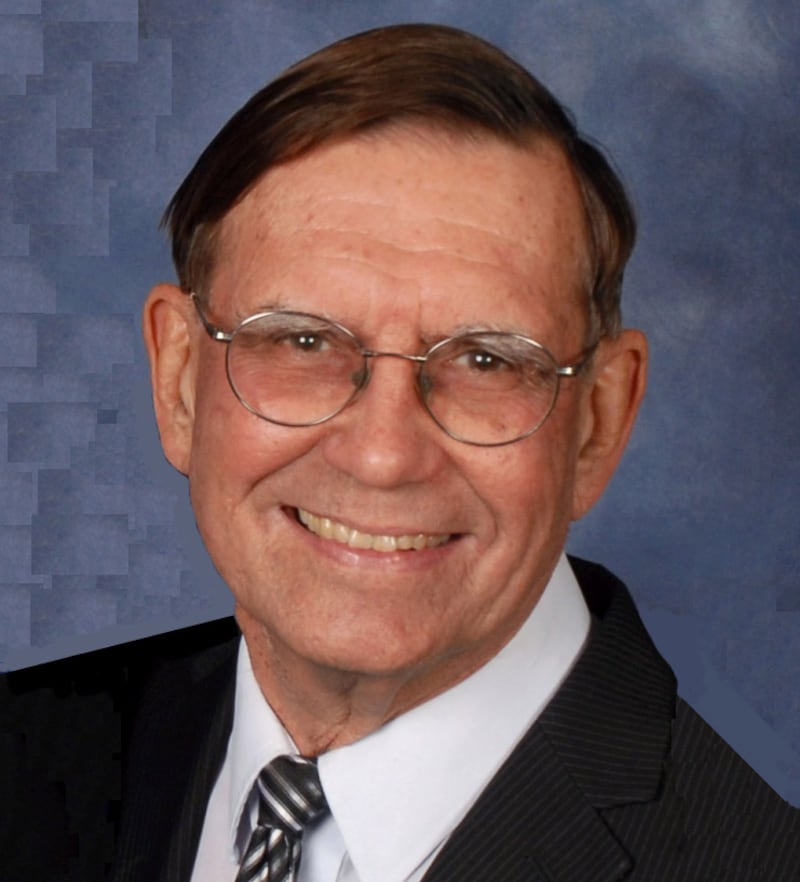
Chuck Roberts is a freelance writer in Rochelle.