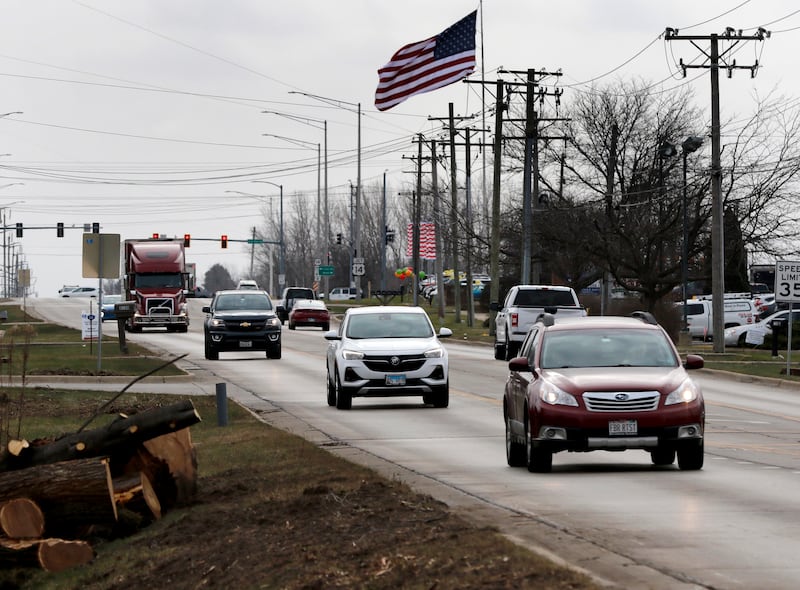
Woodstock leaders have been awarded close to $16 million to cover the city’s share of widening Route 47. But even after that, the city is still on the hook for around $9.5 million more.
Woodstock officials committed last year to paying their share of Route 47 costs, which was around $16 million at the time.
But the construction work was pushed back a year after bids came in millions of dollars above the engineer’s estimates. City Manager Roscoe Stelford said last year the overage was around $9 million.
Stelford said last week that the city found out about a month ago that its share had gone up to $25.1 million and confirmed most of the overage has been passed on to the city. Woodstock’s share covers utility relocation and streetscape improvements in the corridor.
And while many external sources of funding the city pursued have materialized, Woodstock had planned to issue $11 million in bonds in a worst-case scenario. Officials acknowledged bonds are still a possibility for the city.
Woodstock officials have allocated $1.3 million in motor-fuel tax revenues to cover the increased costs for utility relocation work, Woodstock Marketing and Communications Coordinator Colleen Rogalski said. The city also is earmarking $400,000 of motor-fuel dollars for streetscape work.
But city officials still need to find a way to finance the remaining roughly $7.75 million that’s left.
That could include a review of water and sewer rates as a means to cover payments related to utility work if no additional external funding materializes. Woodstock continues to work on getting outside dollars to minimize the burden to taxpayers, Rogalski said.
The city plans to tap into reserves, planned capital improvement funds, utility-related funding sources and “strategic financing tools identified through our long-term financial planning process,” if needed, Rogalski said.
Woodstock has an agreement with the state to cover the city’s share through scheduled payments over time, rather than paying the full amount when the project is completed, she said.
“We are currently working with IDOT to finalize updated payment terms and amounts,” Rogalski said.
Stelford said motor-fuel tax funds had been earmarked for streetscaping, and the city has been saving up for several years for the project. Woodstock received a $2.5 million state grant in 2025 to help with the streetscape work. The state also gave the city a $10 million grant last year to help with the utility relocation side of the project.
Woodstock recently also received about $3.15 million in federal dollars to help with the project. The plan has always been to use that for utility-related project costs, Stelford said.
Woodstock is working to get more state funding or better terms for the payment plan, he said. But if outside funding sources don’t come through, the city might have to look at the bond market, Stelford said.
The city’s first payment in a seven-year payment schedule to IDOT is due May 1, Stelford said. The city has enough motor-fuel tax revenues on hand to cover that payment.
Woodstock needs to have more discussions about whether the recently awarded federal grant money will go directly to the city. If it does, it would fund the second year’s payment, Stelford said.
Those funds can also allow the city more time to find outside sources of money to cover what’s left.
Stelford said the city is “excited to see the project moving forward,” but recognized construction might be painful for the community.
Once the roadwork is complete, it will have significant benefits for residents, businesses, visitors and the Woodstock community as a whole, he said.
An IDOT representative could not be reached for comment.
“Route 47 is a critical regional corridor, and these improvements will enhance safety, mobility, and long-term economic development for Woodstock and the surrounding area. Our goal continues to be delivering this transformative infrastructure investment while managing costs responsibly and minimizing the burden on our community,” Rogalski said.
Construction is anticipated to start in April, but in the meantime, Woodstock is hosting an Open House on the project from 4 to 6 p.m. March 3 at the McHenry County Fairgrounds. For more information, people can visit the project website at woodstockroute47project.org.