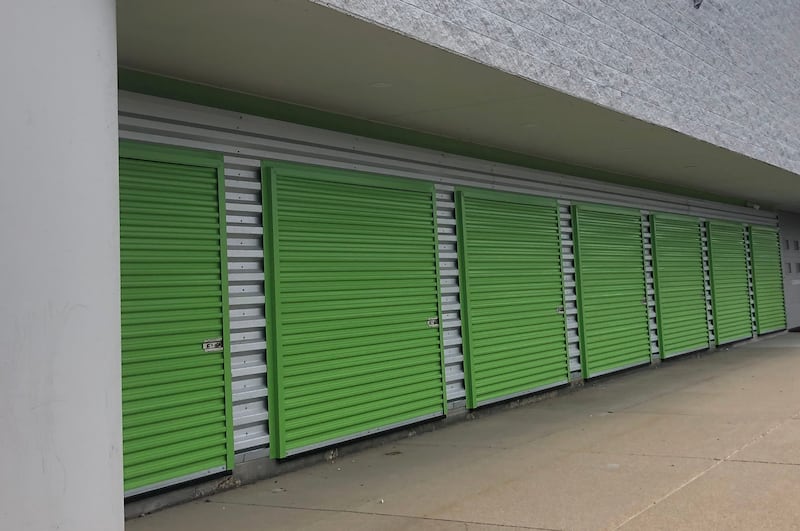
Woodstock is the latest McHenry County municipality to mull whether to add a sales tax for self-storage units.
McHenry has a 5% sales tax for self-storage facilities. Crystal Lake and Lake in the Hills also have proposed such a tax, but neither town has adopted it.
The Woodstock City Council discussed but did not vote on the matter Dec. 16.
City staff had proposed the 5% sales tax “on the gross rental charge for individual storage units to cover the additional cost of providing service to these units. The tax would be borne by the tenant, collected by the operator and remitted to the city quarterly,” according to city documents.
:quality(70)/cloudfront-us-east-1.images.arcpublishing.com/shawmedia/3LMCWZBBJZH5HINPDO4OCH3CPA.jpg)
City staff wrote in a memo to the City Council that such facilities don’t generate “meaningful” sales tax dollars, similar to what officials in other municipalities mulling the tax have said.
Woodstock staff proposed allowing self-storage facility operators to keep 3% of the tax they collect to offset administrative costs related to collecting it. But that wasn’t enough to alleviate self-storage facility operator concerns.
Council member Darrin Flynn suggested making the 3% fee contingent on reporting sales tax within 30 days.
The city talked to several self-storage facility operators who generally were against the tax, according to city documents.
“In general, operators expressed opposition to the proposed tax, emphasizing their belief that their businesses are already taxed excessively and that any new tax would require them to increase rental rates,” according to city documents. “They indicated that doing so could place them at a competitive disadvantage, as customers might choose to rent units in neighboring communities that do not impose a similar tax.”
City staff said a few operators expressed that “adopting the tax would signal that Woodstock does not support small businesses,” adding operators wanted to see the city reduce spending rather than make new revenue sources.
The City Council also held a public hearing Dec. 16 on the matter, but no members of the public weighed in at that time.
Mayor Mike Turner said the tax was not something he was “doing jumping jacks over.”
He noted that when self-storage facilities go up, they can take the place of retail uses that would generate more sales tax for the city. Turner said it’s an issue that “warrants consideration.”
The mayor added that the tax also can diversify revenue streams, and the city needs to generate revenue to provide services that residents expect.
“When we can diversify our revenue stream, every dime that we collect” in storage tax is a dime the city doesn’t need to collect in property or sales tax, the mayor said.
Turner cautioned that trying to do that could lead to a “slippery slope” in which the city taxes everything it can and keeps spending. But Woodstock doesn’t operate that way, Turner said.
He added that city staff were trying to be creative and accomplish things while being wise with people’s money.
Council member Tom Nierman said he was “flexible” regarding a decision on the tax. But Nierman noted that the tax will be passed on to those who rent the storage spaces, some of whom live in town, and it would be taxing some of the city’s residents.
Flynn said in response that he has a storage unit for his business, and he sees businesses from other towns dropping off stuff to their unit at his facility.
Nierman said he felt such units don’t burden police, the fire department, school districts and other resources, and he questioned why the city felt the need to impose the tax.
“This just seems almost like a money grab to me,” Nierman said.
Council member Bob Seegers said he saw both sides but agreed that it felt like a “tax grab.”
Seegers said the facilities do “very little” for the city financially, and there’s a lot of demand for self-storage services, but there’s police protection, administration fees and other costs related to them.
Seegers said he would be supportive of a self-storage tax proposal, but he later added that approving the self-storage tax would be consistent with the city not wanting such businesses on high-value land.
The tax could generate an estimated $91,600 to $141,800 in net revenue annually, according to city documents.
Turner said there was interest in city staff refining the proposed tax and bringing it back, but it’s a “contemplative issue” for the City Council.