The Illinois General Assembly continues to debate what to do about data centers as the artificial intelligence business keeps booming, and communities complain about their energy bills, noise and environmental impacts.
Data centers are warehouse-like buildings that house computer servers and other infrastructure that power the internet, cloud storage and more, but massive data centers are necessary to power AI and other high-level computing.
Developers of the facilities tout property tax revenue, economic development and job creation as reasons for local governments to approve projects that could require as much energy as the city itself – or more.
Opinions on these economic benefits differ. Some Illinois mayors say data centers have worked miracles in their towns while others question whether the benefits overcome the downsides – and whether the benefits are as good as advertised.
Property tax benefits
Property tax revenue from data centers can be significant, but many say the massive centers aren’t worth the millions of gallons of water they consume or the stress they put on an already struggling electric grid. The ComEd territory in northern Illinois, for example, has enough large-load energy projects in its queue to more than double the amount of energy demand in the territory by 2040.
“If all the projects in our pipeline come to be and they all reach their maximum, requested demand will more than double our system peak it took us 120 years to achieve, roughly by 2040,” Max Leichtman, the director of economic and workforce development at ComEd, told a committee earlier this year.
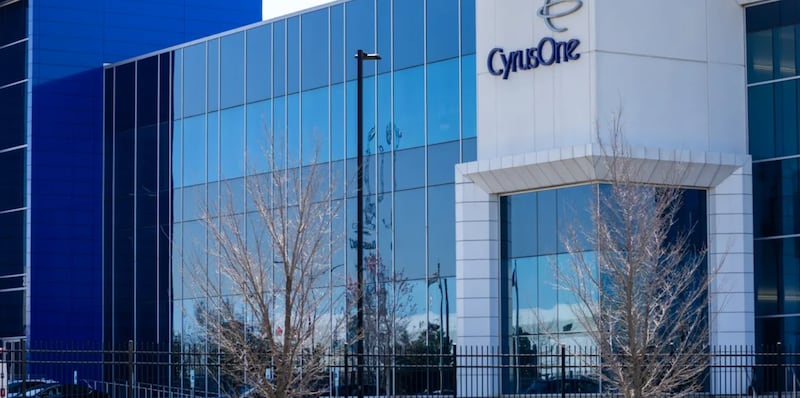
The recently approved CyrusOne data center in Sangamon County is projected to bring $500 million in capital investments to the county. Marc Ayers, a former Sangamon County Board member, said it’s estimated to generate $5 million to $6 million in property taxes annually, with around $98 million in tax revenue over the next 20 years.
A memo from the director of community development in Joliet projected the Joliet Technology Center, a planned 795-acre data center project that was approved in March, would generate about $310 million in property taxes over 30 years, plus $40 million in utility taxes, “in addition to standard industrial water and sewer rate revenues.”
DeKalb Mayor Cohen Barnes said the Meta data center that has been operational since 2023 has contributed significantly to the city with community investments and about $250,000-300,000 in utility taxes.
The city has one Meta hyperscale data center, constructed in 2020, and it recently passed a proposal for the development of a second.
“When Meta first came to our community, they specifically said they wanted to make a significant impact in everything, and that’s just what they did,” Barnes said. “But then, from property taxes, that’s where the magic happens.”
From 2021-24, according to property tax records, Goldframe LLC, a Meta subsidiary, paid a total of $48.5 million for the three sites. That money, Barnes said, goes back to city services and public schools.
“Meta, right now, is our largest economic impact in our small community in the city of DeKalb,” Barnes said.
:quality(70)/cloudfront-us-east-1.images.arcpublishing.com/shawmedia/6JF57QUNANB6VNLK7GPBY5O5CQ.JPG)
Across three properties, 60.9% of Meta’s property taxes are paid to DeKalb School District 428, according to records. Barnes said that revenue allowed the district to build a new school, Mitchell Elementary, which opened in 2025.
The company also has invested millions in grants for the city’s nonprofit community and partnered with Northern Illinois University to improve STEM education for local high schoolers.
Barnes said the city didn’t require Meta to sign any agreements for those investments ahead of time, but making these investments is in their interests.
“They know that wherever they go, if they build a data center that is not friendly to the community, and if they operate on an annualized basis – not in a partnership way – that could impact them from being able to build the next data center,” he said.
The data center was billed $31.1 million for property taxes from 2025.
Other benefits
Brad Tietz, the Midwest policy director for the Data Center Coalition, told a House committee in April that data centers are crucial to the modern economy, especially as it becomes more dependent on computing.
“The data center industry is the 21st century infrastructure. Just like roads and bridges supported the industrial economy, data centers underpin today’s digital economy,” he said.
New data centers are being constructed and coming online all the time. One estimate suggests data center capacity will double by 2030 and the growth is driven largely by investments in AI.
Data centers can have big footprints in the places where they’re constructed – lawmakers earlier this session held hours of hearings on their impacts on water, energy use and the environment.
John Laesch, the mayor of Aurora, said the five operational data centers in his community have provided generous tax payments, but those benefits don’t outweigh the downsides data centers can bring to communities.
The data centers provide approximately $1.6 million in property and utility taxes every year, he told a House committee in April. But Aurora residents have complained about constant, low-level noise from data centers that came online in 2025, and raised other concerns.
“But during our public hearings, we heard residents ask, is that $1.6 million worth the noise pollution and the strain on our power grid and potential long-term risk to our climate?” Laesch said.
Tietz emphasized benefits beyond property taxes.
A 2023 study commissioned by the Data Center Coalition showed that from 2022 to 2023, the industry added 115,130 jobs across Illinois and contributed more than $19 million to the state’s GDP.
Illinois has provided tax incentives for data centers since Pritzker signed bipartisan legislation in 2019. According to the state’s 2024 report, at least 27 data centers have received incentives totaling $983 million in estimated lifetime tax breaks and benefits.
“Beyond the taxes, data centers invest directly in communities in which they are located through community benefit funds and other mechanisms,” Tietz said.
Community benefit agreements are common for large developments. In Cedar Rapids, Iowa, two data center developers are required to invest in the city’s Community Betterment Fund, although the City Council decides how the money will be used.
Other agreements require things like investments in education and infrastructure.
When it comes to job growth, the picture is more mixed. Most of the job growth from data centers comes during the facilities’ construction.
Barnes said the data center in DeKalb employed more than a thousand union construction workers over the five years it took to build. Now, he said there are hundreds of permanent jobs working on tech, electricity and maintaining the HVAC systems.
Regulations and ordinances
In March, Aurora enacted ordinances that would require data center developers to conduct and submit studies dealing with noise, water consumption and energy needs. The ordinances also require future data centers to meet standards for noise, vibrations, water use and energy use. They will also need to get power from renewable energy sources.
“We also realized that while Aurora did our best to address these concerns locally, we need to be acting regionally as a state,” Laesch said, encouraging state lawmakers to pass regulations like those found in the POWER Act, a major bill currently being debated in the General Assembly.
The bill would require data centers to pay for their own energy and the infrastructure to generate it, mandate transparency from data centers about their water use and obtain permits from the Illinois Environmental Protection Agency for how data centers handle wastewater and meet efficiency standards. It would also require community benefits agreements that promote transparent engagement with the public.
Despite three hearings in the House and one in the Senate, it’s unclear whether the bill will pass this spring or if there’s more work to be done.
Capitol News Illinois is a nonprofit, nonpartisan news service that distributes state government coverage to hundreds of news outlets statewide. It is funded primarily by the Illinois Press Foundation and the Robert R. McCormick Foundation.