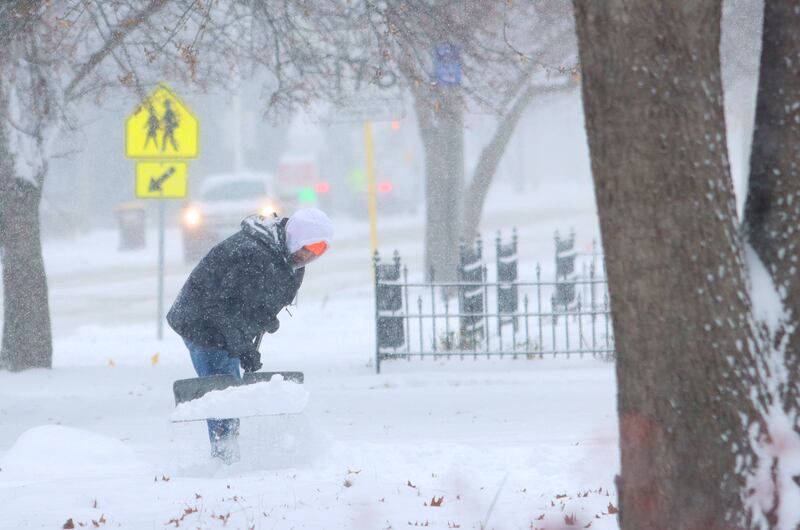
When winter storms hit, many people grab a shovel to clear their driveways and sidewalks.
But did you know that heavy, wet snow is sometimes called “heart attack snow?”
That’s because shoveling heavy snow can put a lot of stress on your heart.
“Shoveling snow is like doing intense exercise in freezing weather. If you’re not used to it, your heart has to work much harder, and that can lead to serious problems,” said Dr. Abraham Thomas, an internal medicine specialist with Silver Cross Medical Group in Mokena.
:quality(70)/cloudfront-us-east-1.images.arcpublishing.com/shawmedia/YV2RU6RH3BC3TG5IKVFHN7URHA.jpg)
Here’s why it happens: Cold air makes your blood vessels tighten, which raises blood pressure, according to a news release from Silver Cross.
At the same time, lifting heavy snow quickly increases your heart rate. For people who have heart disease – or don’t know they have it – this can trigger a heart attack.
How to stay safe while shoveling snow
- Warm up first. Do a few stretches or walk in place for a couple of minutes before you start.
- Dress in layers. Keep warm, but don’t overheat. Wear gloves and a hat.
- Take it slow. Shovel small amounts at a time. Don’t rush.
- Push, don’t lift. Whenever possible, push the snow instead of lifting it.
- If you have a snowblower, use it. But even then, take frequent breaks as snowblowing also can be stressful on the heart when the snow is heavy and wet.
- Listen to your body. If you feel chest pain, shortness of breath or dizziness, stop right away and call 911.
“If you have heart problems or risk factors like high blood pressure, diabetes or smoking, ask someone else to shovel or use a snowblower, but even with a snowblower, take frequent breaks,” Thomas said.
Other tips include:
- Stay hydrated.
- Avoid alcohol before shoveling.
- Try to clear snow early before it gets packed down and heavier.