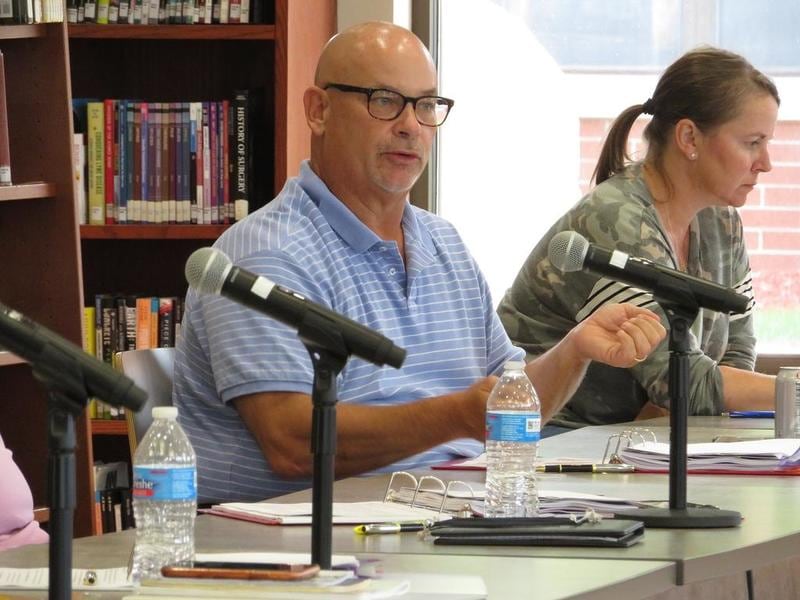
In the wake of almost certain defeat for its $275 million bond proposal for new and expanded facilities, Yorkville School District 115‘ is already gearing up for the next steps.
The district’s proposal was designed to solve overcrowding issues from a growing student population.
With all precincts counted in Kendall County, 67.53% of voters shot down the referendum. Mail-in ballots are still being counted but are unlikely to change the outcome.
Superintendent Matt Zediker said the district will now collect data and feedback from the community to help craft an option residents favor more on the next ballot.
Zediker said the feedback would help the district downscale its plans for the upcoming November general election ballot. A new ballot proposal should be ready this August.
“We have to figure out how we solve our educational issues with what the community told us that they are willing to do from a spending perspective,” Zediker said.
School Board President Shawn Schumacher thanked the administration’s transparency and the community’s engagement over the past year-and-a-half in helping craft the proposal.
“It’s disappointing today to have that result, but we’re going to go back to ground zero and try to figure out what the next steps are for the district,” Schumacher said on Wednesday. “We’re going to use surveys, discussions, everything we can to get some strong data and find out what we need to drive it forward at this point.”
Enrollment has tripled in the past 20 years, with another 800 students expected to be added to the already squeezed classrooms, according to the district’s demographer.
“The overcrowding issues we have are not going away,” Schumacher said. “The problem is just going to worsen if we don’t start to find viable solutions.”
:quality(70)/cloudfront-us-east-1.images.arcpublishing.com/shawmedia/H4WYT2HWU5GZJNG6GHS5ISYQD4.jpg)
To better accommodate students currently overflowing classrooms and having extracurricular in ill-suited settings, the district’s original proposal included a new middle school and a new elementary school.
A new academic wing is listed for the high school, enabling all the students at the Freshman Academy to be moved into the one main high school building. The plan also converts a current elementary school into an early childhood center.
With the last successful district referendum approved by the community more than two decades ago, Zediker said they must precisely identify what drove residents to reject the proposal.
Likely part of the culprit, the community seemed apprehensive to approve $60 million for a performing arts center and an athletic field house.
Zediker said, while the district must make certain this is the case, “one can assume that was really a driving force.”
Schumacher said the need for a new middle school, elementary school, and additions to the high school is apparent. He said it’s also important to include a performing arts center and an athletic field house in the future because the extra spaces they create for academics and extracurriculars are “things our students need.”
Another possible factor was the announcement by the City Council that the district could be the recipient of $68,250,000 from the city in funds collected from up-front payments from the developers of the Project Cardinal data center and the Project Steel data center. The money is still subject to full final approval on both projects.
Zediker said while the funds used for new facilities could “drastically reduce” the tax burden on homeowners and property owners, “the assumption that the data center money would be able to take care of all our needs was one that was pretty prevalent in the community.”
Zediker said the timing of the City Council vote and the money that came with it “certainly, understandably, may have impacted some folks willingness to want to support the current plan.”
As the board collects feedback, Zediker said it’s important to create options covering if the district ultimately receives the money from the city and if they do not.
The timing of the data center announcement could have negatively impacted the referendum’s chances, Schumacher said.
“The timing could have been problematic for voters and it might have been confusing,” he said.
Ultimately the district needs to continue listening to community voices and fostering better alignment by “finding some sort of balance” between the district’s goals and the community’s preferences, Schumacher said
If the next proposal on the November ballot is approved, students would be using the new facilities by the fall of 2029 at the earliest.
:quality(70)/s3.amazonaws.com/arc-authors/shawmedia/0cef0bf9-a04e-4bb4-aea0-03d8ced01c00.jpg)