There is no debate over the lack of affordable housing in St. Charles. According to the city, only 8% of all housing stock is affordable – the lowest recorded rate since the city started tracking the figure 16 years ago.
While the topic has frequently been the focus of city meetings, what is up for debate is how to mitigate the problem. The city’s agreed-upon plan puts it at odds with the Pritzker administration, which thinks stronger state mandates are needed to achieve actual results.
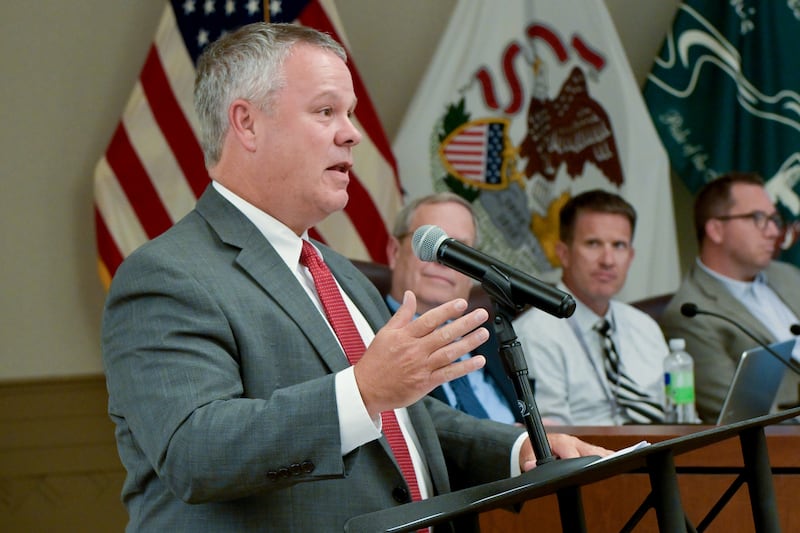
Mayor Clint Hull and a unanimous City Council pushed back, arguing “hardships” will be created if local control of housing and zoning decisions are diminished.
In a formal letter to Springfield, the city made clear its opposition to the so-called Build Up Illinois Developments Plan, or BUILD Act, championed by Gov. JB Pritzker. In a city meeting, the mayor and Council members said they prefer the local approach of the Illinois Municipal League’s Responsible Empowerment and Accountability for Localities, or REAL, Act as “a more collaborative approach.”
While the BUILD Plan did not move forward in Springfield, Hull said it could still potentially come up in the fall veto session.
In the letter, Hull says the city’s “strong opposition” to the BUILD Plan stems from its reduction of local authority over zoning, infrastructure coordination and long-term planning.
“Local governments are best positioned to understand their community’s needs, capacity, and fiscal realities, and any statewide development framework must preserve that role,” Hull said in the letter.
Hull said the city is also concerned about the potential financial impact on the local level.
The legislation, if enacted, “could increase demand on public services, utilities, transportation systems, emergency response, and schools without ensuring sustainable funding or adequate local oversight,” Hull said. “Statewide initiatives must avoid shifting unfunded mandates or disproportionate costs onto communities.”
Hull and the Council previously sent another letter to Illinois officials asking the state for financial alternatives to the unfunded state mandate to replace $84 million in lead pipes over the next decade. The city recently raised water rates to cover the lead pipe mandate and an additional $333 million to upgrade aging water mains and sewer systems – work long put off by the city.
Hull said the city “strongly supports” the municipal league’s REAL Act because he argues it “maintains essential local control, promotes transparent decision-making, and ensures municipalities remain active partners in shaping development that aligns with community priorities and long-term plans.”
During the meeting, Alderperson Jayme Muenz voiced her support for the IML’s approach and for the letter, saying, “This is a wonderful way to tell our state government where we stand as a city.”
State argues local governments failing with affordable housing
Pritzker’s office has argued that one of the main components of the lack of affordable housing is a housing stock shortage.
The governor’s administration said the state is short around 142,000 housing units and will need to build more than 225,000 units over the next five years to keep up with the growing demand, according to NBC Chicago.
In St. Charles, Alderperson Bryan Wirball said teardowns of affordable homes to construct pricey houses compounds the issue.
The BUILD Plan has several components tacked onto it. Even if passage ultimately fails, it has changed the discussion of housing solutions in Illinois.
Supporters of the plan argue it makes it easier and faster to build starter homes and multi-unit housing options.
The plan would enable multi-family options – like duplexes, triplexes, fourplexes and townhouses – to be built in most single-family residential zoned areas by limiting local governments’ abilities to block the developments.
The plan also allows “secondary residences,” which include granny flats, backyard cottages, above-garage apartments, on single-family properties.
Pritzker’s office has argued increasing the housing stock will decrease renting and purchasing costs across the board.
To increase the speed of construction, Pritzker’s plan also creates statewide timelines for permit reviews and inspections. Part of the plan also lowers parking lot size requirements for multi-unit buildings located near public transport. That part of the plan, known as People Over Parking Act, has already been enacted and went into effect June 1.
Within the overall BUILD Act plan are millions in funding for development assistance, and payment assistance programs for first-time homebuyers.
What’s in the city’s preferred REAL Act?
The Illinois Municipal League argues housing affordability should be addressed by local partnerships and incentives, not statewide zoning mandates.
The league’s approach examines community-specific needs and infrastructure capacity, ensuring each proposal aligns with its surrounding area. This approach protects existing municipal zoning authority.
The IML said it can encourage lower construction costs by making building materials exempt from the state portion of sales taxes. The proposal also streamlines permitting and inspection timelines.
The plan also attempts to lower housing costs by capping certain real estate commissions.
And it seeks property tax relief through tying the state’s Local Government Distributive Fund to reductions in local property taxes.
Opponents of the plan argue coordinated efforts at the local level have failed for years to protect and increase access to affordable housing.
What it means for St. Charles
Come 2028, an updated state assessment of St. Charles might require the city to develop a plan to achieve the state standard of at least 10% affordable housing of all units, according to city documents.
Outdated housing info from a couple years ago currently has the city exempt.
If the city is to utilize the IML’s approach to hitting the state’s requirement, a dramatic improvement would be necessary over recent city housing trends.
Last year, of 320 single-family homes sold in St. Charles, only about 1% were considered affordable, according to city documents.
The IML’s plan does not contain any improvement timelines for cities or concrete benchmarks for increasing affordable housing.
While the topic of affordable housing has been front-and-center during most city meetings, a significant portion of new developments feature the developers paying a fee to the city’s Housing Trust Fund in lieu of providing direct affordable housing units on site.
:quality(70)/s3.amazonaws.com/arc-authors/shawmedia/0cef0bf9-a04e-4bb4-aea0-03d8ced01c00.jpg)