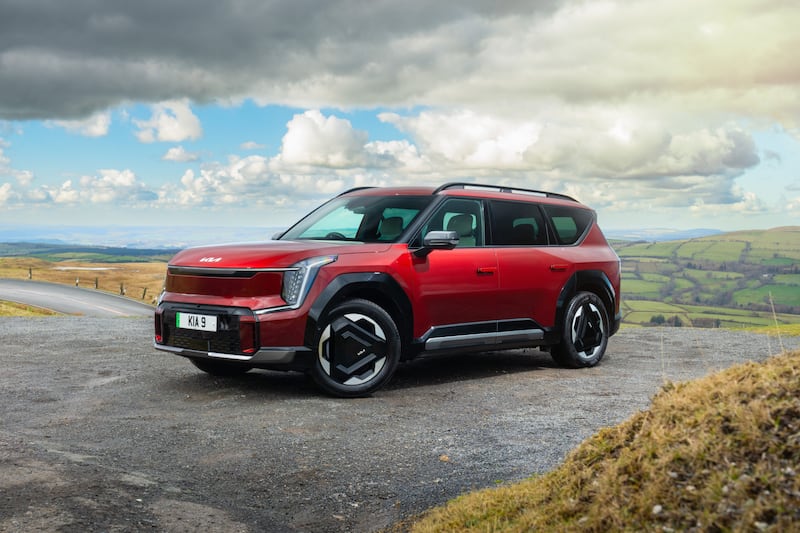
Having driven virtually every type of electric vehicle and most trim levels, I will always be one of the first people to agree on the hit-or-miss appeal of EVs. The 2026 Kia EV9 GT-Line AWD doesn’t just check the expected boxes for a modern three-row electric SUV; it redefines what a family hauler can feel like in the EV era.
With bold styling, a spacious cabin, and a robust dual-motor setup, the EV9 leans into both practicality and presence. But as with any first-wave, full-size electric SUV, it comes with a few compromises that are worth understanding before taking the ever-challenging leap into EV ownership.
My first impressions of the EV9 GT-Line were immediate and only grew during my week-long test period. It manages to stand apart from the increasingly rounded, aerodynamic shapes that dominate the EV landscape. Its upright stance, squared-off edges, and assertive lighting signature give it a distinctly SUV identity.
Helping those great first impressions was the optional Glacial White Pearl paint with a contrasting black roof ($895), which adds visual drama, especially when paired with the GT-Line’s exclusive exterior accents and 21-inch alloy wheels. It’s a design that feels intentional rather than experimental, which should appeal to buyers hesitant about overly avant-garde EV styling.
Underneath, the EV9 GT-Line AWD is powered by a 99.8 kWh lithium-ion high-voltage battery feeding a dual-motor, electric all-wheel-drive system with Terrain Mode. The setup delivers confident, immediate torque, making this large SUV feel surprisingly responsive off the line.
I found acceleration to be smooth, with enough punch to merge confidently onto highways or pass slower traffic without hesitation. While it’s not positioned as a performance EV, the power delivery is more than adequate for daily driving and family road trips.
Ride quality is generally composed, leaning toward comfort rather than sportiness. The suspension does a commendable job of soaking up imperfections, though the large 21-inch wheels can introduce some firmness over rough pavement. The added weight of the battery is noticeable in tighter corners, where the EV9 feels substantial rather than agile, but that’s par for the course in this segment.
Efficiency is competitive for a vehicle of this size. The EV9 GT-Line AWD is rated at 92 MPGe city, 72 highway, and 82 combined. In real-world driving, those numbers will vary depending on weather, driving habits, and use of climate controls, but the overall range should satisfy most daily needs and moderate road trips.
Charging, however, remains a mixed experience. While the EV9 supports fast charging, the fragmented public charging infrastructure means you may still need adapters at certain stations – an inconvenience that underscores the current growing pains of EV ownership.
Inside, the EV9’s cabin is one of its strongest selling points. The panoramic display integrates dual 12.3-inch screens for instrumentation and infotainment, creating a clean, modern interface that’s easy to navigate. The system includes built-in navigation and is generally intuitive, though some users may find the touch-heavy controls require a bit of acclimation.
Material quality is solid throughout, especially in the GT-Line trim, which adds unique interior design cues that elevate the overall feel. The Meridian premium audio system delivers outstanding sound quality. A wireless phone charger is conveniently placed in the console, and connectivity options are plentiful.
Seating is where the EV9 really shines. This tester featured the GT-Line 2nd-Row Relaxation Package ($2,000), which adds power-adjustable second-row seats with leg supports – essentially turning Captain’s Chairs into loungers. Combined with standard heated and ventilated seats in both the front and second rows, the EV9 offers a level of comfort that rivals some luxury-brand competitors.
The six-passenger configuration enhances accessibility to the third row and adds to the premium feel. Cargo space is generous, though like many three-row SUVs, it becomes more limited when all seats are in use.
Safety and driver-assistance features were a highlight of my driving experience. The EV9 GT-Line comes equipped with a comprehensive suite of advanced systems, including Parking Collision-Avoidance Assist, which helps detect and mitigate potential impacts while maneuvering at low speeds. Kia’s suite of driver aids, such as adaptive cruise control, lane-keeping assist, blind-spot monitoring, and highway driving assist, work together seamlessly to reduce driver fatigue and enhance overall confidence behind the wheel.
I always appreciate a head-up display that projects key information directly into the driver’s line of sight without being distracting. Remote start functionality adds convenience, especially in extreme weather, allowing the cabin to be pre-conditioned before you even step inside.
Of course, no vehicle is without its drawbacks. Beyond the aforementioned charging infrastructure challenges and the occasional need for adapters, the EV9’s size can make it cumbersome in tight urban environments or smaller parking structures. Additionally, while the interior is well-executed, some hard plastics remain in lower-touch areas, which may feel out of place given the price point.
Speaking of price, the EV9 GT-Line AWD starts at $71,900, with this particular tester reaching $76,670 including options and destination. That places it firmly in the premium segment, where competition is growing rapidly. While the EV9 offers strong value in terms of space, technology and comfort, buyers will need to weigh those strengths against the realities of EV ownership and their own charging access.
Kia’s 10-year/100,000-mile powertrain and battery warranty remains a significant advantage, providing peace of mind that’s hard to overlook, especially for those new to electric vehicles.
In the end, the 2026 Kia EV9 GT-Line AWD is a compelling entry in the three-row EV space. It blends bold design, impressive interior comfort, and a robust suite of safety features into a package that feels both forward-thinking and practical.
• John Stein is a freelance journalist based in Chicago. He has more than 25 years of experience driving, testing and writing about the automotive industry, its latest innovations and vehicle performance.