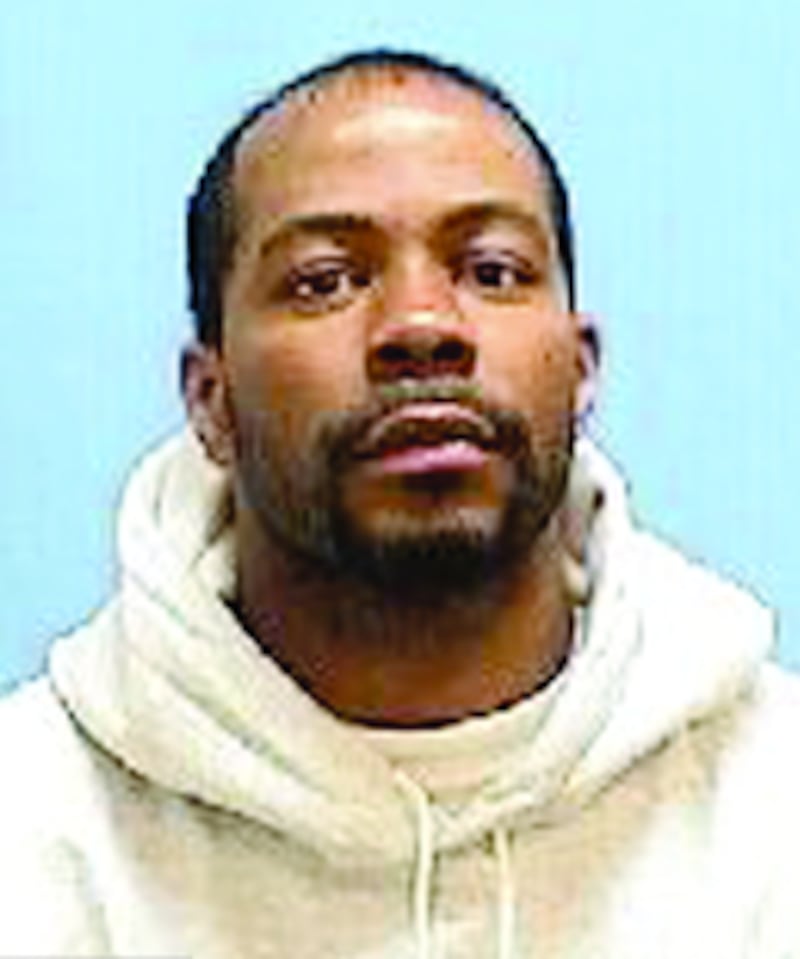
An Illinois appellate court has ordered a new hearing in a 2011 Sterling shooting case, ruling that a man convicted of attempted murder has possibly presented credible evidence of self-defense that was unavailable at trial.
A Whiteside County jury convicted Clarence O. Hopkins, 42, in 2012 of attempting to kill Shaevon M. Collins on July 1, 2011. Hopkins was subsequently sentenced to 55 years in prison.
Reversing the trial court’s 2025 denial of Hopkins’s motion to file a successive post-conviction petition, the appellate court has found that two newly discovered witness affidavits submitted by Hopkins a year earlier could substantially change the outcome if the case goes to retrial.
The appellate court found that Hopkins, who is serving his sentence at Pinckneyville Correctional Center, has presented a “colorable claim of actual innocence” based on evidence that Collins – not Hopkins – may have been the initial aggressor in the confrontation.
Hopkins’s hearing on the matter has been set for May 7 in Whiteside County Circuit Court.
What the new witnesses say
According to affidavits filed with the court, Clarence Prather – Collins’s cousin – stated that Collins confessed to him in June 2012 that he had initiated the attack.
In the affidavit, Prather recounted Collins telling him: “I caught him walking in Sterling that night all of this happened. He didn’t see me at first. I had the 40 (40 caliber pistol) on me.”
Collins allegedly told Prather that he threw a cup of liquor at Hopkins, beat him, and then pulled a gun. According to the account, Hopkins grabbed the gun during a struggle, and shots were fired. Collins told Prather he was hit by his own weapon as Hopkins gained control of it, according to the filings.
Prather said he did not come forward sooner because Collins was his cousin. He stated in the affidavit that he only decided to speak up after learning Collins had stolen his money and drugs while he was incarcerated.
A second witness, Christophe West, provided an affidavit stating he witnessed the altercation nearby.
West said Collins threw liquid in Hopkins’s face, struck him repeatedly, choked him, and then pulled a gun from his waistband. According to West’s account, Hopkins grabbed Collins’s arm as they struggled over the weapon, shots were fired, and Hopkins then backed away while Collins charged at him before more shots rang out.
West said he fled the scene immediately because he had drugs in his possession and did not want police involvement. He stated he did not learn Hopkins had been imprisoned until 2024, when they were transferred to the same correctional facility.
At the 2012 trial, Collins testified that Hopkins approached him, made a threatening statement, and then pulled a gun. Collins said he threw a cup of liquor at Hopkins and grabbed his forearm, pushing the gun down. Hopkins fired multiple times, striking Collins eight times.
Hopkins did not testify at trial and did not assert a self-defense claim.
The trial court had denied Hopkins’s motion for a new hearing, arguing the affidavits were not “newly discovered” because Hopkins should have known Collins had the gun. The appellate court rejected this reasoning, finding that Hopkins could not have discovered witnesses who chose not to come forward.
“If an unknown, unobserved and unrecorded witness chooses not to come forward, there is no amount of due diligence that can force him or her to come forward,” the court wrote, citing established Illinois precedent.
The court also found the affidavits could be “conclusive” – meaning they could lead to an acquittal if believed by a jury. Evidence that Collins confessed to being the aggressor and that an eyewitness corroborated a self-defense narrative would “place the trial evidence in a different light,” the court stated.
The State had argued that even if Collins was the initial aggressor, Hopkins’ eight shots constituted excessive force that negated any self-defense claim. The appellate court disagreed, noting that both witnesses described the shots as occurring during a struggle over the gun and as Hopkins backed away from Collins, not after Collins had been incapacitated.
What happens next?
The case has been remanded for second-stage post-conviction proceedings. Hopkins will be entitled to appointed counsel, and the county’s State’s Attorney’s office can either move to dismiss the petition or file a response. If the petition advances, Hopkins could be granted a new trial.
:quality(70)/s3.amazonaws.com/arc-authors/shawmedia/9bb5f897-be4a-42b8-9507-9193a7f43c2d.png)