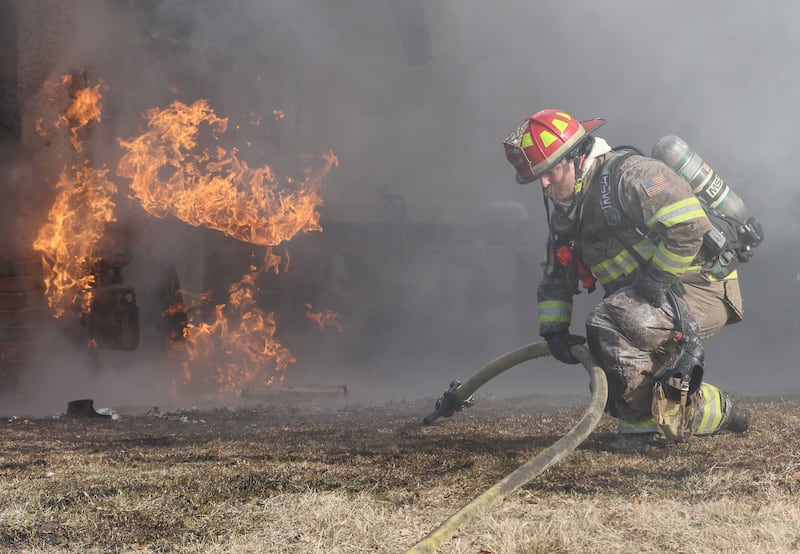
It might be freezing outside, but that doesn’t mean your home can’t catch fire if you’re not careful this winter.
In fact, fires trend up in the winter months because of it, experts say. That’s because homes are using more equipment – electric and gas – to keep warm.
December, January and February are the peak months for fires caused by heated elements. Equipment like space heaters, fireplaces and more are also the leading cause of home fires and home fire injuries, and the third leading cause of home fire deaths, according to the National Fire Prevention Association.
Here are some tips from the NFPA, DeKalb Fire Chief Lukie Howieson and other experts to ensure your home is safe and fireproof in the cold months:
Beware supplemental heat sources
Not so much that you use them, but where you plug them in.
Space heaters should be plugged directly into a wall outlet, not an extension cord or power strip. And keep them away from flammable materials like curtains and beds – things that will catch more quickly if overheated.
It might be tempting, but using your oven to heat your home also is ill-advised.
What’s the safest way to keep my pipes from freezing? (Or if I have to thaw them out?)
Another common cause of winter fires is improperly thawing frozen pipes.
It’s easier to prevent them than thaw them, Howieson said. If you’re worried your pipes will freeze, turn every sink on to a small trickle and leave the sink cabinets open, especially if the sink is attached to an exterior wall. That keeps water flowing continuously.
But what if your pipes do freeze?
“You can use a hairdryer,” Howieson said. If you’re careful, you can set a space heater next to a frozen pipe as long as nothing flammable is around.
Can I use my generator inside if the power goes out?
Short answer? No. Long answer: Also no, because portable generators produce a large amount of carbon monoxide, a colorless, odorless, toxic gas that can quickly turn fatal, according to the NFPA. Other common risks from generators are electrical shock or electrocution and fire.
Generators should be plugged in outside and away from your home, including windows and doors.
Electrical fires are the leading cause of home fires in the U.S., according to the NFPA. Plug only one heat-producing tool (like a space heater) into a wall outlet at a time.
You should always ensure your carbon monoxide and smoke detectors in your home are working. The NFPA recommends checking carbon monoxide detectors once a month.
Tips for fireplaces and candles
Anytime there’s a live flame, extra vigilance is warranted.
Chimneys should be inspected and cleaned before you start up the fireplace for the season. Store cooled ashes in a tightly covered metal container. Keep that container outside at all times, at least 10 feet away from your home.
Even things like candles should be monitored closely, according to the NFPA.
Anything flammable, including linens, bedding, blankets, furniture, should be at least 3 feet away from any heat source like fireplaces, wood stoves, radiators or space heaters.
For more tips, visit nfpa.org.
:quality(70)/author-service-images-prod-us-east-1.publishing.aws.arc.pub/shawmedia/afeba7c5-6912-4fdf-967f-edcf9aadb18e.jpg)