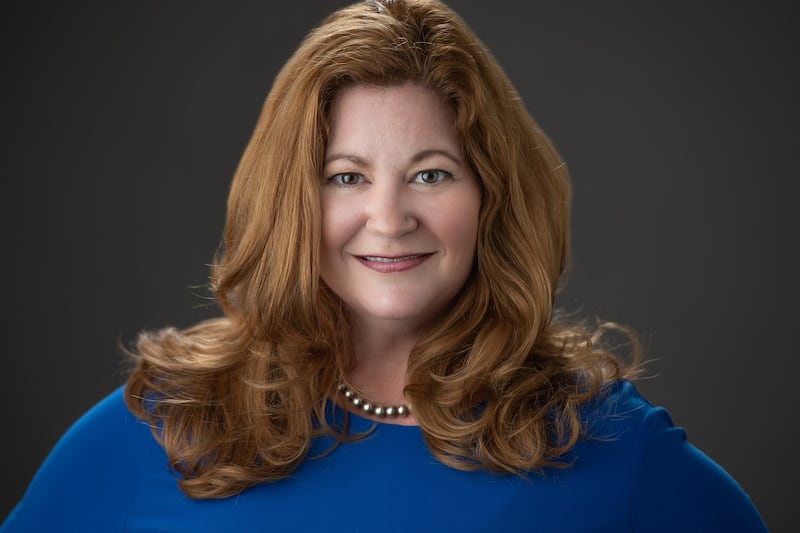
Name: Lynn LaPlante
What office are you seeking: State Representative IL-42
What is your political party?
What is your current age? 53
Occupation and employer: Commissioner, DuPage County Board; DuPage County
What offices, if any, have you previously held? I am in my third term as a DuPage County Board Member, as well as in my fourth term as an elected Precinct Committeeperson.
City: Glen Ellyn
Campaign website: LynnLaPlante.org
Education: University of Notre Dame: Master of Music, on a full, merit-based scholarship with teaching-assistant stipend; University of Illinois-Urbana: Bachelor of Music.
Community involvement: I have been involved in many community organizations and participated as a board member for several, including: Glenbard West Boosters Board; DuPage Symphony Orchestra Board; Glenbard West Association of Music Parents Board Officer; Choose DuPage; DuPage Convention and Visitors Bureau; Arts DuPage; DuPage Board of Health; Illinois Arts Alliance; Illinois Women’s Institute of Leadership; Glen Ellyn Women Leaders. I volunteer extensively in my community, including playing my violin for the detainees at the DuPage County Jail; for residents at various nursing homes, memory care units, and hospice units; in classrooms and church at St. Petronille Parish; and I coach chamber music ensembles at Glenbard West for state level competitions. I am involved with the community advocacy group 6000 Moms, assisting with their annual fundraising efforts, and by hosting and chairing fundraising efforts for many sports programs at Glenbard West High School.
Marital status/Immediate family: I have been married to Mike Allaway for 28 years, and we have four children.
What are your top three priorities for this district in Springfield?
I’m running to lead a government that will be fiscally responsible AND make critical investments in community services for the most vulnerable members of our community. My top three priorities are affordability, protection from ICE, and the creative economy.
How will you support economic growth and development in your district?
I love the topic of economic development! Especially when it comes to the creative economy. There is a brand new, $80 million dollar Sound Stage that is going to be built which will redirect recording for film, television and streaming from the current hubs of Los Angeles and Nashville, and bring it to Illinois instead. We will stop outsourcing these jobs, and instead, keep these union jobs-- and revenue-- here in Illinois. I served as Chair of Economic Development for DuPage County, and I know from experience how important it is to look for new sources of revenue. This requires creative problem solving and being comfortable with big, bold, new ideas. Illinois does an admiral job already of investing in the creative economy, and this new Sound Stage will bring us to the next level in terms of economic growth.
Do you support term limits for state representatives, and if so, what limits?
Since the terms are only two years long, voters have plenty of opportunities to impact precisely how long a representative serves. I believe we need to build our bench by helping younger people gain political experience. I am a huge proponent of bringing along people as young as high schoolers on my campaign team because in this arena, you learn by doing.
How will you address the state’s long-term pension obligations?
It’s important to acknowledge that we reached the point we are at due to years of politicians underfunding our pension system, poor investments, and accounting mistakes – not because our pensions are much more or less generous than other states.
There are no magic fixes to this problem. We must make sure that we work towards a healthier pension system without overly burdening a single generation of taxpayers to make that happen. We also should work to reduce overhead costs, and also monitor fraud and abuse in our system so that workers are only being paid what they are owed.
How will you address property taxes and school funding reform?
I support the option for the state to reduce the burden on working-class families while making sure the ultra-wealthy pay their fair share. This current session of Congress has done very little to help working and middle-class families throughout our nation and here in Illinois. They have ceded most of their authority to Donald Trump, who has threatened to cut or freeze billions of dollars in food, child care, and social service assistance to Democratic states he doesn’t agree with.
What is your stance on the SAFE-T Act? What changes, if any, would you support?
The SAFE-T Act is the result of years of work and was enacted just over two years ago. We must keep a close eye on the outcomes – positive and negative – and weigh those outcomes together. If any parts of the law are making communities less safe, I’m ready to have a conversation with advocates, victims, law enforcement, elected officials, and local governments to make any amendments that are necessary.
What legislation would you propose to address crime and public safety in your district?
Gun violence must be addressed through legislation. HB 3320, the Responsibility in Firearm Legislation, which would require gun manufacturers to obtain a state license and financially account for the costs of gun violence.
What is your stance on reproductive rights in Illinois?
I stand firmly and steadfast in my defense of women’s reproductive healthcare, and will fight to preserve access to abortion as essential medical care in Illinois. Period. End of story.
What is your opinion of the TRUST Act (sanctuary state protections)?
The TRUST Act prioritizes public safety by ensuring undocumented immigrants can report crimes,. access services, and interact with law enforcement without risk of immigration-related repercussions. With ICE as a very real and terrifying threat to our immigrant communities, the TRUST Act is vital.
Should the state expand Medicaid funding?
Yes. Healthcare is a basic human right, not a luxury. Expanding Medicaid ensures more people can access preventative care--especially our most vulnerable such as low-income individuals, people with disabilities, families and senior citizens. We need to focus on health equity and accessibility, and expanding Medicaid funding will address both of those issues.
Should local governments have more authority over solar farm development in their communities?
Yes, as long as there are strongly defined statewide climate goals and equitable standards throughout the state.
Should Illinois expand use of nuclear energy, including facilities like the Byron plant? What’s your vision for the state’s energy mix?
Illinois should prioritize rapid clean energy growth, such as wind and solar. The Byron plant is useful for the near term because it provides large amounts of carbon-free electricity. I worry about waste disposal, safety concerns, and high costs of nuclear energy. In Illinois, the goal is 100% carbon-free electricity by 2045. I’d like to see the focus of the state’s energy mix on clean renewables, storage and efficiency.
What role should the state play in housing affordability?
The state should play a lead role in addressing housing affordability. Housing is a basic, human need, not just a financial commodity. The state can lead the way in matters of funding and policy, specifically to reduce inequality in housing accessibilty and affordiblity.
How should the state address rising energy costs from data centers? How do you balance water rights between communities and industry regarding data center development?
Illinois should require data centers to contribute fairly to pay their full grid costs, energy infrastructure upgrades, and grid reliability. Data centers should also commit to clean energy programs through power purchase agreements, and battery storage to reduce grid strain. There needs to be careful and strategic planning with local communities. When it comes to water rights, Illinois should prioritize community needs, environmental protection, and equity. Illinois should set minimum water use protections and require water impact assessments.
To what level should the state fund a new stadium for the Chicago Bears?
Illinois is home to dozens of Fortune 500 and global companies. We work closely with businesses – large and small – to locate or expand here in Illinois. It is appropriate to discuss how and where the State of Illinois can help any business – including the Chicago Bears – by providing limited support and infrastructure development. As we make tough choices about funding education, supporting social services, and helping families deal with a cost of living crisis, anything beyond what we regularly do to help businesses is out of the question.
Should the state regulate the use of AI in the classroom? To what extent?
Illinois must protect student’s privacy and data, when it comes to AI. AI should be considered a tool, not a replacement of education, learning, critical thinking and writing. AI should never be considered as a replacement for teachers, it should support teachers. Teachers should have oversight and input on guidelines for AI in the classroom. Illinois should ensure equitable access, responsible and transparent use of AI, including bias-aware education.
Who are your top donors? How often do you speak with them?
My top donors are my constituents: friends in my community who have supported all of my campaigns since the beginning. I speak with my donors all the time, because they are my community! I also receive donations from my union, the Chicago Federation of Musicians, and other labor organizations.