City of Hope recognized World Cancer Day on Feb. 4 with a full day of events that celebrated progress in cancer care while inspiring the next generation of health care professionals and engaging community leaders in meaningful dialogue.
The day began with City of Hope welcoming more than 50 high school students from the College of Lake County Tech Campus to its hospital in Zion. The CLC Tech Campus, an extension of numerous Lake and McHenry County high schools, allows students to pursue specialized career and technical education programs while still in high school.
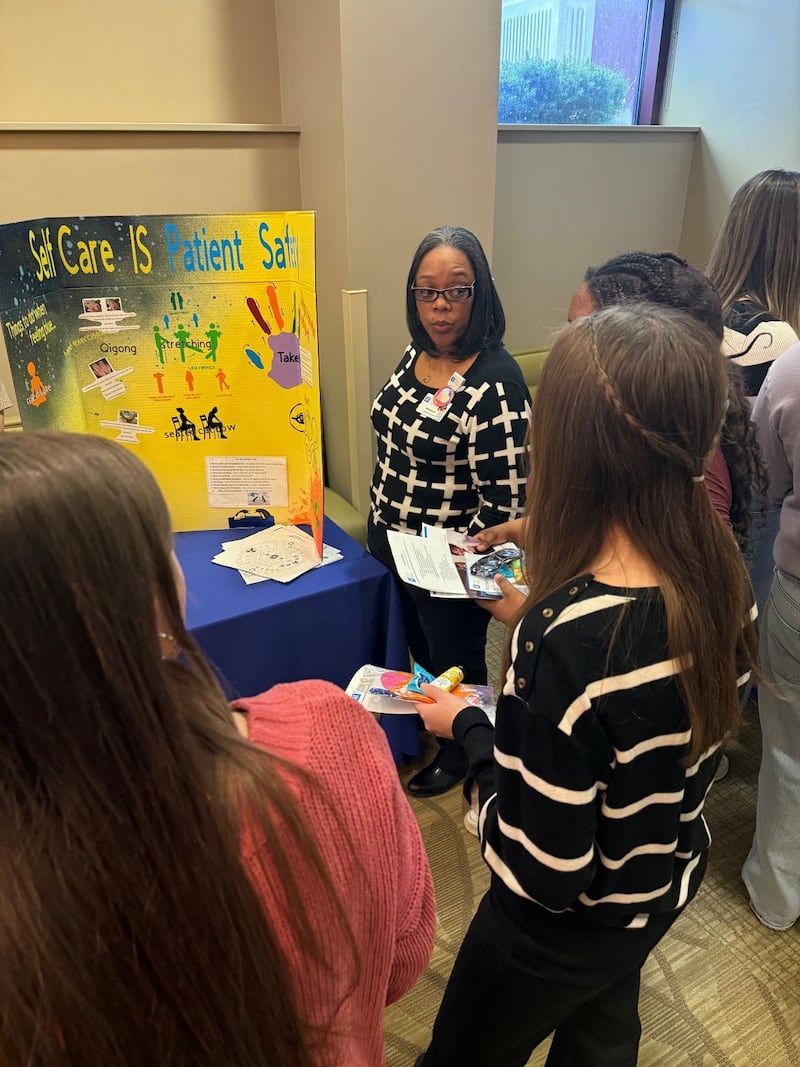
Students spent the morning touring City of Hope’s Zion campus, sharing lunch and rotating through 11 interactive stations staffed by hospital professionals from a wide range of departments. Each station offered students a firsthand look at career paths within a hospital setting – from clinical roles to support services.
Following the tours, several students spoke in front of their peers, sharing reflections on their experience. One student, Maria, who is enrolled in the Certified Nursing Assistant program, talked about how the visit expanded her perspective on what jobs she may want to pursue in health care.
“I just wanted to say that I am really grateful for this amazing opportunity to really explore so many different career paths,” she said. “I never expected to see a salon at a hospital, and I got to talk to people from so many departments. Now I’m conflicted because I don’t know what I’m going to do anymore.”
:quality(70)/cloudfront-us-east-1.images.arcpublishing.com/shawmedia/HPWDWQRWIZDC7OBUAIEBTNEYEM.jpg)
The evening continued with a World Cancer Day symposium hosted by City of Hope, at the Kenosha Innovation Neighborhood, drawing an audience of about 50 attendees, primarily business and community leaders. The panel featured three speakers from City of Hope Cancer Center Chicago, including Dr. Walter Stadler, chief clinical officer; Beth Garoutte, chief operating officer; and Dr. Jacob Bitran, hematologic-oncologist.
The discussion followed the recent release of the American Cancer Society’s 2026 annual report, which revealed a hopeful milestone: nearly 70% of people diagnosed with cancer now survive five years or more, a significant increase from the 1970s when survival rates were closer to 50%. The report has sparked widespread conversation in the weeks since its release, and the panel focused on the advances that have made this progress possible.
Stadler highlighted the role of research and innovation, emphasizing the importance of clinical trials.
“There’s a lot of really exciting ideas in the laboratory that are coming to fruition that we are testing at City of Hope and that my colleagues are testing,” he said, “We need to continue to do that, and we ought to encourage patients to participate in the clinical trials that are going to make a difference.”
Stadler also noted improvements in early detection and prevention.
“We’re doing better in terms of screening and diagnosing patients earlier in the disease process, when it is highly curable,” Stadler said, adding that many cancer prevention strategies mirror those for heart disease, including maintaining a healthy weight through exercise and good nutrition.
Panelists discussed how cancer care is evolving rapidly through breakthroughs such as precision medicine – personalizing treatment down to a patient’s DNA – revolutionary blood cancer therapies such as CAR T-cell therapy, and the power of partnerships that bring cutting-edge treatments to patients sooner.
Together, the day’s events reflected City of Hope’s mission to advance cancer care while investing in education, collaboration and compassion. From inspiring students just beginning to explore health care careers to engaging community leaders in conversations about innovation and access, City of Hope marked World Cancer Day as both a celebration of progress and a reminder of the work still ahead.
:quality(70)/s3.amazonaws.com/arc-authors/shawmedia/b945ae41-e0fd-42fd-805a-feca8401d740.png)