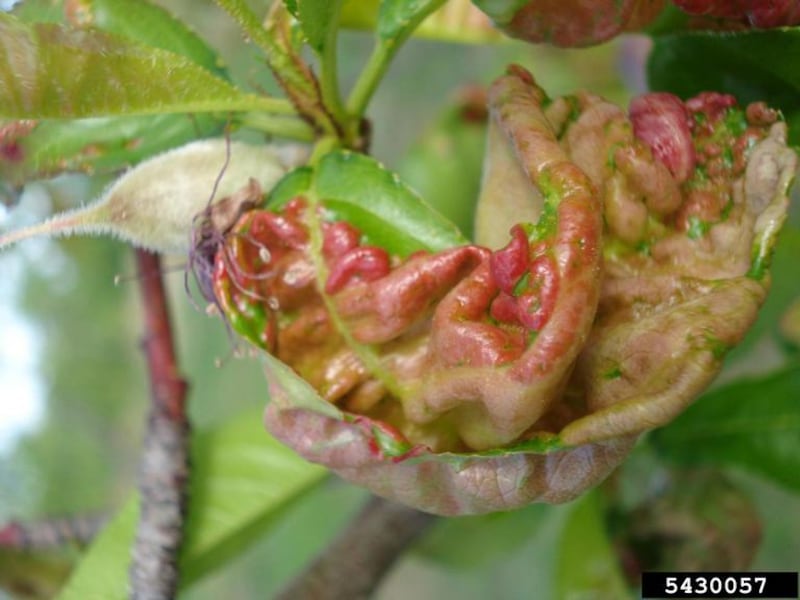
Over the past month, the tri-county Extension offices have received several calls and emails regarding peach leaf curl. Given the wet spring conditions, it is not surprising that this fungal disease is showing up in home orchards this year.
However, early symptoms can easily be mistaken for frost damage, as both can cause leaf distortion and curling.
Peach leaf curl is relatively easy to distinguish from other fungal diseases once symptoms become more pronounced. Infected leaves appear thickened, curled, or crinkled, often with scalloped leaves and a characteristic pinkish-red discoloration in affected areas (Johnson 2020).
As the disease progresses, leaves may turn yellow and prematurely drop, and in severe cases, entire trees can become defoliated.
Sadly, by the time symptoms are visible, it is generally too late to effectively control the disease for the current growing season (Enroth 2016). Management strategies are most effective when implemented during the dormant period. Fungicide applications are typically recommended in the fall, after leaf drop, or in early spring before bud swell.
However, during warm springs, timing spring applications can be challenging, as buds may swell earlier than expected. A properly timed application of a copper-based or chlorothalonil fungicide in the fall is usually sufficient to reduce disease pressure the following season (Enroth 2016 and Johnson 2020).
Always remember to read the label and follow directions when applying fungicides. Planting resistant cultivars is another valuable management strategy; for example, ‘Redhaven’ and related cultivars offer good resistance to peach leaf curl (Johnson 2020).
Maintaining overall tree health is essential when managing peach leaf curl. Good cultural practices can help trees recover and remain productive. This includes following a balanced fertilization program, providing adequate irrigation, aiming for about one inch of water per week during dry periods, and thinning fruit to reduce stress and crop load. Strong, healthy trees are better able to tolerate and recover from disease pressure.
Peach leaf curl can be frustrating, but with timely dormant season treatments and good cultural care, it’s a manageable problem for most home gardeners. By staying proactive each year, you can protect your trees, support healthy growth, and enjoy a more reliable peach or nectarine harvest.
For more information, check out the University of Illinois Extension’s Local Food and Small Farms YouTube Channel for growing tips and other horticultural advice.
Alexis R. Barnes is the University of Illinois Extension Local Food Systems Small Farms Educator serving DuPage, Kane and Kendall counties. Barnes’s areas of expertise include fruit and vegetable production and reduced tillage practices.
Have a question for the Master Gardeners? Residents can contact the Kendall County Master Gardener volunteers on Monday, Wednesday, and Friday from 9 a.m. to 12:30 p.m. by calling 630-553-5823, stopping in at 7775B Illinois Route 47, Yorkville, or emailing uiemg-kendall@illinois.edu.