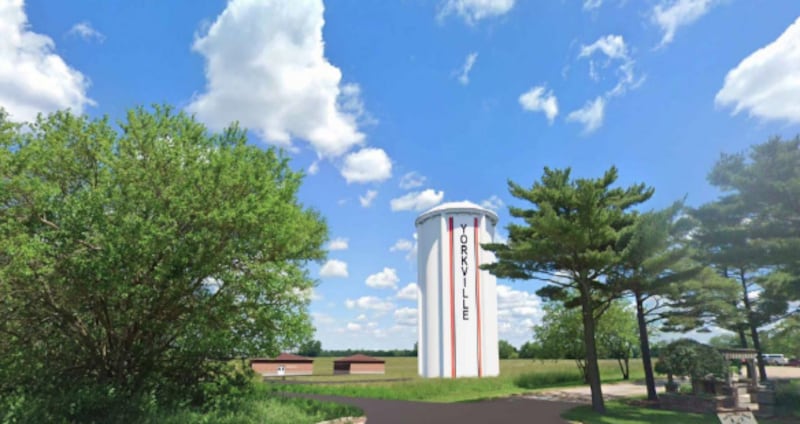
When prices came in about $100 million higher than expected for the first leg of the Lake Michigan water sourcing project, the sticker shock had Yorkville officials concerned about the rest of the project.
To cover the rising costs, the city had to re-apply for a $170 million loan from the U.S. Environmental Protection Agency, $30 million higher than the city’s initial loan.
Mayor John Purcell said while the initial bids for the first section haven’t decreased, the most recent bids for separate legs of the project have been a string of good news.
“The last two bids we received came in around $55 million and the estimate was for $83 million,” Purcell said during the Feb. 10 City Council meeting. “The numbers are definitely coming down. It’s still a substantial amount of money, but not the high numbers we were thinking about after that first bid opening.”
After the initial sticker shock of the first bid, a subsequent round of bidding by the DuPage Water Commission that was expected at $40 million came in at $23 million.
The first bid’s higher-than-expected costs is likely due to scheduling issues and the engineering complexities of the first leg. Purcell said the subsequent legs are much easier construction.
City Administrator Bart Olson said the last bids for the large construction project should open in the middle of March. He said after that, the city should know about 99% of the project’s official total costs.
The Lake Michigan water sourcing project is a joint venture between Yorkville, Oswego and Montgomery hooking up to existing water mains near Naperville owned by the DuPage Water Commission. The three Kendall County communities will share costs.
:quality(70)/cloudfront-us-east-1.images.arcpublishing.com/shawmedia/FFYLSDSHGBGITNIOHEJVSJYY2Q.jpg)
City officials have said the project is necessary because the region’s underground aquifer is being used at an unsustainable rate from the region’s booming population.
To receive water down the pipeline by the summer of 2028, the city needs to have all parts of the project, including new water receiving stations, storage tanks, and water mains, completed by 2027.
How it’s being funded
As it currently stands, the city is eyeing about $224.4 million in total project costs.
The EPA loan, through the Water Infrastructure Finance and Innovation Act, can support up to $179.5 million of those costs, leaving the remaining 20% to be financed through Yorkville’s bond issuance and Illinois EPA loan proceeds.
To help offset the costs for the water infrastructure, the city recently approved higher water rates for users. Residents will face about 20% annual increases for at least five years.
The WIFIA loan has a 35-year payback from the time of substantial completion, which will take it through 2065.
In consideration of any future water rate hikes, the city must cover 145% of the WIFIA loan debt and the 3.5% interest rate to meet the obligations of the loan.
City staff favor using WIFIA loans to cover the project’s costs because they carry low-interest rates. They also allow deferred repayment, with interest payments postponed during construction and up to five years after, according to city documents.
But, like the future water, the WIFIA loan proceeds will take some time to come in.
To cover infrastructure costs for the project in the meantime, the city approved a $50 million debt certificate.
“This $50 million is essentially a bridge, this is not in addition to the money we’ve already borrowed, it just allows us to get there,” Purcell said. “And we are going to save a fair amount of money in interest on it.”
Rob Fredrickson, the city’s finance director, said the funds could help cover the costs for things like the new water main transmission and other already completed projects. He said the money could be stretched through most of this year and potentially 2027 as well.
Fredrickson said the debt certificate has a rate of 3.83%, which is lower than the WIFIA’s loan rate of 4.82%.
He said that means by using this financial bridge, the city will save about $2 million in interest costs over the life of the debt certificate, which goes to Dec. 30, 2029.
:quality(70)/s3.amazonaws.com/arc-authors/shawmedia/0cef0bf9-a04e-4bb4-aea0-03d8ced01c00.jpg)