Humans have a complicated relationship with coyotes. Some fears are justified, but there are things we can do to make it easier to live with them.
Here are a few facts about coyotes that might help you to better understand them, anticipate their behavior and prevent negative encounters.
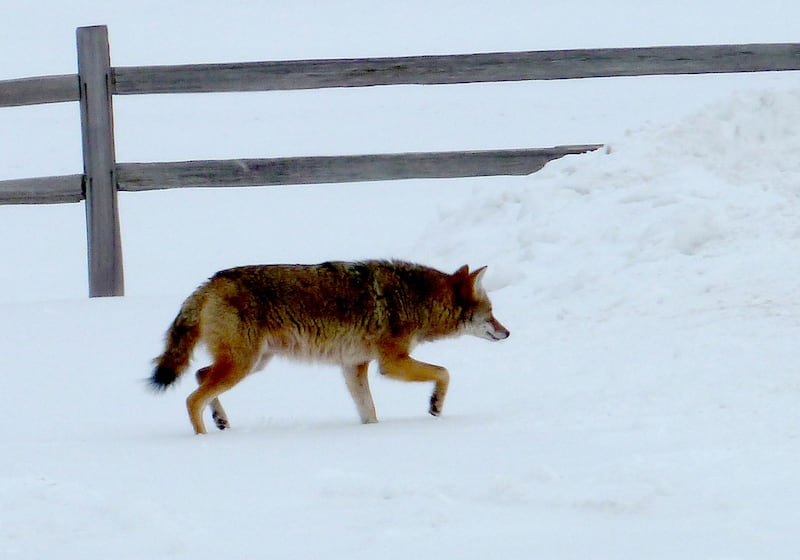
Coyotes can vary in size but often are compared to a small German shepherd dog weighing in at 22 to 42 pounds depending on the season. One distinct characteristic is that the bushy tail is carried below the level of the back rather than curved upward.
The fur varies from light gray to dull yellow and even mostly black. Their muzzle is long and thin, and ears are pointed and erect. They have distinctive yellow irises.
Coyotes are found throughout Illinois in both urban and suburban areas. They prefer farmland and woodland and may live in areas as large as 20 to 30 miles in diameter. They travel both in packs of extended families and alone.
They are most active from dusk until early morning but can be seen in the daytime.
Coyotes are well-rounded athletes. They are good swimmers, can sprint up to 43 mph, and can easily jump fences. They have a characteristic nocturnal yap and howl.
While captive-raised coyotes can live 13 to 15 years, wild coyotes often live only to age 3 because of hunting, vehicle collisions and disease.
Although coyotes are the largest wild predator in Illinois, they are mostly scavengers. Urban coyote diets consist mainly of small rodents, fruit, deer and rabbits, according to the Urban Coyote Research Project.
It is very rare for them to go after pets or garbage, and these are generally not considered food.
Coyotes are naturally afraid of humans and are not typically a threat if given enough space, are not injured and are not being fed by people. Attacks on humans have been very rare, but care should be taken with children.
Coyotes are not considered a public health concern; however, they can carry rabies. Any unusual coyote behavior should be reported immediately, including aggression and loss of fear of humans. Removal of a coyote should be done by a professional.
Taking coyote behavior into consideration, there are some ways to reduce the changes for negative interactions. First, do not run from them. Appear larger by waving your arms and yelling.
Don’t leave small pets and children unattended outside, especially at night. Don’t feed coyotes, including unintentional food left outside (pet food, other animal feeders, etc.)
Alert local authorities (public safety, animal control, etc.) and neighbors if concerning behavior is observed, such as acting aggressively or lack of fear.
Coyotes play an important role in a healthy ecosystem by keeping the small mammal population down. Humans and coyotes can co-exist if we take measures to lessen our exposure. One of the most important steps is not to feed coyotes.
For more information on co-existing with coyotes and making your neighborhood safe, check out the Illinois Department of Natural Resources at wildlifeillinois.org/identify-wildlife/coyote and the Urban Coyote Research Project at urbancoyoteresearch.com.
• Darlie Simerson is a certified master gardener and naturalist volunteer with the University of Illinois Extension serving DuPage, Kane and Kendall counties.