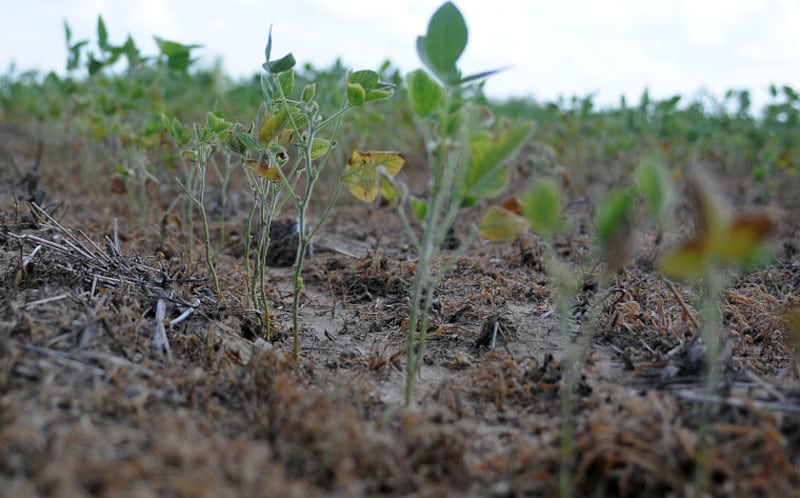
Farmers wouldn’t mind a little more rain, but a wet March has effectively snapped a months-long drought across North Central Illinois – indeed, across most of the state.
The U.S. Drought Monitor was updated Thursday and showed widespread relief across the state’s northern half. Bureau and Putnam counties are “abnormally dry,” as are parts of La Salle County, but the Illinois Valley no longer is in drought territory.
:quality(70)/cloudfront-us-east-1.images.arcpublishing.com/shawmedia/RIMXIRRFUVGFNELR32AJC6ILOM.png)
Farmers interviewed by Shaw Local News Network said they’re relieved, as spring planting begins soon and they need the moisture.
“It’s nice to get the rain now, as it warms up, so we can get the crops in the ground,” said Steve Michelini, who farms properties in Bureau, La Salle, Putnam and Marshall counties. “Some of our fields got 4½ inches of rain. After we plant, we don’t want that much rain. It’s nice to get this now so we can dry out and plant.”
Brad Temple farms in Serena Township, north of Ottawa. He said the March precipitation ends a couple of years of perilously dry conditions.
Temple said he’s enjoyed good yields in recent seasons, but only because of timely rains that ensured a good harvest. Had Temple had to rely on subsoil moisture, he’d have been singing a different tune.
March, however, has generally improved moisture levels and “planting ought to be starting out any time now.”
“The rain at the moment is very welcome,” he said.
Jacob Aubry farms in central La Salle County and he said a dry fall was followed by a worryingly dry winter. To the relief of him and his peers, the March soaking not only erased the drought but arrived in a window that wouldn’t delay spring planting.
“If the rain persists well into late April it could be another story,” Aubry said, “but we’re far happier the rains came now.”
There’s more rain on the way, however. Except for Saturday, there’s a chance of rain every day through Tax Day.
A mild soaking would likely lift the Illinois Valley out of “abnormally dry” and, so far, without the risk of catastrophic flooding. The National Oceanic and Atmospheric Administration showed the Illinois River was just a foot over flood stage Thursday, and set to fall below flood stage by April 15.
Illinois as a whole had been mired in drought for the better part of six months. That changed last month.
Dr. Trent Ford, Illinois State Climatologist, reported Monday on his blog that Illinois had the wettest March in 41 years, with precipitation nearly 2 inches above average.
Ford said the U.S. Drought Monitor reduced statewide coverage of all drought categories between March 3 and March 24, including 43% less of the state in at least “moderate drought” and 11% less of the state in “extreme drought.”
“Root zone soil moisture improved across the state, relieving some of the risk of early-season agricultural drought,” Ford said. “However, water table levels remained much deeper than typical for spring and streams also remained somewhat to very low as the calendar moved to April.
“These issues are lagged effects of the prolonged hydrologic drought in Illinois, and we will need continued wet weather through April and May to see consistent improvement in these conditions.”
:quality(70)/s3.amazonaws.com/arc-authors/shawmedia/638ad18c-1176-4018-bcef-b5560cf36d58.png)