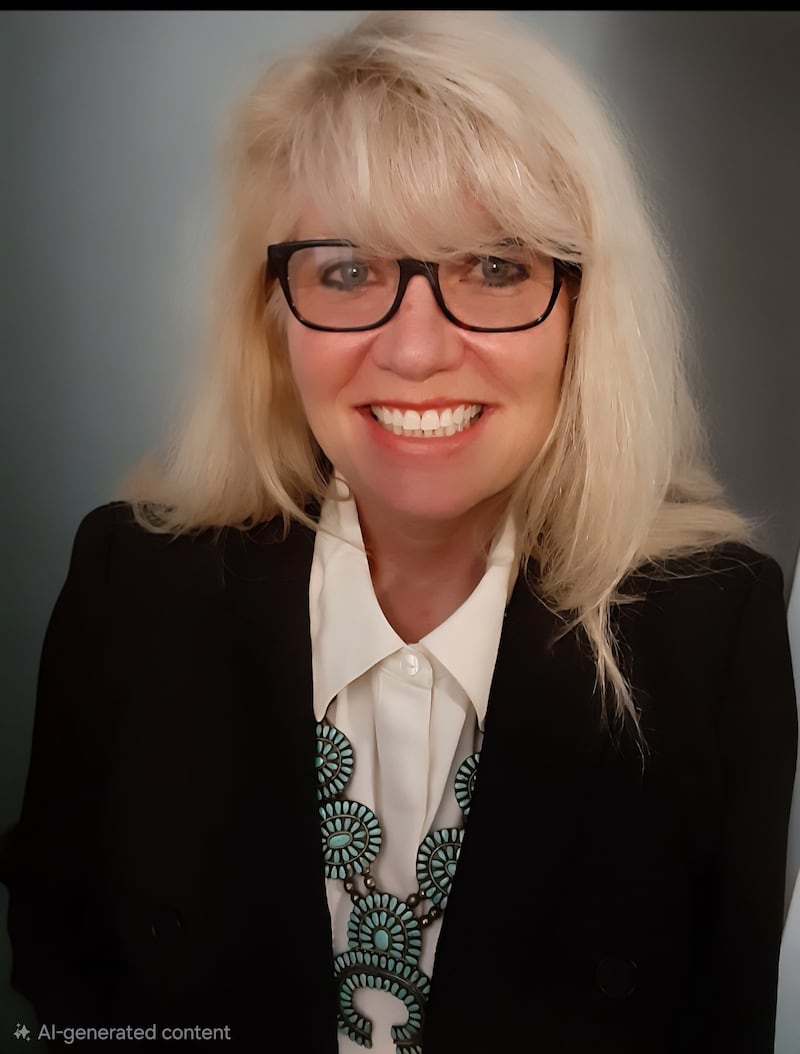
Name: Crystal Loughran
What office are you seeking: State Representative in the 76th District
What is your political party?
What is your current age? 63
Occupation and employer: Retired
What offices, if any, have you previously held? LaSalle County Republican Precinct Committeeman
City: Peru - Born in Spring Valley at St. Margarets Hospital - Five Generations in Peru (Piwonski)
Campaign website: www.crystalloughran.com
Education: Bachelor of Science in Mass Communication at Colorado State University
Community involvement: 30 years of service in the education community, co-lead LaSalle County Moms For America-a national organization, co-founder of Middle America Grassroots Action-a political action committee, co-lead Illinois State Rifle Association Townhall County meeting, and a volunteer with local churches and charities throughout the community.
Marital status/Immediate family: Michael Loughran and I have been married for 30 years. Our daughter, Brittany, is married to a career military serviceman, Julian Riggs, in the US Army.
What are your top three priorities for this district in Springfield?
Here are my top three priorities for this district in Springfield:
1. Taxes — Relief for Working Families, Accountability for Government
Families are stretched thin. I’ll fight to lower the tax burden on middle- and working-class residents, stop wasteful spending, and demand transparency so every tax dollar is spent responsibly. Springfield must live within its means—just like the people it serves.
2. Energy — Affordable, Reliable, and Homegrown
Energy costs are crushing household budgets. I support an all-of-the-above energy strategy that keeps prices affordable, strengthens grid reliability, and invests in local energy jobs—without forcing costly mandates that hurt families and small businesses.
3. Crime — Safe Communities, Strong Enforcement, Real Prevention
Everyone deserves to feel safe. I’ll back law enforcement, hold repeat offenders accountable, and invest in proven prevention strategies that reduce crime before it starts. Safety isn’t partisan—it’s fundamental.
How will you support economic growth and development in your district?
I’ll support economic growth and development by staying focused on jobs, affordability, and opportunity—right here at home:
1. Grow Local Jobs and Small Businesses
Small businesses are the backbone of our district. I’ll fight to cut red tape, expand access to capital, and support workforce training so local employers can grow, hire, and stay here.
2. Make the District Affordable for Families and Employers
High taxes and rising energy costs drive jobs away. I’ll push for lower taxes, predictable regulations, and affordable energy so businesses can invest with confidence and families can get ahead.
3. Invest in Workforce Development
We need to prepare workers for today’s jobs and tomorrow’s careers. I’ll support apprenticeships, career and technical education, and partnerships between schools, community colleges, and employers—so people can earn good wages without leaving the district.
4. Revitalize Communities and Infrastructure
Strong infrastructure attracts investment. I’ll advocate for responsible investments in roads, broadband, and community revitalization that help businesses expand and bring new employers into our district.
5. Keep Communities Safe and Pro-Growth
Economic growth depends on public safety. I’ll support law enforcement and smart prevention so families, workers, and businesses feel safe to live, work, and invest here.
More jobs. Stronger businesses. A district where people can build a future.
That’s my commitment.
Do you support term limits for state representatives, and if so, what limits?
Yes —I support term limits.
Career politicians lose touch with the people they serve. Term limits keep representatives accountable, bring in fresh ideas, and remind elected officials they work for voters—not the other way around.
My position:·
State Representatives: 4 terms (8 years total)
·Enough time to learn the job, deliver results, and fight for the district
·Not so long that Springfield becomes a permanent career
Term limits mean less complacency, less insider politics, and more focus on results.
Public service should be a responsibility—not a lifetime appointment.
How will you address the state’s long-term pension obligations?
lllinois’ pension crisis didn’t happen overnight—and it won’t be fixed with gimmicks. I’ll address it honestly, legally, and responsibly:
1. Keep the Promises Already Made
The Illinois Constitution is clear: benefits already earned must be honored. I will not support breaking promises to retirees and workers who did everything right.
2. Fix the System Going Forward
Reform has to focus on the future. That means:
·Strengthening Tier II to ensure long-term sustainability
·Ending abuses like pension spiking and double-dipping·
Aligning benefits more closely with what taxpayers can afford—for new service only
3. Grow the Economy to Grow the Revenue Base
You don’t fix a debt problem by shrinking your economy. Job growth, affordable energy, and predictable taxes increase revenue without raising rates—and that helps fund pensions sustainably.
Bottom line:
No broken promises. No reckless tax hikes. No more excuses.
We need discipline, transparency, and long-term thinking to finally put Illinois pensions on stable ground.
How will you address property taxes and school funding reform?
Illinois families are getting crushed by property taxes—and the system is broken. I support real reform, not more Band-Aids.
1. Property Tax Relief Starts with School Funding Reform
Property taxes are so high because the state has shifted too much of the cost of education onto homeowners. I’ll push to increase the state’s share of education funding so local property taxes don’t keep rising just to keep schools open.
2. Cap Property Tax Growth and Stop Automatic Increases
I support stronger limits on annual property tax hikes, so families—especially seniors and fixed-income homeowners—aren’t taxed out of their homes year after year.
3. Reduce the Cost Drivers
We can’t lower property taxes without addressing what drives them up. That means:
·Controlling unfunded mandates on school districts and local governments
·Reforming pensions responsibly
·Cutting waste and duplication at the state level
4. Grow the Economy Instead of Raising Taxes
A stronger economy means a broader tax base and less pressure on property owners. Jobs, affordable energy, and predictable taxes help fund schools without punishing homeowners.
Bottom line:
Illinois needs fair school funding, real property tax relief, and fiscal discipline.
Families deserve to afford their homes—and kids deserve strong schools without bankrupting their parents.
What is your stance on the SAFE-T Act? What changes, if any, would you support?
I do not support the SAFE-T Act in its current form and would work to abolish it because:
·Public safety must come first. Courts and law enforcement need the authority to protect our communities, including the ability to use financial bail or other tools when appropriate for serious offenders.
·The current system has limited tools for judges and prosecutors to detain repeat offenders — even those with a pattern of crime — unless they meet narrow dangerousness standards. Some prosecutors and sheriffs say this has made it harder to keep communities safe and slowed public-safety responses.
·Implementation challenges and local frustrations with the law’s mechanics show that it has not worked well for many counties.
What I Would Support Instead
Rather than leave SAFE-T Act in place, I’d push for legislation that:
1. Reinstates a sensible bail system that gives judges discretion — including the option of cash or secured bail — based on objective criteria such as violence, prior convictions, and flight risk.
2. Restores local control and common-sense discretion to judges and prosecutors so they aren’t handcuffed by a one-size-fits-all state mandate.
3. Strengthens tools for dealing with repeat lower-level offenders, including options for mandated treatment, mental health intervention, or secure supervision when needed.
4. Improves transparency and accountability so taxpayers know how reforms affect public safety, court backlogs, and local law enforcement. (Right now the data are mixed or inconclusive in many places.)
Bottom Line
I support abolishing the SAFE-T Act as currently written and replacing it with a reform that strikes a true balance between fairness and public safety — ensuring judges have the tools they need to protect communities. Public safety is the foundation of everything else—and right now Illinois needs clear, decisive action.
What legislation would you propose to address crime and public safety in your district?
Here’s the legislation I would propose to address crime and keep our communities safe:
1. Repeal and Replace the SAFE-T Act
I would introduce legislation to abolish the SAFE-T Act and replace it with a system that:
·Restores judicial discretion, including the option for cash or secured bail
·Allows judges to detain violent and repeat offenders before trial
·Prioritizes public safety—not ideological experiments
2. Crack Down on Repeat Offenders
Too many crimes are committed by a small number of repeat offenders. I would support:
·Enhanced penalties for repeat violent crimes
·Mandatory pretrial detention eligibility for habitual offenders
·Better tracking and coordination between courts and law enforcement
3. Support Law Enforcement, Not Undermine Them
I would back legislation to:
·Increase recruitment and retention incentives for police officers
·Provide legal protections for officers acting in good faith
·Ensure departments have the resources and staffing they need to do their jobs safely and effectively
4. Strengthen Victims’ Rights
The justice system should never forget victims. I would push for:
·Stronger victim notification and participation rights·
Faster court timelines so cases don’t drag on for years
·Expanded access to victim services and compensation
5. Target Crime at Its Source—Without Excuses
Public safety also means prevention that actually works:
·Fund mental health and substance abuse treatment tied to accountability
·Expand specialty courts only when public safety is protected
·Focus resources on high-crime areas with proven enforcement strategies
Bottom line:
I will fight for tough, smart, and fair crime legislation—laws that back law enforcement, protect victims, hold criminals accountable, and put community safety first.Safe streets aren’t optional. They’re essential.
What is your stance on reproductive rights in Illinois?
I believe Illinois can do better at protecting life while supporting women and families.
My stance:·I believe life begins at conception, and I will consistently vote to protect unborn children.
·I oppose taxpayer-funded abortion and late-term abortion, and I support reasonable limits that reflect the values of most Illinois families.
·I believe decisions around pregnancy should never leave women feeling pressured, alone, or without support.
What I will fight for in Springfield:
·Strong protections for women’s health and safety, including informed consent and parental notification
·Expanded support for mothers and families—prenatal care, adoption services, childcare support, and resources that make choosing life possible
·Transparency and accountability in abortion policy so Illinois does not become an unregulated abortion destination
·Respect for conscience rights of healthcare providers and faith-based organizations
Bottom line:
Being pro-life means more than laws—it means standing up for life, supporting women, and strengthening families. I will bring that principled, compassionate approach to Springfield.
What is your opinion of the TRUST Act (sanctuary state protections)?
I support abolishing the TRUST Act.
·Public safety must come first. Law enforcement should have full ability to cooperate with federal authorities when a dangerous, criminal, or violent offender is identified—especially if they are wanted for deportable offenses.
·The TRUST Act’s limitations on detainer holds and information sharing make it harder for police to protect our communities and for sheriffs/courts to keep repeat offenders off the street.
·Local governments should not be forced into policies that restrict enforcement of federal law or create safe havens for individuals who pose a risk to public safety.
What I Would Support Instead
I would propose legislation that:
1. Restores full cooperation between state/local law enforcement and federal immigration authorities for individuals with serious convictions.
2. Ensures that violent and repeat offenders are not released early solely because of procedural limits in Illinois law.
3. Respects constitutional protections, due process, and civil liberties for everyone—but doesn’t prioritize sanctuary policies over safety.
4. Provides clear policy guidance so sheriffs and chiefs know exactly what they can do to protect the community without conflicting mandates.
Bottom Line
I believe Illinois should be a state that welcomes people lawfully, respects our laws, and protects all residents by supporting law enforcement—not tying their hands with sanctuary-style restrictions.
Should the state expand Medicaid funding?
I believe help is best delivered closer to home—through local communities, where needs are understood and resources can be targeted effectively.
My position:
·Local solutions work better than one-size-fits-all state expansion. Community health centers, hospitals, nonprofits, faith-based groups, and local governments are better equipped to respond to real needs quickly and compassionately.
·Illinois can’t afford unchecked expansion. Medicaid already consumes a huge share of the state budget and crowds out funding for education, public safety, and tax relief.
·Focus on efficiency and accountability first. Before expanding eligibility, the state must reduce waste, fraud, and abuse and ensure existing services actually reach those who need them.
·Strengthen community-based care. I support incentives and flexibility for local partnerships that provide preventive care, mental health services, and addiction treatment—without growing a bloated state bureaucracy.
Bottom line:
We should protect the most vulnerable, but real help shouldn’t come from Springfield mandates. It should come from strong local communities, backed by responsible policy and fiscal discipline.
Should local governments have more authority over solar farm development in their communities?
·Local control matters. Communities know their land, infrastructure, zoning, and economic needs better than state bureaucrats.
·No one-size-fits-all mandates. What works in one county may be wrong for another. State mandates ignore farmland preservation, drainage, property values, and local planning concerns.
·Respect private property and community input. Large-scale solar projects should move forward only with local approval, transparency, and fair negotiation—not pressure from the state.
·Energy policy should support, not steamroll, communities. Renewable energy should be balanced with agriculture, conservation, and local economic priorities.
Bottom line:
Springfield should set broad standards, not dictate outcomes.
Communities—not state government—should decide what belongs in their backyards.
Should Illinois expand use of nuclear energy, including facilities like the Byron plant? What’s your vision for the state’s energy mix?
Yes — I support expanding and protecting nuclear energy, including facilities like the Byron plant, and I believe Illinois needs a balanced, reliable, energy-independent mix.My vision for Illinois’ energy future:
1. Nuclear Is Essential — Protect and Expand It Nuclear power is:
<span style=“text-indent: -0.25in; color: initial; letter-spacing: 0.4px; font-size: 10pt; font-family: Symbol;“>· <span style=“font-variant-numeric: normal; font-variant-east-asian: normal; font-variant-alternates: normal; font-size-adjust: none; font-language-override: normal; font-kerning: auto; font-optical-sizing: auto; font-feature-settings: normal; font-variation-settings: normal; font-variant-position: normal; font-variant-emoji: normal; font-stretch: normal; font-size: 7pt; line-height: normal; font-family: “Times New Roman”;“></span></span> <strong>Reliable, carbon-free, and always on</strong>
· A major source of good-paying union jobs
· Critical to grid stability and energy independence
Illinois should keep existing plants open, streamline permitting for upgrades and next-generation reactors, and stop policies that put nuclear facilities at risk of closure.
2. Natural Gas for Reliability and Affordability
Natural gas is a necessary part of a realistic energy strategy:
· Keeps energy affordable for families and businesses
· Provides backup power when other sources can’t meet demand
· Supports domestic production instead of foreign dependence
I oppose policies that demonize natural gas or force families to pay more through mandates.
3. Coal Still Has a Role in Energy Independence
Illinois has coal resources and workers who depend on them.
· Coal provides baseload reliability
· Abrupt shutdowns hurt workers, communities, and grid stability
Energy transitions should be practical, not ideological, and should never sacrifice reliability or jobs.
4. Energy Independence Over Energy Mandates
I oppose one-size-fits-all mandates that:
· Raise energy prices
· Threaten grid reliability
· Make Illinois dependent on out-of-state or foreign energy
Illinois should prioritize homegrown energy, strong infrastructure, and a resilient grid.
Bottom line:
Illinois needs nuclear, natural gas, and coal working together to deliver reliable, affordable, and independent energy.
Families shouldn’t pay higher bills so politicians can score ideological points.
Reliable power. Good jobs. Energy independence.
What role should the state play in housing affordability?
Housing affordability is a real problem—but Springfield isn’t the solution. The state’s role should be limited, targeted, and supportive of local control, not more mandates and bureaucracy.
My view:
1. Empower Local Communities, Not State Micromanagement
Housing markets are local. Zoning, land use, and development decisions should be made by cities and counties, not dictated by the state. One-size-fits-all housing mandates drive up costs and ignore local realities.
2. Remove State-Level Barriers That Drive Up Costs
The state should focus on getting out of the way by:
·Cutting red tape and excessive regulations
·Reforming costly building mandates that raise prices
·Streamlining permitting requirements at the state level
Less bureaucracy = lower housing costs.
3. Focus on Affordability Through Economic Growth
People can afford housing when they have good jobs and predictable expenses. That means:
·Lower taxes
·Affordable energy
·A strong local economy
You don’t fix housing by subsidies alone—you fix it by making life affordable.
4. Targeted Help for the Most Vulnerable—With Accountability
For seniors, veterans, and truly vulnerable residents, the state can support limited, accountable programs—but those efforts should partner with local governments, nonprofits, and community organizations, not expand permanent state dependency.
Bottom line:The state should support—not control—housing affordability, respect local decision-making, and focus on policies that lower costs across the board.
Affordable housing comes from local solutions, economic growth, and less government interference—not more mandates from Springfield.
How should the state address rising energy costs from data centers? How do you balance water rights between communities and industry regarding data center development?
Rising energy and water demands from data centers are a real issue, and Illinois has to handle it with common sense and local control—not giveaways and mandates.
Here’s how I’d address it:
1. Make Data Centers Pay Their Fair Share
Data centers are massive energy users. I oppose policies that shift their costs onto families and small businesses.
·No special energy subsidies that raise residential rates
·Require infrastructure cost-sharing so grid upgrades aren’t paid for by taxpayers
·Transparent rate structures so households aren’t cross-subsidizing corporate power use
2. Protect Grid Reliability First
Our energy system must serve residents and existing businesses before new mega-users.
·Require impact studies before approval
·Ensure new facilities don’t strain local grids or increase blackout risk
·Prioritize reliable baseload power—nuclear, natural gas, and coal—to keep costs stable
3. Local Control Over Siting and Approval
State government should not force data centers into communities.
·Local governments should decide if, where, and how data centers are built
·Communities must have a real say in zoning, scale, and conditions
4. Balance Water Rights—People Come First
Water is a finite resource.
·Community needs—drinking water, agriculture, fire protection—must come first
·Data centers should be required to:
oUse water-efficient or recycled cooling systems where feasible
oFund necessary water infrastructure upgrades
oComply with locally set withdrawal limits
Springfield should not override local water authorities or sacrifice residents for corporate development.
5. Economic Development Without Exploitation
Data centers can bring jobs and tax base—but only if:
·They provide clear local benefits
·They don’t drive up utility bills·
They don’t drain community water supplies
Bottom line:
Illinois should welcome innovation—but not at the expense of families, farmers, or local communities.
Energy affordability, water security, and local decision-making must come first—always.
To what level should the state fund a new stadium for the Chicago Bears?
Taxpayers should not be on the hook for a new Chicago Bears stadium.
My position is clear:
·No state taxpayer funding for a private, for-profit sports franchise.
·Families are already struggling with high taxes, high energy costs, and high property taxes—they shouldn’t be asked to subsidize billionaire team owners.
·If the Bears want a new stadium, it should be privately financed, with the team and its partners covering the costs.
What I would support instead:
·Limited infrastructure improvements (roads, transit, public safety) only if they serve the broader community long after games end—and only with local approval.
·Full transparency and ironclad guarantees that taxpayers are not exposed to overruns, debt, or future bailouts.
Bottom line:
Illinois’ priorities should be schools, public safety, tax relief, and infrastructure that benefits everyone—not stadium subsidies.
The Bears can build a stadium.
Taxpayers shouldn’t have to buy it.
Should the state regulate the use of AI in the classroom? To what extent?
Yes — but only in a limited, common-sense way. The state’s role should be to set guardrails, not micromanage classrooms or replace local decision-making.
My position:
1. Local Control First
Schools, teachers, and parents know their students best. Decisions about how AI is used in the classroom should be made locally by school districts, not dictated by Springfield.
2. State Guardrails, Not Mandates
The state can play a role by setting basic protections, such as:
·Student data privacy and security standards
·Age-appropriate use guidelines
·Transparency about how AI tools collect and use student information
Beyond that, the state should stay out of the way.
3. AI as a Tool—Not a Replacement
AI should support teachers, not replace them.
·Assist with tutoring, lesson planning, and personalized learning
·Never substitute for human instruction, judgment, or discipline
4. Protect Academic Integrity
Schools should have clear local policies to prevent misuse—like students using AI to cheat—while still allowing responsible use for learning and skill-building.
5. Prepare Students for the Future
Banning AI outright would put students behind. Used responsibly, AI can help students learn critical thinking, technology literacy, and real-world skills—with teachers and parents in the lead.
Bottom line:
The state should set minimal safeguards and trust local schools to handle the rest.
Guardrails from Springfield. Decisions in the classroom.
Who are your top donors? How often do you speak with them?
I don’t have special interests calling the shots.
My donors are grassroots—local families, neighbors, and supporters from this district—and I’m also self-funding my campaign. That means I answer to voters, not lobbyists or corporate donors.
I don’t have regular meetings with big donors or political insiders. I spend my time talking with residents, small business owners, parents, farmers, and seniors.—the people who actually live with the consequences of decisions made in Springfield.
Bottom line:
When you’re funded by the community—and willing to invest your own resources—you stay independent.
I work for the people of this district, not donors.