Since its invention, the locomotive has been a backbone of the American economy. It has also been one of the most talked-about machines in our native folklore.
During the folk music era of American music, the train was a recurring theme among many songwriters and artists.
Some of the more famous songs include “500 Miles” by the Journeymen, released in 1961. In 1972, Arlo Guthrie sang “City of New Orleans”, another tune about trains, the workers on them, and the scenery seen by passengers riding a train that takes them and 25 sacks of mail to New Orleans.
Many songs have been written about trains, their sounds, the comfort they provide, and the roles they serve. Whether it’s delivering loved ones or transporting freight, hearing a horn and the hum of wheels on the rails reassures us that everything is all right in our world.
Any day or evening when I do not hear the trains brings about a different feeling.
The other evening my wife and I were awake, talking about the usual stuff couples discuss at 3 a.m., when she asked me if I had heard anything outside the window. I replied, “No, I don’t,” and she then said, “The silence is deafening.”
The silence we heard was the stillness of a late evening, with no noise, no cars passing by, no alley cats fighting over scraps of food, and no train horns.
That’s what was missing: the train horns.
The Sauk Valley is served by the Union Pacific Railroad (UP), which operates an essential rail network that acts as an “artery for state and national economic success,” according to the UP website (www.UP.com).
The UP reports that in Illinois, it has 2,383 miles of track, an annual payroll of $316.2 million, and employs 2,702 workers. It mainly transports auto parts, grain, coal, assembled cars, and intermodal freight.
The Sauk Valley has a significant rail line within the UP network, with up to 100 trains passing through in a 24-hour period, each sounding its horn as needed.
According to the Federal Railroad Administration, trains must sound their horns when entering rail-grade crossings and, when necessary, to alert people and animals to get off tracks or to warn that something dangerous is about to happen.
Because train tracks may be located near industrial, commercial, or residential areas, the FRA allows communities to petition the administration to establish quiet zones to reduce noise from train horns in developed areas.
A quiet zone is an area where locomotive horns are not usually sounded as trains approach a rail-grade crossing within half a mile of that crossing. However, train horns may still be used if necessary to ensure safety when approaching a rail-grade crossing.
Morrison established a quiet zone several years ago, and Sterling applied for and received approval for one at the rail-grade crossing on Avenue B, near the Farmers Market and the Wallace Street roundabout.
Avenue B is a key route to the new Northwestern Steel & Wire Mill Park and the Wallace Street roundabout. It is also the nearest rail-grade crossing to the former National and Lawrence Brothers sites, which are slated for redevelopment.
To promote pedestrian safety at the Avenue B rail-grade crossing, Sterling has engaged SRF Consulting, an engineering firm that specializes in quiet zones.
Public comments on social media regarding the railroad tracks and pedestrian safety near the new park have gained attention from City Hall and are being addressed by City Hall and SRF Consulting.
SRF Consulting designs and oversees the installation of essential safety devices to ensure safe crossings for pedestrians and vehicles at rail-grade crossings. Visit their website at www.srfconsulting.com/project-service/quiet-zones/ for more details.
It is hoped that work to install the necessary safety devices at the Avenue B rail-grade crossing will start this fall.
Trains have been and will continue to be essential to our economic strength in the Sauk Valley.
Pause long enough one day to watch a train pass by, and observe the coal cars heading east to the suburban plants that generate electricity for the greater Chicago area. Look at the intermodal railcars and ask yourself what they contain and where they are headed.
The UP generates $80 billion in annual revenue and supports more than 167,00 jobs nationwide. They move 1.71 trillion ton-miles with nearly 1 million railcars over approximately 140,000 route miles. It is indeed an incredible and vital part of the national economy.
Knowing that the UP is working to keep us clothed and fed and to provide most of our durable goods, including automobiles and household items, is reassuring.
The quiet zone at the Avenue B rail-grade crossing will help keep visitors to the Farmers Market and the riverfront park calm and prevent occupants of the redeveloped National and Lawrence Brothers buildings from jumping out of their office chairs. However, it won’t completely silence the trains as they cross our community from Sinnissippi Park Slough to Galt, or vice versa, which is OK.
To me, hearing a train blow its horn at 3 a.m. means I will wake up a little later with the chance to continue living a good life in the Sauk Valley. I hope you share the same thoughts.
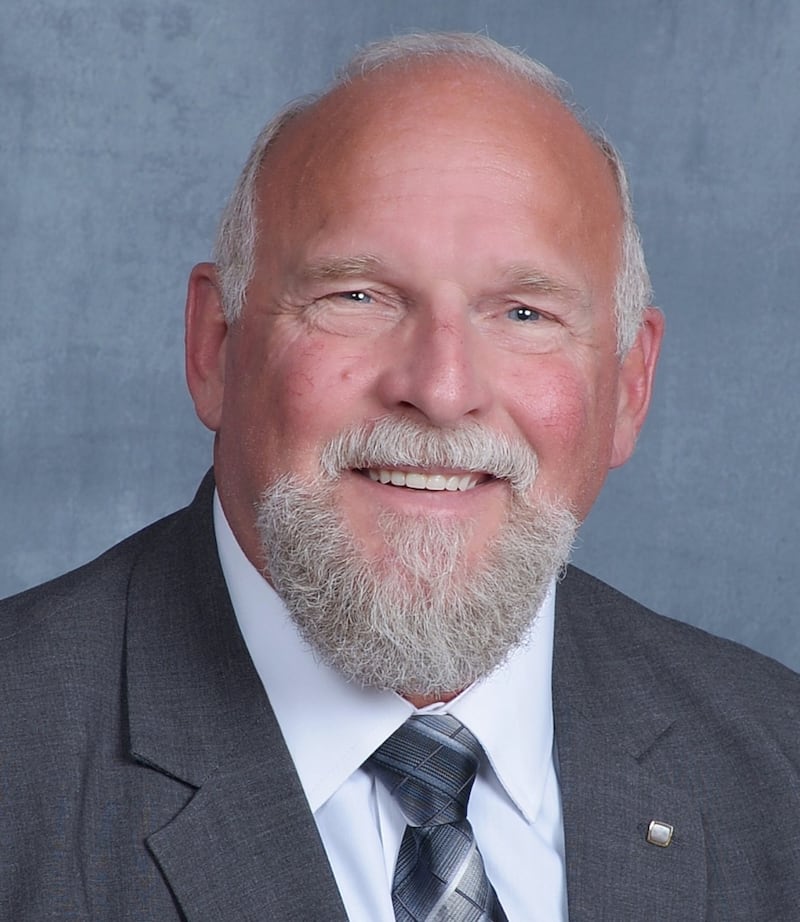
Jim Wise is a city of Sterling alderman.