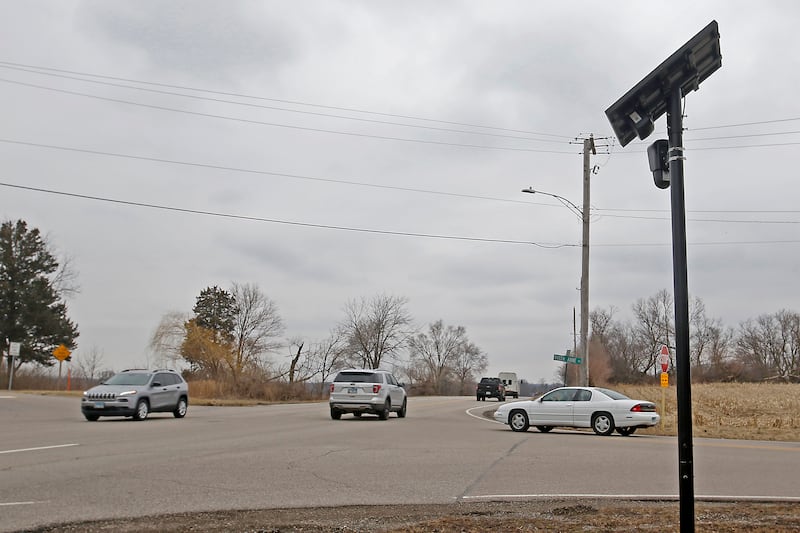
Woodstock officials have approved the city’s annual budget – including funding for the controversial Flock security cameras downtown.
The City Council approved the cameras for the historic Woodstock Square in a 4-3 vote in February amid a large public outcry against the plan. But officials added a condition that if the council were to choose not to fund the cameras in its next budget, the contract would be canceled.
When it came to the budget vote at Tuesday’s City Council meeting, though, the Flock funding remained.
Police Chief John Lieb said Tuesday the cameras had not yet been installed and the city is in the queue for that. He said the cameras could go up in late June.
Council member Melissa McMahon, who voted against the cameras but voted in favor of the budget Tuesday, said Wednesday she still doesn’t want them.
“It’s not a done topic,” McMahon said, adding that if she can find alternatives or convince other council members to see the dangers of Flock, she will do it.
But McMahon said she wasn’t going to hold up the budget over the line item.
The city’s budget, which includes about $78.1 million in revenues and $90.4 million in expenses, was approved 5-1 Tuesday and takes effect May 1. City documents indicate the deficit “reflects the planned use of previously accumulated capital reserves and grant funding to complete several major infrastructure and facility investments.”
Council member Natalie Ziemba, who also voted against the Flock cameras, was absent Tuesday. Council member Gregg Hanson was the sole “no” vote on the budget, though not having to do with the Flock cameras.
Hanson said he didn’t think the priorities he heard from residents were reflected in the budget.
“At the end of the day, this was such a condensed thing in which I don’t think the residents had greater input,” Hanson said, adding he had talked to City Manager Roscoe Stelford about changing the process.
Hanson said residents should have input at the beginning of the budgeting process, and that input should then go to the City Council and then the city manager. In Hanson’s framework, the feedback from the public would then go to department heads, who would integrate it into a budget before it comes back to the City Council, he said.
Mayor Mike Turner said he didn’t think anyone has voted against the budget in his time as mayor or at a council member before that.
Turner noting council members can talk to city staff if there are things they want to change.
Hanson said he talked to Stelford multiple times and next year, Hanson wants to see better outcomes for the priorities of the community.
Turner called Hanson’s stance an “outright rejection” of the budget document.
“You’re basically stating, ‘I don’t agree with the entire direction of the city,’ because that’s what the budget is,” Turner said, adding there’s plenty of opportunities to go over elements of past and future processes.
Turner said each council member represents 25,500 people, and about 18,000 people of voting age, adding that each member has to make their own decisions with input from others.
“I actually represent the residents who are the checkbook for all the things that the city does,” Hanson said.
In a budget hearing earlier in April, no members of the public commented on the budget.