Cary Mayor Mark Kownick used the recent annual State of the Village to warn residents of possible state legislation in the pipeline that would put substantial limits on local control of things from housing to parking.
Kownick, currently serving his fourth term, spoke at the business roundtable hosted by the Cary-Grove Area Chamber of Commerce at Cary Village Hall.
:quality(70)/cloudfront-us-east-1.images.arcpublishing.com/shawmedia/2M5WYLPZIJC3NGHI6LK6YAVY2A.jpeg)
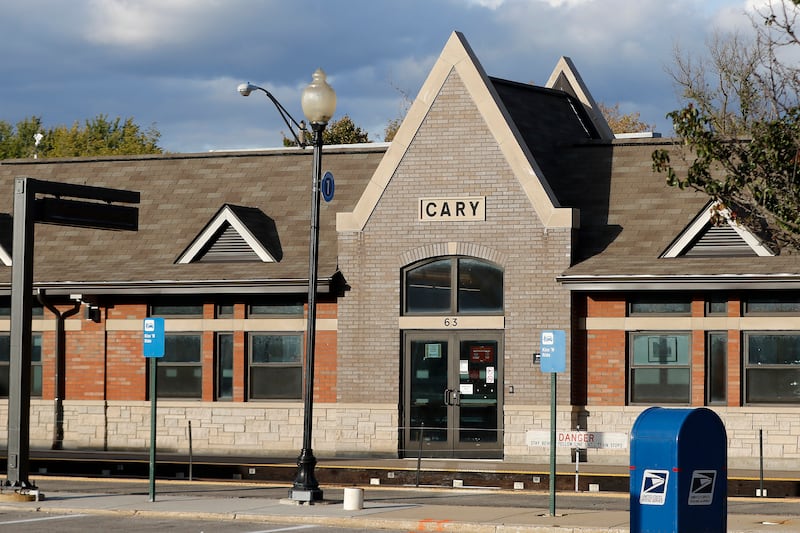
The statewide parking reform legislation called the People Over Parking Act, which goes into effect in June, means local governments will no longer be able to enforce or impose any minimum parking requirements on projects within a half mile of public transportation, such as the downtown Cary Metra station.
“Our main thing right now is loss of local control,” Kownick said. “They want to take away all of our authority, and that just can’t happen.”
Currently, the village requires 2.25 parking spaces per unit, but zoning commissioners can consider lower amounts for certain proposed developments on a case-by-case basis.
Kownick also called the legislation – which passed last year as part of a major public transit bill – “quite alarming” during a Village Board meeting earlier in March.
On top of limited parking control, another statewide legislative proposal could take away local municipality control over residential density.
Called Building Up Illinois Developments, or BUILD Illinois, Gov. J.B. Pritkzer looks to address the state’s housing shortage by relaxing restrictions on what can be built on residentially zoned areas, according to Capitol News Illinois.
Cary’s current village code calls for a maximum density of 3.4 units per acre.
“If this passes in May, that goes up to 26 units per acre,” Kownick said. “What are we going to do? It’s going to completely change the look of our communities.”
Separately, Kownick also spoke of the Illinois Freedom of Information Act, and how requests for public documents under the act have become “daunting” and “out of control” for the village.
Last year, Cary received more than 500 FOIA requests and spent more than $10,000 on requests regarding the Seasons of Cary mixed-use development off Route 31 alone.
“That is ridiculous. Think about what other things that we could be doing that take away our staff time to put together these FOIAs,” he said. “They’re just not necessary. It’s for personal use. It’s for personal vendettas and things, and they don’t use it for the purpose that it was meant to be.”
:quality(70)/cloudfront-us-east-1.images.arcpublishing.com/shawmedia/3IMLO7F2WRA6VMUUGUNBH673IU.png)
The 360-apartment development was approved in October, despite strong opposition from neighboring residents. Construction is scheduled to start in May, with the goal to complete the project by Summer 2030.
Kownick said that the development, which includes 5 acres of retail space, will bring $2.75 million in impact fee revenue and an estimated $39.6 million in economic impact over 10 years.
Another contentious development among neighboring residents on the docket sits on the former Maplewood school site in downtown Cary. The plan, proposed by JM Developers, calls for multiple home types, including single-family homes, townhomes and more than 200 apartment units.
Kownick gave an updated possible timeline with an expectation for developers to seek zoning approval in May, followed by a board vote for approval in June. If approved, construction could start as early as this summer.
“This has been on the village’s radar for over 15 years,” he said.
In conjunction with the Maplewood development is the High Road extension project, formerly called the Maplewood Access Road Extension. The village aims to build a road extending from Industrial Drive to the Metra Cary station that would add a full traffic signal at Industrial Drive and Cary-Algonquin Road.
Construction is expected to start next year and be completed in winter 2028. Maplewood is expected to be completed then, too, Kownick said.
More changes are planned at the office of Stryker, Cary’s largest employer. The medical equipment company will expand its building with a 31,000-square-foot addition, along with an outdoor area for employees. A new parking lot with 161 spaces will be added where baseball fields currently sit.