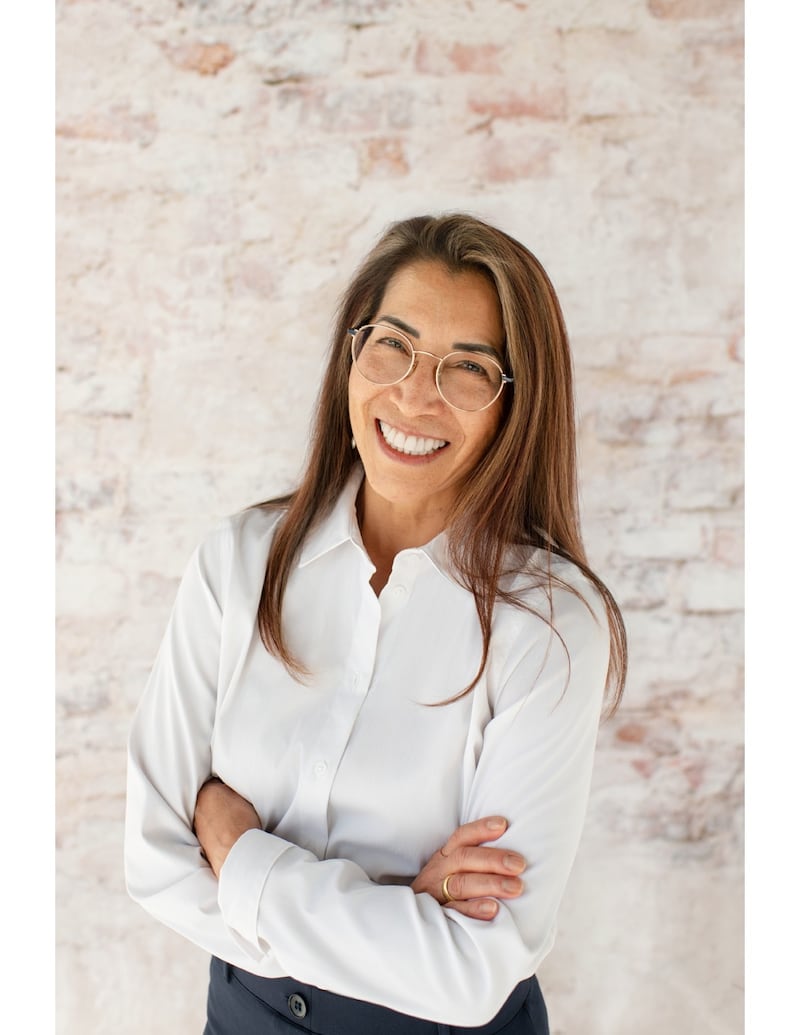
Name: Maria Peterson
What office are you seeking: IL State House of Representatives 52nd District
What is your current age? 63
Occupation and employer: Retired Labor Attorney and Small Business Owner
What offices, if any, have you previously held? Currently serving as Vice Chair on the Lake County Zoning Board of Appeals
City: North Barrington
Campaign website: mariafor52.com
Education: Loyola University of Chicago, B.S. in Criminal Justice and Organizational Communications. The John Marshall Law School, J.D.
Community involvement: My involvement in the community has been shaped by service, persistence, and a deep belief that representation matters. I first ran for office in 2022, challenging Republican Senate Minority Leader Dan McConchie, and came within a narrow margin of victory. In 2024, during a challenging national political environment, I ran again and lost by just 47 votes to Republican Marty McLaughlin in what was widely considered a red wave. Those close races affirmed what I already knew: our community is ready for a true representative - one who has met and talked with thousands of residents.
I have been a resident of Barrington since 1996 and have spent decades actively engaged in civic and community organizations. I previously served as President of the Barrington Rotary Club, where service above self is a guiding principle. I am a longtime member of the Sierra Club, having joined in 1990, and I later became involved with the Illinois Stewardship Alliance, reflecting my ongoing commitment to conservation, sustainability, and responsible land use. I also helped establish the Barrington chapter of Moms Demand Action to address gun violence locally and currently serve on the WINGS Northwest Suburban Leadership Council, supporting survivors of domestic violence.
Between my election runs, I remained deeply engaged in local organizing. I canvassed for Democratic candidates, supported local campaigns, and stayed actively involved with the Barrington Area Democrats to help build the infrastructure needed to win tough races in our region.
Beyond Barrington, I served on the Citizens Utility Board, advocating for consumers and utility accountability, and volunteered teaching English as a second language to native Spanish speakers.
For me, community involvement is not seasonal or transactional. It is about showing up year after year, earning trust, and doing the hard work required to build a coalition that reflects the true values of our district. It’s about listening to the concerns of working families, standing up for our schools and our environment, and ensuring that every voice—not just the loudest or the wealthiest—is heard and represented in Springfield. That kind of change doesn’t happen overnight. It requires consistency, integrity, and a genuine commitment to the people I serve.
Marital status/Immediate family: Married with 3 sons
What are your top three priorities for this district in Springfield?
I believe in Maslow’s Hierarchy of Needs, and I believe that a compassionate budget should reflect these needs. Especially in these times where the Trump administration continues to cut back funding on basic necessities and our healthcare is more at risk with the reduction of vaccines and other essential services, Illinois must step up to protect our residents. My three priorities are:
- Healthcare Access and Public Health Protection: At the foundation of Maslow’s Hierarchy are physiological needs—and nothing is more fundamental than health. With the federal government rolling back vaccine programs and threatening healthcare funding, Illinois must act as a backstop. I will fight to protect and expand access to affordable healthcare, ensure continued funding for vaccination programs, and strengthen our public health infrastructure. This includes supporting community health centers, protecting reproductive healthcare access, and ensuring that no one in our district goes without the medical care they need because they cannot afford it. Our state budget must prioritize keeping people healthy and alive.
- Economic Security and Affordable Housing: The second level of Maslow’s Hierarchy is safety and security—which in modern terms means economic stability, housing, and the ability to meet basic needs. I will prioritize policies that create living-wage jobs, support working families, and address our housing affordability crisis. This includes advocating for workforce development programs, supporting small businesses and local economic development, and working to ensure that everyone in our district can afford a safe place to live. With federal safety net programs under threat, Illinois must strengthen protections for workers, expand access to childcare and eldercare, and ensure our tax system is fair so we can fund these essential services without overburdening working families.
- Quality Education and Opportunity: Education represents both the safety needs (stable, quality schools) and the higher-level needs of belonging, esteem, and self-actualization in Maslow’s framework. I will fight for fully funded public schools, expanded early childhood education, and accessible pathways to college and career training. Every child in our district deserves a quality education regardless of their zip code or family income. This includes supporting our teachers, modernizing school infrastructure, and ensuring that our education system prepares students for the economy of tomorrow. Education is the foundation of opportunity and the pathway out of poverty—and it must be a budget priority.
Why these three? Because they address the most fundamental human needs that are currently under attack. When the federal government abandons its responsibility to protect people’s health, economic security, and access to opportunity, Illinois must fill that gap. A compassionate budget recognizes that we cannot ask people to thrive when they are struggling to survive. By prioritizing healthcare, economic security, and education, we build from the ground up—ensuring that every person in our district has what they need not just to get by, but to build a good life.
How will you support economic growth and development in your district?
Economic development starts with listening. My first priority would be to meet with the mayor and village administrators of each of the 20 villages that sit in District 52. As this is a very gerrymandered district, some villages fall more in other districts than in District 52, which makes coordination and communication even more critical. These conversations would help me understand each community’s unique assets, challenges, and vision for their economic future.
In order for our communities to thrive and have vibrant downtown areas, we need to bring strong economic development to the area. I would work to attract diverse employers, entertainment venues, and family resorts to the district—businesses that create quality jobs, generate local tax revenue, and give residents reasons to stay, shop, and spend time in their own communities rather than traveling elsewhere.
Beyond recruitment, I would advocate for state support that helps our local businesses and municipalities succeed. This includes working to secure infrastructure investments that make our communities more attractive to employers—improved roads, reliable broadband access, and modern utilities. I would also support workforce development programs that connect local residents to training opportunities aligned with employer needs, ensuring that economic growth benefits the people who already live here.
I recognize that economic development requires partnership between state government, local officials, and the private sector. As a state legislator, my role would be to serve as a connector and advocate—bringing resources and opportunities to the district, removing regulatory barriers where appropriate, and ensuring that state policies support rather than hinder local economic growth. I would also work to ensure that development happens in a way that preserves what makes our communities special: our quality of life, our environment, and our sense of place.
Finally, I believe economic development must be equitable. I would prioritize initiatives that create opportunities for all residents, including those who have historically been left behind. This means supporting small businesses and entrepreneurs, ensuring living wages, and making sure that the benefits of growth are shared broadly across our communities.
Do you support term limits for state representatives, and if so, what limits?
Yes, I support term limits for state representatives. I believe 10 years is sufficient time to serve effectively while ensuring fresh perspectives and preventing entrenchment. Here’s why:
Encourages New Ideas and Fresh Perspectives. Ten years allows enough time to learn the job, build relationships, and accomplish meaningful work—but it also ensures a regular infusion of new voices, experiences, and ideas. Government works best when it reflects the diversity of thought and experience in our communities, and term limits help prevent the legislature from becoming stale or disconnected from evolving needs.
Reduces the Influence of Entrenched Interests. The longer someone serves, the more likely they are to become deeply embedded in the existing power structures and relationships that can prioritize special interests over constituents. Term limits help ensure that representatives remain focused on serving the people who elected them rather than maintaining their position or catering to those who fund long careers.
Creates Opportunities for Broader Participation. When seats regularly open up, more people—especially those from underrepresented communities—have the opportunity to run and serve. This strengthens our democracy by making elected office more accessible and ensuring that a wider range of voices and experiences can be heard in Springfield.
Maintains Accountability and Urgency. Knowing there’s a finite time to serve creates a sense of urgency to get things done. Rather than settling into a comfortable routine or focusing primarily on reelection, representatives with term limits are more likely to prioritize meaningful legislation and tangible results for their constituents.
Balances Experience with Renewal. Ten years—five two-year terms—strikes the right balance. It’s long enough to gain institutional knowledge, develop expertise on key issues, and see major initiatives through from conception to implementation. But it’s not so long that representatives lose touch with the concerns of everyday people or become more invested in preserving their own power than serving the public good.
I believe in public service, not political careerism. Term limits help ensure that serving in the legislature remains about representing your community, not building a permanent position.
How will you address the state’s long-term pension obligations?
Our pension crisis is the biggest hurdle to funding what our communities actually need, like fully-funded schools and quality healthcare. The reality is, our state doesn’t have a spending problem—it has a revenue problem. Our pension obligations are crowding out everything else, which is a hidden tax on every resident who relies on state services.
To fix this, we need a responsible, two-part solution that honors our commitments and creates a sustainable future.
First, we must modernize our tax structure by passing a Fair Tax. This isn’t about raising taxes on working families; it’s about making our system more equitable and creating a dedicated funding stream to responsibly pay down our pension debt. By doing this, we can finally free up the billions of dollars currently being diverted from education, healthcare, and human services.
Second, we need to fix our pension system for the long term. This means, first and foremost, that we must honor our promise to Tier 1 pensioners—no exceptions. For our newer public servants in Tier 2, we must pass legislation like Senate Bill 1937, which makes critical adjustments to the retirement age and cost-of-living adjustments. This ensures we have a system that is fair, equitable, and can attract and retain the dedicated teachers, nurses, and first responders our communities depend on.
This is a common-sense approach: modernize our tax system to create a dedicated funding source, honor our past commitments, and ensure the system is fair for our current and future public servants. It’s the only way to finally get our fiscal house in order and start properly investing in the services our communities deserve.
How will you address property taxes and school funding reform?
Let’s be clear: our crushing property taxes are a direct result of the state’s failure to properly fund our schools. For decades, when Springfield didn’t pay its fair share for education, the burden was pushed onto local communities, forcing them to raise property taxes just to keep the lights on. It’s an unfair system that penalizes working families and creates massive inequities in the quality of education our children receive.
We already have the right tool to fix this: the Evidence-Based Funding (EBF) formula. It’s a smart, equitable plan that directs state resources to the school districts that need them most. The problem is, the state has never lived up to its promise to fully fund it. My commitment is to make that happen.
And here’s how we do it: we must modernize our tax system by passing a Fair Tax. By asking the wealthiest to pay their fair share, we can generate the billions in new, dedicated revenue needed to finally and fully fund the EBF formula every single year.
When the state steps up and meets its constitutional obligation to fund our schools, it takes the pressure off of local communities. This is the most direct and sustainable way to provide real, lasting property tax relief across Illinois. It’s a simple, common-sense equation: fully funding our schools means we can finally lower our property taxes.
What is your stance on the SAFE-T Act? What changes, if any, would you support?
I believe that all legislation is a living document, and that is clearly the case with the SAFE-T Act. The core principle of the law is just: a person’s freedom shouldn’t depend on how much money they have, but on how much of a danger they pose to the community. And we have seen some real successes. We have fewer people in jail simply because they are poor, and overall crime in the Chicagoland area has continued to fall.
There is always room for improvement, and the horrific fire attack on the CTA is a tragic and infuriating example of where the system failed. That failure, however, wasn’t because of the SAFE-T Act itself, but because a judge chose to ignore the law’s intent and the explicit warnings of prosecutors.
Court records show that prosecutors told the judge that the suspect, Lawrence Reed, was a clear danger and that electronic monitoring would be ‘wholly insufficient’ to protect the community from another ‘vicious, random, and spontaneous attack.’ The judge dismissed that, saying, ‘I can’t keep everybody in jail because the State’s Attorney wants me to,’ and released him. That is an unacceptable failure of judgment that put a dangerous individual back on our streets with tragic consequences.
This is where we need to make a change. The SAFE-T Act is based on risk, not riches. When prosecutors present clear and convincing evidence that a defendant is a threat to public safety, judges must be held to a higher standard of accountability if they choose to ignore that evidence. I would support an amendment that requires a judge who overrides a state’s attorney’s request for detention in a violent felony case to provide a detailed, on-the-record justification explaining exactly how they believe the public will be kept safe.
This isn’t about repealing the law; it’s about refining it. We can and must have a system that both ends wealth-based jailing and gives our judges the clear direction and accountability needed to keep violent offenders off our streets.
What legislation would you propose to address crime and public safety in your district?
My approach to public safety is straightforward: support our law enforcement, keep our communities safe, and address the root causes of violence. I’m incredibly grateful for the bipartisan progress we’ve made recently in Springfield. Passing common-sense gun safety laws like Karina’s Law to protect domestic violence survivors, requiring safe storage of firearms to protect our children, and banning untraceable ghost guns are huge steps forward. These are the kinds of responsible measures the vast majority of Illinoisans support.
My focus in the legislature would be to build on that success, especially in two areas that are deeply concerning to me and to families across our district: preventing firearm suicide and strengthening our response to domestic violence.
First, on domestic violence, Karina’s Law was a landmark achievement. Now, we must ensure it’s working as intended. As a member of the WINGS Northwest Suburban Leadership Council, I’ve seen firsthand the critical need for comprehensive support for women who are victims of domestic violence. I would propose legislation to fully fund Karina’s Law implementation, providing law enforcement with the resources and training they need to remove firearms from dangerous situations quickly and safely. We also need to increase support for survivors by expanding access to shelters, counseling, and legal aid, which are critical to breaking the cycle of violence.
Second, we need to have an honest conversation about firearm suicide, which tragically accounts for the majority of gun deaths in Illinois. This is a public health crisis. I would propose creating a statewide public awareness campaign for our Firearm Restraining Order (FRO) law. This existing tool allows family members to petition a court to temporarily remove guns from a loved one who is in crisis and a danger to themselves or others. It’s a life-saving law, but it only works if people know it exists. By promoting awareness, we can empower families to intervene before it’s too late.
These are practical, evidence-based proposals that respect the rights of responsible gun owners while taking meaningful steps to prevent tragedy. It’s not about politics; it’s about protecting our families and building a safer community for everyone in our district.
What is your stance on reproductive rights in Illinois?
I trust people to make the right decisions that are right for their lives and their bodies.
What is your opinion of the TRUST Act (sanctuary state protections)?
I absolutely support the TRUST Act, and I do so because it is a common-sense law that makes our communities safer.
At its core, the TRUST Act is about building trust between our local law enforcement and every member of the community they serve. When I was president of the Barrington Rotary Club, I helped create our first DEI committee because I believe that our communities are stronger and safer when everyone feels seen, respected, and protected. The TRUST Act is built on that same principle.
It ensures that a victim of domestic violence or a witness to a robbery can call the police for help without fearing that their family will be torn apart because of their immigration status. When our police can build that trust, they get more cooperation, solve more crimes, and can focus their resources on addressing local public safety threats, not on enforcing federal civil immigration law.
To be clear, the TRUST Act does not prevent police from cooperating with federal authorities on criminal matters when there is a judicial warrant. It simply draws a bright line that keeps our local police focused on local crime, which is exactly where their focus should be. It’s a practical, pro-police, and pro-community law that makes all of us safer.
Should the state expand Medicaid funding?
Yes, we should expand Medicaid funding. Healthcare is a basic human need—it sits right at the foundation of Maslow’s hierarchy. When people can’t access healthcare, they can’t work, they can’t care for their families, and our entire community suffers.
The challenge is real. With the Trump administration’s proposed cuts, Illinois is facing enormous pressure to meet its existing Medicaid obligations, let alone expand them. But that doesn’t change the fact that we have a moral and practical responsibility to ensure that our most vulnerable residents—children, seniors, people with disabilities—can see a doctor when they’re sick.
This is exactly why we need to modernize our tax system with a Fair Tax. We cannot continue to ask working families to shoulder the burden while we fail to meet basic needs. If we create a dedicated, sustainable funding stream, we can protect and expand Medicaid, fulfill our obligations, and ensure that no one in Illinois is forced to choose between paying rent and getting medical care. It’s not just the right thing to do—it’s the smart thing to do.
Should local governments have more authority over solar farm development in their communities?
This is a question I’ve dealt with firsthand as Vice Chair of the Lake County Zoning Board of Appeals. My experience has shown me that the current framework strikes the right balance between state-level goals and local control, and I believe it should be maintained.
Our Zoning Board of Appeals has seen numerous solar farm petitions come before our board. Our process is to ensure that every project meets the clear, uniform guidelines laid out by the state. As the Illinois Environmental Council has pointed out, these state-level standards are critical. They were put in place to prevent a patchwork of local bans from undermining Illinois’ ability to meet its clean energy goals under the Climate and Equitable Jobs Act (CEJA).
However, state law does not eliminate local authority; it standardizes it. It prevents counties from being more restrictive than the state, but it absolutely preserves the vital role of local review. On the Zoning Board of Appeals, after we confirm a project meets the state’s requirements, we then conduct a rigorous review to ensure it also complies with our own Lake County Unified Development Ordinance. This is where we can address site-specific concerns, and possibly deny a request if there are overwhelming circumstances that make a project unsuitable for a particular location.
This two-tiered system works. The state ensures we are all moving forward on our clean energy transition, while local boards like mine provide the essential, on-the-ground oversight needed to make sure these projects are developed responsibly and are a good fit for our communities. It’s a practical, effective partnership that respects both our climate goals and the importance of local input.
Should Illinois expand use of nuclear energy, including facilities like the Byron plant? What’s your vision for the state’s energy mix?
While I understand the state’s decision to lift the moratorium on new nuclear plants as a way to ensure grid reliability, I believe we must be clear-eyed about what nuclear energy is and isn’t. I agree with the Illinois Environmental Council and the Sierra Club: nuclear is not clean energy.
My perspective on this is shaped by my direct experience with the hazardous byproducts of energy production. When I testified before the Illinois Pollution Control Board about the coal ash from the Waukegan Generating Station, my focus was on the safety of the workers who would have to handle and transport that toxic material. It’s the same concern I had when I represented coal miners who were denied their Black Lung benefits after decades of working for companies that exposed them to hazardous dust.
For me, the issue is simple. Nuclear waste, just like coal ash, is dirty and hazardous to the health of anyone exposed to it. We still have no safe, permanent solution for its disposal.
Therefore, while we rely on existing plants like Byron as a temporary bridge, our focus must be on aggressively accelerating the transition to truly clean and renewable energy like wind and solar. We cannot afford to create another generation of hazardous waste and repeat the mistakes of the past, leaving a toxic legacy for our children and grandchildren to clean up.
My vision for Illinois’ energy mix is clear: we must transition as rapidly as possible to 100% clean, renewable energy—primarily wind and solar—while ensuring that transition is equitable, affordable, and protects workers and communities.
The Climate and Equitable Jobs Act set the right goal: 100% clean energy by 2050. But we need to be honest about what ‘clean’ means. Nuclear is not clean energy. It produces hazardous waste with no permanent disposal solution and poses significant safety risks. As I’ve said, having testified on coal ash disposal and represented coal miners denied Black Lung benefits, I’ve seen firsthand the human cost of leaving toxic legacies behind. We cannot repeat that mistake with nuclear waste.
That said, I recognize the reality we face. Our existing nuclear plants, like Byron, provide reliable baseload power today, and we need that capacity as we build out our renewable infrastructure. So while we phase out nuclear over time, our immediate priority must be a massive, accelerated investment in wind, solar, and battery storage.
This is where my experience on the Lake County Zoning Board of Appeals comes in. We’ve reviewed numerous solar farm applications, and when projects meet state guidelines and our local development standards, we approve them. That’s the kind of responsible, balanced approach we need statewide—clear standards that protect communities while enabling the rapid deployment of renewable energy we desperately need.
To make this vision a reality, we need to fully fund the implementation of CEJA, invest in grid modernization and energy storage, and ensure that the jobs created in this transition are good-paying union jobs with strong safety protections. And as I’ve said repeatedly, we cannot afford these critical investments without passing a Fair Tax to create a sustainable, dedicated revenue stream.
This is about more than just energy policy. It’s about leaving our children and grandchildren a healthier, safer Illinois—one powered by the sun and wind, not by hazardous waste and toxic legacies.
What role should the state play in housing affordability?
The state has a fundamental role to play in housing affordability, but it must act as a partner to local communities, not a top-down director. My work on this issue has been deeply personal and hands-on. As a member of the Lake County Housing Coalition, I’ve listened to experts and grappled with the unique challenges facing different parts of our county. And when I participated in the annual POINT in Time count, going out to count our unhoused neighbors in southwest Lake County, the housing crisis stops being a statistic and becomes a human reality.
That experience informs my belief that the state’s primary role is to empower local solutions and remove barriers to affordability. Here’s what that looks like in practice:
First, the state must be a reliable financial partner. This means significantly expanding the Illinois Affordable Housing Trust Fund and the state’s affordable housing tax credit program. These are the critical funding streams that organizations use to build the very developments our coalition has studied. Without a dedicated, robust source of state funding—which, again, points to the need for a Fair Tax—we are simply not serious about solving this problem.
Second, the state needs to lead on zoning reform. In our coalition, we see how outdated and restrictive local zoning codes can stop good projects before they even start. The state should provide strong incentives—and, where necessary, mandates—for municipalities to allow for a greater diversity of housing types, including the ‘missing middle’ housing like duplexes and townhomes that are essential for working families, young people, and seniors looking to downsize.
Finally, the state must double down on preventing homelessness before it starts. My experience with the POINT in Time count is a stark reminder that we are often intervening too late. This means robust state funding for rental assistance, legal aid for those facing eviction, and permanent supportive housing programs that combine housing with the services people need to stay housed.
The state’s role is to provide the funding, the framework, and the tools. It’s then up to local groups, like the Lake County Housing Coalition, to use those tools to develop the specific, tailored policies that will work for our communities. It’s a partnership, and it’s one we must strengthen if we are to ensure every Illinoisan has a safe, affordable place to call home.
How should the state address rising energy costs from data centers? How do you balance water rights between communities and industry regarding data center development?
This is a critical issue with two distinct but related problems: who pays for the massive energy demand, and who protects our water?
First, let’s talk about energy costs. It is fundamentally wrong that residential and small business customers are being forced to subsidize the energy costs of Big Tech. The facts are clear: the Citizens Utility Board—an organization I was proud to serve on as a Board member in the early 1990s—has warned that our bills could go up by as much as $70 in the next three years. The Associated Press found that a staggering 70% of a recent electricity price hike was directly because of data center demand. Right now, we are all paying for massive grid upgrades and reserve power for these tech giants. That has to stop.
CUB has proposed a solution with a memorable name: BYONCE, or ‘Bring Your Own New Clean Energy.’ I fully support this approach. Data centers that want to operate in Illinois must be required to build or buy their own new, clean energy sources to power their facilities. They should also pay for their own grid upgrades. The profits of these corporations should not be built on the backs of Illinois families.
When it comes to water, the issue is even more fundamental. I was incredibly proud to see the residents and leaders of Naperville stand up and say ‘no’ to a massive data center that threatened their community. Now, we need to ensure that Barrington Hills does the same. In the Barrington area, we depend on our aquifers for the water we drink. We will not sacrifice the water we need to live on for a data center. Full stop.
This isn’t just about one community; it’s a matter of principle. Just as the state created clear, comprehensive siting guidelines for solar farms under PA 102-1123, we must now do the same for data centers. The state needs to establish mandatory water impact assessments, set limits on aquifer usage, and empower local communities to protect their essential water resources. The right to clean, safe drinking water is non-negotiable, and our state policy must reflect that.
To what level should the state fund a new stadium for the Chicago Bears?
At a time when families across our district are struggling to make ends meet—facing rising costs for healthcare, insurance, and utilities—it is absolutely absurd to expect them to subsidize a multi-billion-dollar corporation.
What makes this proposal even more insulting is that the Bears are essentially asking for a new loan before they’ve even paid off the last one. Taxpayers are still on the hook for over half a billion dollars for the 2003 Soldier Field renovation. The team has already paid their share, leaving the public to cover the rest. For them to now ask for another $855 million in public funding is, as one state representative rightly called it, a ‘dine-and-dash’ on the city and its taxpayers.
I absolutely recognize that the Bears, like all professional sports teams, create jobs and generate sales tax revenue that benefit our communities. But that doesn’t mean taxpayers should be forced to finance their facilities. The Bears are a private business that generates enormous profits. They should fund their own stadium, just as any other private business funds its own operations. If the economic benefits are as strong as they claim, the team can afford to invest in itself without reaching into the pockets of working families.
Should the state regulate the use of AI in the classroom? To what extent?
This is a question we have to approach with extreme caution. I am not in favor of rushing to embrace AI in the classroom. Our first priority must always be the safety, privacy, and well-being of our students. However, we also can’t ignore that it has the potential to be a helpful tool for teachers if—and only if—it is implemented with strong, clear regulations.
Illinois just took an important first step by passing Senate Bill 1920, which requires the Illinois State Board of Education to develop statewide guidance on AI in K-12 classrooms by July 1, 2026. This guidance must address student data privacy, responsible and ethical use, and the biases that can be inherent in AI products. That’s a good start, but we need to make sure the guidance we develop is as strong as the best models from other states.
We could adopt California’s approach to establishing the strongest possible protections for student data privacy. We could follow Utah’s model of investing in our teachers first by paying them to get trained on AI and develop their own lesson plans. And we could look to Connecticut, which launched a limited, evidence-based pilot program to test state-approved AI tools in just a handful of districts before considering a statewide rollout.
My vision for Illinois is clear: we start with privacy, we invest in our teachers, and we test everything on a small scale before widespread use. Any state-level guidance must also preserve local control, allowing individual school districts to make the final decision on what’s best for their students.
Who are your top donors? How often do you speak with them?
My top donors are my repeat and longtime donors—people who have believed in me and supported my work over the years. They are also donors within the district, my neighbors and community members who know me, know my values, and trust that I will fight for them in Springfield.
I make it a priority to stay in regular contact with them. These aren’t transactional relationships; they’re built on genuine connection and shared commitment to our community. I speak with many of them frequently, not just to ask for support, but to listen to their concerns, update them on what’s happening in the district, and ensure they know their voices are being heard.
For me, this work has always been about the people I serve, and that includes the people who make it possible for me to run a strong campaign. My donors aren’t special interests or corporate PACs—they’re teachers, small business owners, retirees, and working families who want to see real change in Illinois.
:quality(70)/s3.amazonaws.com/arc-authors/shawmedia/b945ae41-e0fd-42fd-805a-feca8401d740.png)