As the days warm in May, local health experts caution anyone heading outdoors to take simple measures to protect themselves from ticks and the diseases they can cause.
The Centers for Disease Control and Prevention noted on April 23 that visits to emergency rooms for tick bites were higher than normal in all regions except the South Central U.S., and the highest for this time of year since 2017.
“Tick season is here and these tiny biters can make you seriously sick,” Alison Hinckley, a CDC epidemiologist and Lyme disease expert, said.
Emergency room visits for tick bites have been steadily trending up since 2020, said Yolanda Y. Harris, communications manager for the Cook County Department of Public Health.
Last week, 0.08% of emergency room visits were for tick bites compared to 0.06% this time last year, she added. Last year’s peak of 0.11% was reached in early June.
Because this winter was relatively mild and temperatures didn’t stay below freezing for extended periods, more ticks survived and have become active earlier. That poses a greater risk as people spend time outdoors, according to the DuPage County Health Department.
Residents in DuPage and Lake counties have been reporting increased tick activity.
Milder winters, wet and humid springs and an increase in wildlife hosts, such as deer and mice, can impact tick populations. Residents should expect ticks to be active in spring, summer, fall and even winter, said Alana Bartolai, ecological services program coordinator with the Lake County Health Department.
Preventing bites is considered the best form of protection, health experts say.
“So far, we are not witnessing any unusual tick activity in Illinois, but it is still important to take all appropriate precautions to guard against tick bites and the diseases they can carry,” said Jim Leach, public information officer with the Illinois Department of Public Health.
Lyme disease, anaplasmosis, hard-tick relapsing fever and babesiosis are among the diseases spread by ticks, he noted.
Every year, an estimated 31 million people in the U.S. are bitten by a tick, according to the CDC.
Potentially debilitating Lyme is the most common tick-borne disease, with an estimated 476,000 cases treated each year, the agency reported.
In Cook County, confirmed reports of Lyme disease have increased over the last decade. In 2025, total cases of Lyme disease reached 132 — more than double the 58 reported in 2024.
Fortunately, early diagnosis and proper antibiotic treatment can help prevent more severe disease, according to IDPH.
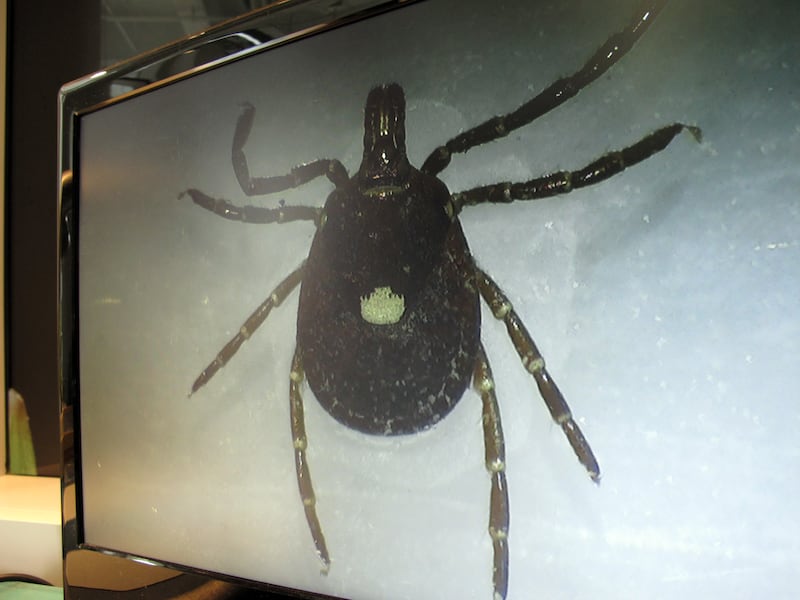
Different tick species carry different viruses that can cause serious illness such as Lyme (deer/blacklegged tick), Rocky Mountain spotted fever (American dog tick) or Alpha-gal syndrome, a potentially life-threatening allergy to red meat and products made with it (Lone Star tick).
“Ticks can also carry multiple viruses and humans can get co-infections, meaning a single tick bite could transmit multiple viruses,” Bartolai explained.
Though more prevalent in central and southern Illinois, the Lone Star tick is arriving in the Chicago area, Leach said.
It’s been identified in Lake County, which has been monitoring tick species and viruses since 2013.
“Lone Star ticks are known as aggressive biters, as they actively pursue hosts,” Bartolai said.
Kendall County health officials recently discovered two adult male Lone Star ticks, describing it on social media as having found the elusive “white whale.” But they suspect the find doesn’t yet meet Illinois’ criteria to confirm it’s established there, said Aaron J. Rybski, director of environmental health services.
In Illinois, anyone who becomes aware of a known or suspected case of Lyme disease or other tick-borne infection — including health professionals, school staff and others — are required to report it to the local health department.
https://www.dailyherald.com/20260511/health-and-fitness/tiny-biters-can-make-you-seriously-sick-prevention-key-during-tick-season/