The Illinois State Board of Education unveiled new statewide data revealing the state’s teacher shortage is on the decline.
The ISBE’s 2026 Unfilled Positions Data Collection showed that there are fewer unfilled teaching positions and declining vacancies across the state’s schools in all major staffing categories.
Statewide teacher vacancies decreased by 24% from school year 2024-25 to school year 2025-26, with less than 3,000 vacancies remaining in the state as of Oct. 1, 2025, according to the ISBE.
In October 2024, the state had 3,864 unfilled teacher positions, compared to 2,943 in October 2025.
In addition to the teacher vacancies, 167 administrative positions, 2,134 paraprofessional jobs, and 964 school support personnel jobs were still vacant in fall 2025, according to the data.
“The statewide progress reflects Illinois’ historic $120 million in vestment in the Teacher Vacancy Grant, now in its third year, which supports locally driven strategies to recruit and retain educators in the 170 school districts with the greatest staffing needs,” the ISBE said.
The Teacher Vacancy Grant allows districts “flexibility to address unique staffing challenges including investing in educator preparation, professional learning, recruitment efforts, and financial incentives,” according to the ISBE.
The program has benefited districts across all regions of the state including rural, suburban, and urban communities, according to the ISBE report.
Districts participating in the program hired more than 12,400 new teachers and retained almost 16,000 educators from 2023 to 2025, according to the data. The program also helped 2,300 staff members earn licensures or endorsements in high-need areas.
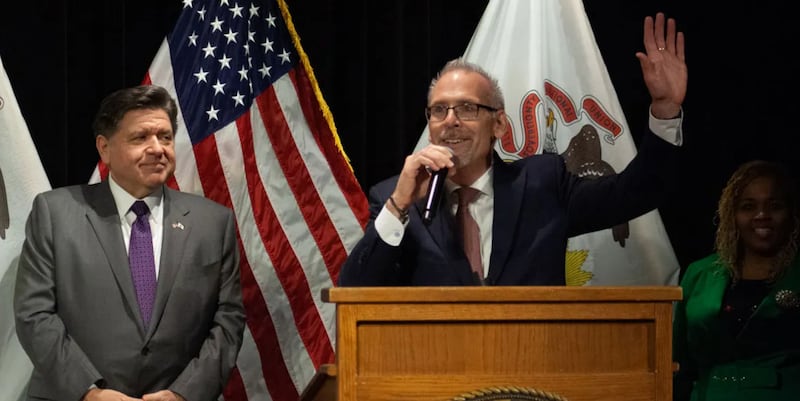
“Illinois is making critical investments in public education to recruit more educators and achieve better outcomes for our children and our historic efforts are paying off,” said Gov. JB Pritzker in a released statement.
“This data highlights persistent declines in teacher vacancies as we continue to strengthen the state’s educator workforce and deliver real results for the school districts that need it most,” he said.
The ISBE acknowledges that there are several high-demand areas that still have significant staffing needs, with special education accounting for 1,079 – more than one-third – of the unfilled teaching positions available in the state.
That gap highlights the need for targeted efforts to fill those roles.
“These data show that Illinois’ targeted investments are making a real difference for our schools and students,” State Superintendent of Education Dr. Tony Sanders said. “Our statewide efforts to invest in the educator workforce are helping districts make progress, particularly in the communities with the greatest need. At the same time, we know there is more work ahead, and it is critical that we sustain and build on these gains.”
The full finding of the Teacher Vacancy Grant results are available on the ISBE’s website.
The department said it will continue working with the governor and the General Assembly “to sustain and build on this progress, ensuring every Illinois student has access to a well-supported, highly qualified educator.”