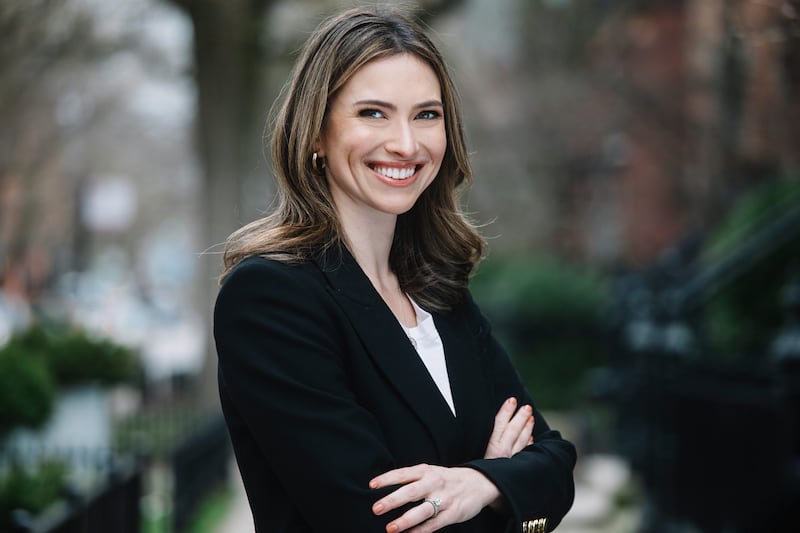
Name: Margaret Croke
What office are you seeking: Comptroller
What is your political party? Democrat
What is your current age? 33
Occupation and employer: State Representative, 12th District
What offices, if any, have you previously held? State Representative, 12th District - 2021-present, Democratic State Central Committeewoman, 5th Congressional District - 2022-present
City: Chicago
Campaign website: CrokeForIllinois.com
Education: University of Michigan, BA in Political Science and Communications
Community involvement: Board Member on the Women’s Board for the Lincoln Park Zoo, Board Member for Think Big America
Marital status/Immediate family: Married, 3 children
What are your top priorities for the state’s fiscal reporting and payments?
As Comptroller, I will work to increase communication and efficiency between agencies, modernize outdated systems, and proactively identify risks before they become crises. My top priorities include:
1) Modernizing Outdated Systems: The Comptroller Office’s current software programs do not communicate with other constitutional offices or departments. By integrating the Comptroller’s systems with these other ones, we would increase transparency and efficiency. Ultimately, my goal would be to implement a “Budget to Bill” public-facing software interface system where anyone could see where in the life cycle public dollars are from when they are appropriated (“budget”) to when the Comptroller’s Office pays the bill (“bill”).
As Comptroller, I will work to increase communication and efficiency between agencies, modernize outdated systems, and proactively identify risks before they become crises. My top priorities include:
2) Modernizing Outdated Systems: The Comptroller Office’s current software programs do not communicate with other constitutional offices or departments. By integrating the Comptroller’s systems with these other ones, we would increase transparency and efficiency. Ultimately, my goal would be to implement a “Budget to Bill” public-facing software interface system where anyone could see where in the life cycle public dollars are from when they are appropriated (“budget”) to when the Comptroller’s Office pays the bill (“bill”).
3) Providing Technical Assistance to Small Non-Profits, Vendors, and Local Units of Government: The Comptroller’s Office pays bills after receiving an invoice, but the payment processing can be onerous and difficult for smaller entities who do not have manpower and expertise. Dedicated employees across the state that can be reached virtually or deployed to help ease this burden would encourage smaller vendors, both nonprofit and for profit, to do work with the state of Illinois and decrease their labor costs. For local units of government, the technical assistance office would deploy staff to help with their audits. Some local governments have audits that are up to seven years past due, which is often due to a lack of staffing and expertise.
4) Utilizing Predictive Financial Modeling: The Comptroller’s Office would utilize predictive financial modeling to identify state grants where the state is not receiving a federal match, opportunities to refinance loans to pay lower interest rates, and flag risk earlier before it becomes catastrophic.
5) Enforcing the Prevailing Wage Act: In partnership with the Department of Labor, continue enforcing and bringing awareness to the Illinois Prevailing Wage Act, which ensures fair wages for those working on public works projects, and identify employers who are bad actors. This includes improving the complaint portal, organizing statewide informational awareness campaigns, and assisting the Department of Labor in investigations.
6) Implementing Changes to the Vendor Payment Program (VPP): The Comptroller’s Vendor Payment Program was created to help small and medium-sized businesses who are owed money but facing long payment delays sell their receivables to qualified financial firms. In return, vendors get paid more quickly, while the state continues to owe the debt to the financial firm. The program helps businesses maintain cash flow when Illinois is facing a backlog of unpaid bills, and participation is voluntary. This program will be incredibly important for our small and medium-sized businesses who do work with the State of Illinois if our revenues are constrained. In its current form, the program benefits larger vendors, while boxing out the small vendors who are most in need. I would make changes to the VPP so that financial firms cannot pick and choose what businesses they purchase receivables from, but instead, they would make a blind investment still backed by the state. I believe this would result in greater utilization by small and medium-sized businesses, and would create certainty and stability for businesses.
How will you address bill backlogs?
We frequently say that a budget is a moral document, and the implementation and execution of that budget is just as important. As Comptroller, I would take a holistic, big-picture approach to managing the payment of bills so that bills are prioritized based on additional costs accrued by not paying them, vendors and non-profits that need funds to stay afloat, and where there might be some flexibility.
Should Illinois change the way it handles rainy-day funds?
Under Bruce Rauner, our Rainy Day Fund was nonexistent, our bill backlog was billions of dollars, and no one was getting paid on time. While we’ve come a long way since then, there is more to do. The rainy day fund has a few different revenue streams, but the consistent one is earned interest on its balance. The way we get there is by continuing to pass balanced budgets while making smart investments in our people and paying our bills on time. If we pay after 90 days, we accrue interest and end up owing more. Thanks to our progress, we’ve rebuilt trust with vendors and received 10 credit rating upgrades, which directly impact our general bond ratings. Raiding the rainy day fund impacts our bond rating and makes it more expensive for us to borrow money and make long-term investments. A strong credit rating makes doing state business cheaper and more efficient. As a State Representative, my north star has always been balanced budgets that invest in the next generation and our rainy day fund is part of that mission: meeting our obligations today while saving for the future.
What is your plan for improving transparency in state spending?
By implementing the “Budget to Bill” software, a tool in which members of the public can see the full picture of where their money is going and how taxpayer dollars are being spent, vendors, local governments, and non-profits would be able to track the status of their grants in real time.
How will you enforce timely payments to social service providers?
Invoicing and payment processing can be challenging for smaller not-for-profit organizations and social service providers that are already stretched thin. By dedicating employees within the Comptroller’s Office to provide technical assistance and assist providers through this process, we can reduce the processing time and errors that may delay payments. When it comes to bill prioritization, I would prioritize providers reliant on state funding to provide services and keep the doors open.
What reforms, if any, do you support for state financial reporting processes?
One thing the Comptroller’s Office can improve upon is timely financial reporting, particularly as it relates to the delays caused by delayed audit reports. I am committed to working with the Auditor General to ensure timely audits, and in the absence of that, as a last-case scenario would issue interim reports to maintain the spirit of transparency until a complete report can be issued. Additionally, I would dedicate employees across the state to assist smaller local governments with their audits. Some local governments have audits that are up to seven years past due, which is often due to a lack of staffing and expertise rather than ill intent. We should help smaller governments meet their obligations so that we can focus on rooting out the bad actors.