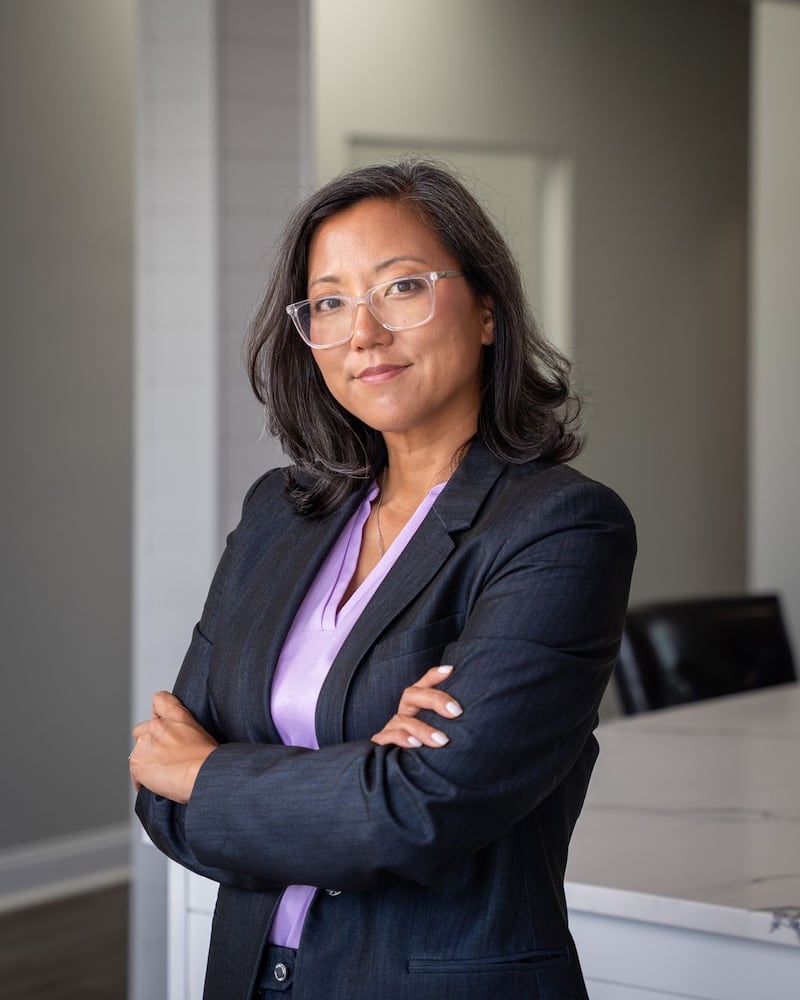
Name: Holly Kim
What office are you seeking: State Comptroller
What is your political party? Democratic
What is your current age? 0
Occupation and employer: County Treasurer, Lake County
What offices, if any, have you previously held? 1. Secretary, Illinois County Treasurers Association
- Commissioner, BankOn Illinois Commission - Predatory Lending Subcommittee for Illinois Comptroller Susana Mendoza
- Technology enhancements Committee -Illinois Secretary of State Transition Team for Secretary of State Alexi Giannoulias
- Member Board Of Directors - Lake County Coordinated Transportation Services Committee
- Director, Vernon Township
- Trustee, Village of Mundelein
City: Mundelein
Campaign website: www.voteforhollykim.com
Education: * CPFIM - Association of public treasurers of the United States and Canada
- American Council of Young Political Leaders (ACYPL) fellowship
- IMRF Authorized Agent Certification
- Edgar Fellow - University of Illinois Champaign Urbana
- Bachelor of Arts - Northeastern Illinois University
- A+ Certification Oakton Community College
Community involvement: * Chair of the Illinois AAPI Caucus
- Vice Chair of Lake County Democrats
- Vice Chair of Fremont Township Democrats
- Advisory Board of Hanul Family Services
Marital status/Immediate family: Wife and mother to 4 amazing kids
What are your top priorities for the state’s fiscal reporting and payments?
First, timely and transparent payments. When the state delays payments, it is working families, nonprofits, schools, and small providers who pay the price. I’ve lived that reality not only as someone who used the All Kids program for my children, but also as someone who worked in a doctor’s office right out of college. I was able to see firsthand how untimely reimbursements made doctors and dentists second-guess participating in the program and forcing families to go further and further for services, including my own. As Comptroller, I will make sure bills are paid as quickly and predictably as possible, especially for social service providers who operate on thin margins.
Second, modernizing fiscal reporting. When the current Comptroller was first elected, she was handed a burning pile of bills to pay that were accruing late fees. That is night and day from where we are right now. Additionally, Illinois Comptroller Susana Mendoza has done a great job bringing us 10 credit upgrades. That was her mission. With my tech background, my mission, in addition to being a fiscally prudent steward protecting you and your family’s finances, is going to be modernizing this office.
Many Illinois offices still use outdated systems. For example, as County Treasurer, when I receive wire transfers from banks, there is more detail than when I receive money from the State of Illinois. That will be resolved with an upgrade to our financial software so we can provide as much information as possible to pensioners, municipalities, vendors, lawmakers, and watchdogs. I’ll also look for ways to better serve the public so it makes their lives easier, whether that’s implementing tools like DocuSign or shortening the time tax on their busy schedules when working with the office.
We are at a point in history where people don’t want polished bullet points and limousine liberals. They are asking, “How does this make my life better or more affordable?” I don’t do theoretical reform. I have a history of changing government in ways people can see, feel, and benefit from. That’s what Illinois needs right now.
Third, strong internal controls and cybersecurity. This is a real money office handling billions of taxpayer dollars that needs a real money person in charge. The rise of digital systems means the Comptroller’s office must safeguard privacy rights and strengthen cybersecurity to protect sensitive financial data. Financial scams are no longer an “if” but a “when” for government offices.
For example, from a webinar I did with IDFPR (Illinois Department of Financial and Professional Regulation) and Wintrust Bank’s cybersecurity division, the number one financial scam involves intercepting paper checks, acid-washing the “pay to” line, and replacing the recipient name. Being the fiscal watchdog and protecting taxpayer funds means tightening controls, preventing fraud, and investing in serious cyber defenses.
In today’s rapidly evolving landscape, I bring a specialty as a privacy rights advocate. As a Village Trustee in 2013, when the village launched license plate readers, I ensured we followed ACLU guidance. I believe strongly in maximum government transparency and maximum personal privacy. I also held a rally in 2013 to protect Fourth Amendment rights against unwarranted search and seizure and taught Know Your Rights classes as an elected official.
We are living in unique times where the federal government is attempting to access resident data through constitutional offices. This office holds data on more than 100,000 pensioners, over 60,000 state employees, and every Illinois taxpayer who has filed Illinois state taxes and received a refund. It matters who is at the wheel to protect us during these threats of federal MAGA overreach. I will protect you, your families, and your money in this office. I will be an unwavering and decisive check on the federal government.
Fourth, fairness and accountability. That means enforcing prevailing wage, standing up to predatory financial practices, and ensuring every dollar reflects Illinois’ values, not political favoritism. I come from a background of financial hardship, having a child in college while working full time and attending school part time. Sometimes I only took one class a semester, on a Saturday. But you do what you need to do to get by. It took me eight and a half years to earn my degree, but I kept going because education lifts people out of all situations.
Around that same time, a relative stole my identity and destroyed my credit. That experience gave me a deep appreciation for social service programs and shaped the lens through which I see government reform — favoring the working class and those who are two paychecks away from nothing.
As a Village Trustee, I was the only one to stand up to Rauner’s turnaround agenda. I welcome unions in my home, as my husband was a member of the IFT, and I welcome unions in my office as County Treasurer, where my staff unionized under AFSCME Council 31 and I stood by their decision.
One of the advantages of living in Illinois is our strong union labor force. When we put Illinois construction trade workers to work, we put skilled union labor on the job. We must put Illinois workers first before allowing contractors to bring in out-of-state labor. Government fails workers when it does not ensure fair wages and benefits through negotiated agreements. Workers deserve a voice at job sites, and collective bargaining is that voice.
Illinois government must promote the inclusion of Illinois workers under project labor agreements. These agreements lead to more local communities benefiting from local construction employment. This is putting Illinois to work.
The Office of the Illinois Comptroller is a national thought leader through its prevailing wage department. With solar farms and data centers rapidly expanding, we must be more proactive in ensuring government projects pay prevailing wage. That means strengthening this department. The Comptroller’s office controls the flow of funds, and when the law is not followed, that spigot can be turned off.
As your Comptroller, one of my most important responsibilities is ensuring employers uphold their commitments. Illinois taxpayer money invested in Illinois must return to Illinois workers earning prevailing wages and benefits.
I am the working-class outsider in this race. If you look at my donors compared to others, you’ll see I’m funded by nearly 1,000 individual donors averaging $200 or less, and by unions made up of working people. I am proud to be an independent fiscal watchdog who will do what’s best for the office, not under anyone’s thumb.
At the end of the day, there’s nothing wrong with wanting to do the job. My priority is simple: make government work, protect residents, and deliver tangible change so life is better for the people you serve.
How will you address bill backlogs?
Bill turnaround time at the Comptroller’s office is currently two weeks or less, which is faster than the private sector. So first, let’s be clear: there is no bill backlog right now. It was paid off three years ago. Illinois has made real progress, and anyone running for this position must acknowledge that.
I believe paying bills even faster could compromise our ability to serve as a watchdog if we need to stop a project that isn’t paying prevailing wage. My job as Comptroller will be to ensure backlogs never return.
In the event of another crisis, I will use my best judgment and discretion to control the spigot. During hard times, people need government the most. Payments must be prioritized for social services, including senior care, hospitals and rural health centers, mental health services, and programs for children with autism.
That means continuing disciplined cash management, modernizing payment and reporting systems, and flagging issues before they cause delays. It also means protecting timely payments for nonprofits, schools, and small providers who cannot afford uncertainty.
With the stormy waters of another three years of a Trump presidency, we need a weathered sea captain at the wheel. I am the only candidate who has directly managed staff, overseen billions of dollars, personally paid government bills on time, and returned millions of dollars to schools, parks, libraries, and taxing bodies by taking government reform seriously.
Should Illinois change the way it handles rainy-day funds?
I would continue the Comptroller’s office’s disciplined, fiscally responsible management of rainy-day funds, which has stabilized Illinois’ finances and restored confidence in the state’s fiscal health. I am a money person. As Chief Fiscal Officer of Illinois, the role requires prudent decision-making and the willingness to tell the truth about the numbers, even when unpopular.
Before Comptroller Mendoza, the rainy-day fund was depleted, leading to credit downgrades, higher borrowing costs, and financial instability that affected schools, service providers, and taxpayers statewide.
As Comptroller, I would continue championing rainy-day legislation introduced each session by Comptroller Mendoza. This policy calls for automatic deposits into the rainy-day and pension stabilization funds when revenue benchmarks are met. We need agreement on metrics to trigger depositing five percent of the state budget into reserves so strong economic years prepare us for future challenges.
This is good government. It strengthens Illinois’ credit, reduces long-term risk, and ensures fiscal stability without sacrificing transparency or accountability.
What is your plan for improving transparency in state spending?
Transparency isn’t about posting more data online when it already exists. Illinois has an overwhelming amount of publicly available financial information. The issue isn’t access; it’s understanding.
True transparency means everyday people can find and understand information without needing a finance degree. In the tech sector, we ask whether a normal user can understand and navigate a system. That human-centered approach is what I bring to government.
As Comptroller, I will focus on clear navigation, plain-language explanations, and short explainer videos. Transparency works when people can actually use the information, and I have a history of delivering exactly that.
How will you enforce timely payments to social service providers?
In times of hardship, people rely on government the most. I will prioritize timely reimbursements to nonprofits and social services so they can focus on serving communities.
I know firsthand how critical this is. I used public aid programs like WIC, Medicaid, and Head Start to get by as a young parent. I’ve also worked in healthcare and witnessed how delayed reimbursements push providers out of programs and force families to travel farther for care.
As a board member of Hanul Family Alliance, I saw how delayed payments during the Rauner administration pushed nonprofits to the brink of closure. Those experiences shape how I lead.
As Comptroller, I will ensure bills are paid quickly and predictably, especially for providers operating on thin margins.
What reforms, if any, do you support for state financial reporting processes?
Current compliance and audit requirements are unsustainable for many local governments. The statute governing these requirements dates back to 1968 and has not kept pace with workforce realities.
This is a capacity problem, not a transparency problem. My goal is to help municipalities succeed while increasing transparency by modernizing requirements, consolidating audits, expanding eligibility for extended filing cycles, and reducing duplicative burdens.
This is practical, smart government reform that benefits residents, not paperwork.