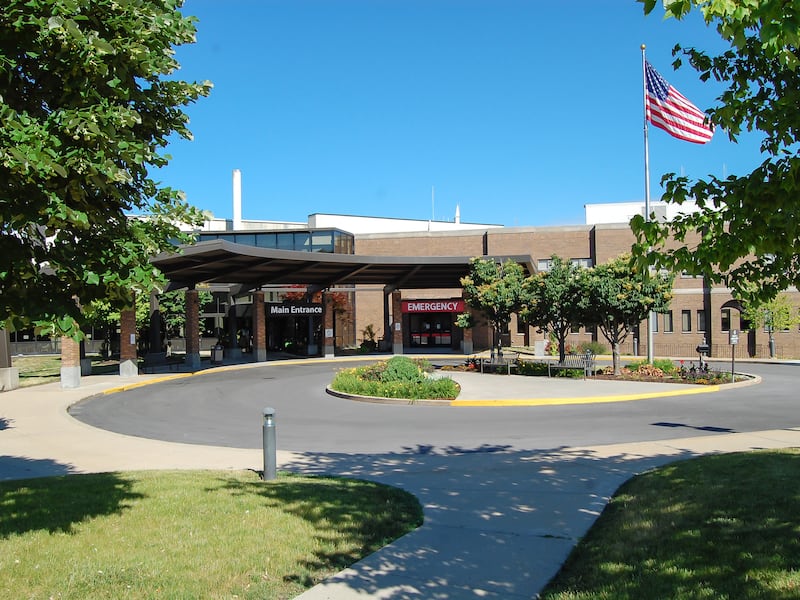
After providing pulmonary rehabilitation options for more than a decade to patients with a variety of lung conditions, Morris Hospital will end its two programs in coming weeks, with some clients petitioning against dropping the monitored exercise based in the Morris Hospital YMCA.
Patients were told of the impending discontinuation of Phase 2 and Phase 3 in mid-October, said Janet Long, public relations manager for Morris Hospital & Healthcare Centers, citing strategic planning based on the new year and areas of focus.
“It was a difficult decision that was made,” Long said.
No additional program cuts are planned, she said, noting the hospital recently added a gastroenterologist, bringing the number to two, as well as two new full-time general surgeons for a total of four, expanding surgical service offerings. Recent robotic arrivals include a new Mako for orthopedic surgery and a Da Vinci used in gynecological and general surgery.
Cardiology services are comprehensive, with five cardiac physicians, Long said, adding, “[The hospital’s] looking at expanding oncology services in Grundy County. … We proactively try to recruit physicians. It can be more challenging to recruit physicians to a more rural area.”
It’s been two years since the renovated surgery area started being used, Long said.
“We have made major investments in developing our surgery facilities,” she said of the 89-bed independent community hospital.
The pulmonary rehabilitation Phase 2 program stopped taking new referrals in October, but everyone already enrolled will complete the full regimen, Long said, explaining that patients have such conditions as Chronic Obstructive Pulmonary Disease, or COPD, emphysema, asthma or cystic fibrosis. The twice-weekly training encompasses 36 sessions or 36 weeks, whichever comes first.
“In addition to exercising, [patients are] learning about exercise on equipment like the treadmill, stepper, stationary bike, using free weights,” Long said. “Patients also get a lot of education on self-care breathing strategies. All of this is to help them improve their quality of life: lessen their shortness of breath, improve cardiopulmonary health. Patients in Phase 2 are monitored by the pulmonary rehabilitation staff, and while they are exercising, there are checks on oxygen saturation and heart rate … and blood pressure.”
People are encouraged to continue the exercise habits they learn through Phase 2, which covers how to safely work out on their own and how to self-monitor while exercising. Those who have opted to participate in the ongoing Phase 3 maintenance program do their exercises with staff present, but not monitoring them.
Phase 3 will be offered until Phase 2 comes to an end, Long said, noting that the number of Phase 2 participants last year averaged about 47 each month, with 13 in Phase 3.
“It is possible that [some] patients in pulmonary rehabilitation could also have a diagnosis that qualifies for cardiac rehab,” Long said of the program that also is based at the YMCA. “Our staff would be conducting evaluations.
“Some of the Phase 3 patients have probably been exercising with us through Phase 3 for years,” she said. ”So understandably, this is a difficult transition.”
It’s been about a year since Morris Hospital moved its cardiac and pulmonary rehabilitation and outpatient physical, occupational and speech therapy services from the Diagnostic & Rehabilitative Center on Gore Road into an 8,800-square-foot space at the new Morris Hospital YMCA at 2200 W. Dupont Ave. on the west side of Morris. According to a news release announcing the relocation, the move brought Morris Hospital services closer to the community with a focus on transitioning patients to the YMCA to maintain ongoing healthy lifestyle habits.
Going forward, patients can choose to become a member of the YMCA, which has the same equipment as the rehabilitation gym, but located elsewhere in the building, Long said. Patients would exercise independently.
“There’s no staff cuts,” Long said of the pulmonary rehabilitation team of four employees, including registered nurses and respiratory therapists. “We have opportunities for RNs and respiratory therapists. … Some of those four already cross over and also work in our cardiac rehab program.”
The Phase 2 and 3 discontinuation has no bearing on the health care system’s part-time pulmonologist, who is credentialed with the hospital, and does not have a role in the pulmonary rehabilitation program, Long said.
One of the hospital’s pulmonary rehabilitation participants is Liz Veronda of Coal City, who is on supplemental oxygen. Unlike cardiac or cancer patients who hopefully can move forward after treatment and healing, Veronda says there is no cure for lung disease.
A good diet and exercise are requisites for improving quality of life, she said.
“[For] pulmonary patients, it’s a lifelong program that we need,” Veronda said.
She said she met with Morris Hospital President and CEO Tom Dohm in late December.
Calling it a great meeting, Veronda said she proposed some alternative ways to continue accommodating the needs of pulmonary patients, and hopes they will be considered for implementation.
For those who need to be on supplemental oxygen, the existing pulmonary rehabilitation program provides a mobile oxygen source on a cart that can be placed next to the different pieces of exercise equipment, she said. If that is no longer available, patients would have to carry their own oxygen on their body, generally on their hip or in a backpack, which is physically taxing and often impractical when trying to properly fit oneself onto workout equipment, according to Veronda, who notes the energy it takes for patients simply to breathe can be exhausting.
“If a patient has a prescription for oxygen and for pulmonary rehabilitation, why not provide the oxygen along with an oximeter and a place to take their own blood pressure,” she said she proposed to Dohm.
A professional-grade oximeter, which clips on a finger to monitor oxygen levels and pulse rate, can cost $600 or more.
She describes the existing pulmonary rehabilitation offerings at Morris Hospital as “a great program,” emphasizing “How professional this group is,” and praising the responsiveness of the staff who go above and beyond to meet patients’ needs.
That extends to checking that people on a given day are able to safely exercise, taking into account their blood pressure reading or other issues.
Veronda said that once the program ends, patients will “have nowhere [close] to go. … It would be nice if we could find some sort of solution for them.”
Veronda, 61, said she has a hereditary disease – called Alpha-1 for short – that affects the lungs and liver, and was diagnosed at age 33. She is dedicated to maintaining her fitness in order to prepare her body for a double-lung transplant. She said her team at the University of Wisconsin transplant clinic in Madison recommend that the surgery take place in about four years.
“[They] want me to squeeze everything out of my lungs right now,” she said of the strategy to increase her life expectancy.
For information about Morris Hospital services at the YMCA, visit morrishospital.org/locations/morris-hospital-ymca.
In other local pulmonology care news, a pulmonology and critical care medicine physician, Dr. Samrat Khanna, recently began serving the Coal City campus of Riverside Healthcare, in addition to seeing Riverside patients in Kankakee and Watseka. For starters, he will be in Coal City for the day once every third week of the month, expanding pulmonology and sleep medicine at that location, said AnnMarie Fauske, director of marketing and public relations.
Launching a pulmonary rehabilitation program for the Coal City location is in discussion, Fauske said, but no timeline has been determined. Riverside currently offers it in Bourbonnais and Watseka.