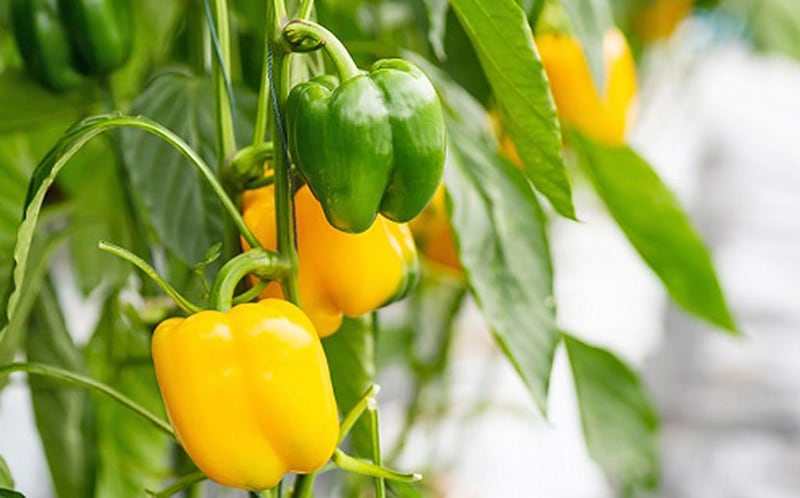
Peppers are a staple for many summer gardens, yet high heat combined with humidity can challenge plant performance. While peppers are often considered heat-loving crops, extreme or prolonged high temperatures can cause more problems than productivity.
Recent growing experiences highlight how weather, variety choice, and timing all play key roles in pepper success for home gardeners.
During graduate research in South Dakota, the bell pepper cultivar Red Knight (X3R) performed well under temperatures near 90°F. Those plants thrived in the region’s hot, dry conditions, which helped limit disease and nighttime stress.
However, growing peppers in hot, humid summers with temperatures swinging through the 90s and limited rainfall tells a very different story for northern Illinois.
Under those conditions, even reliable bell pepper varieties can struggle, which raises the question if other sweet pepper varieties are better.
:quality(70)/cloudfront-us-east-1.images.arcpublishing.com/shawmedia/MKPIDHVF4H4XCK7L2FZ46WTFC4.jpg)
To experiment with alternatives, a snacking pepper, SVPS0897, was added to the garden alongside Red Knight bell peppers. Snacking peppers are smaller, long and slender, and are bred for sweetness and convenience.
They’re great for dipping, fresh eating, and quick snacks straight from the garden. This variety is bred to resist bacterial leaf spot, an important advantage in humid growing conditions.
When summer turns stressful
Despite their tropical reputation, peppers have their limits. Once daytime temperatures climb above 85°F, pepper plants often reduce fruit set, especially if nighttime temperatures stay above 70°F (Schuh and Tong 2024).
During the hottest part of summer, common problems can occur, even for snacking varieties, including:
• Blossom drop, where flowers fall before forming fruit
• Sunscald, which leaves pale, damaged patches on exposed peppers
• Yields fewer and smaller fruits overall compared to cooler temperatures
These issues are most noticeable in July, August and early September when heat, humidity, and dry conditions overlap. Plants remain green with plenty of foliage, but they tend to produce fewer peppers than expected.
A long season crop
As temperatures cool into the 70s and low 80s in September, snacking peppers can hit their stride. Plants set fruit more consistently and produce many small peppers, often allowing for multiple harvests per plant.
This makes snacking peppers an excellent option for gardeners looking to stretch their harvest from late spring to late fall.
Their strong performance in cooler, warm-season weather also raises an important point for gardeners using small greenhouses. These structures can become very hot during summer.
Installing shade cloth can help lower temperatures by several degrees and reduce heat stress, keeping peppers productive when conditions get extreme (Hoidal 2024).
Tips for thriving peppers
Home gardeners can support pepper growth during hot weather by:
• Choosing varieties suited to local conditions
• Watering consistently, especially during dry conditions
• Mulching with straw to keep roots cool and soil moist
• Providing light afternoon shade during heat waves
Give snacking peppers a try
Snacking peppers offer big rewards in a small package. They’re productive, easy to eat, and well suited for raised beds, containers, and urban gardens. Their steady season production and fun shape make them a great complement to traditional bell peppers.
Seeds for snacking, picnic, or lunchbox peppers are available from Johnny’s Selected Seeds, Burpee, High Mowing Organic Seeds, Driftless Seed Supply and Harris Seeds.
With the right expectations and a little heat management, bell peppers still can be a highlight of the summer garden.
For more information, check out the University of Illinois Extension’s Local Food and Small Farms YouTube Channel for growing tips and other horticultural advice.
(*Illinois Extension does not endorse any products, varieties, or companies mentioned in this article, nor is it endorsed by any of the entities referenced.)
ª Alexis R. Barnes is the University of Illinois Extension Local Food Systems Small Farms educator serving DuPage, Kane and Kendall counties. Barnes’s areas of expertise include specialty crops, fruit quality and reduced tillage.