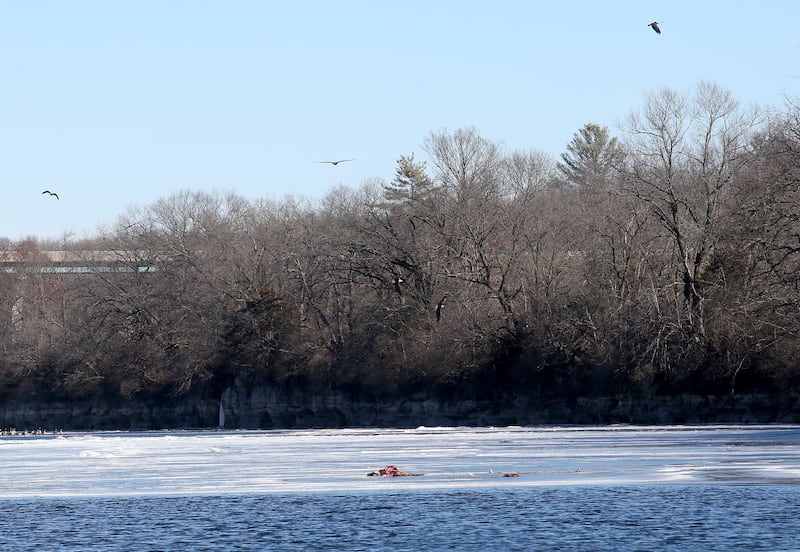
When Gary Swick sees the resurgence of bald eagles soaring and nesting along the Fox River, he thinks of all the hard conservation efforts that have helped revitalize the watershed.
Now with looming changes to the federal Clean Water Act, potentially restricting protections for millions of acres of wetlands and miles of streams, he reflects on how quickly it can all be lost.
As president of the Friends of the Fox River, a nonprofit of volunteers dedicated to protecting and improving the watershed, Swick is urging community members to raise their voices against a possible flood of pollution and development.
:quality(70)/cloudfront-us-east-1.images.arcpublishing.com/shawmedia/ZAYB6PBUDH5OEZRPHL7ORSJIFA.jpg)
“The proposed ‘Dirty Water Rule’ will remove federal protection from 70% of our nation’s wetlands,” Swick said in a public petition letter. “This is to provide private interests less regulations over public waters. It transfers the responsibility of protection to states whose legislation and agencies are not designed for this.”
The nonprofit is asking community members to either sign on to an official letter by Friends of the Fox River to legislators or to submit their own personal letters of support. The group is submitting all comments by Jan. 5 to the U.S. Environmental Protection Agency (EPA) to try to prevent the deregulation efforts.
The group is hosting a virtual meeting on Jan. 3 to assist people in their submissions.
“For over 50 years, the Clean Water Act has been protecting and restoring our rivers nationally and right here in the Fox River Watershed,” Swick said. “The return of the Bald Eagle is just one example. The CWA (Clean Water Act) is now being threatened.”
The Clean Water Act was passed by Congress and signed into law in 1972. President Richard Nixon vetoed it, saying it was too costly. There were enough votes in Congress to override Nixon’s veto.
:quality(70)/cloudfront-us-east-1.images.arcpublishing.com/shawmedia/6OIS4AZNFRBIBB5SN6W44QMRIU.jpg)
The proposal by the Trump Administration includes a more limited definition of the “Waters of the United States” that receive protections under the Clean Water Act.
The new proposal prioritizes waters with a year-round “continuous surface connection” to traditional navigable waters. If approved, it would eliminate substantial amounts of ephemeral and disjointed wetlands, smaller tributaries and headwaters that often lack consistent year-round water flow.
Within the Friends of the Fox River letter, they claim the proposed reductions of the Waters of the United States definition would, “potentially harm public health, risk flood damage, reduce wildlife habitat, and impair the drinking water source for over 300,000 people in our watershed.”
The group also argues the threats would lead to minimized recreational activities and “decreased economic opportunity” across the entire Fox River watershed.
:quality(70)/cloudfront-us-east-1.images.arcpublishing.com/shawmedia/5FUGYNSOLNBPVJQSIZUKDJPAGE.jpg)
According to the group, since modern development, Illinois and Wisconsin have already lost more than 90% of their native wetlands.
“Removing federal protection and placing responsibility upon states and counties is inappropriate and insufficient to address watershed level protection,” the group’s letter says. “Illinois currently lacks wetland protection legislation, and both (Illinois and Wisconsin) are not equipped with funding and staff to adequately provide protection. Federal support is essential.”
The EPA, under Administrator Lee Zeldin, argues the proposed rule establishes a “clear, durable, common-sense definition of ‘waters of the United States,’” according to a Nov. 17 EPA release on the proposal.
“When finalized, the rule will cut red tape and provide predictability, consistency, and clarity for American industry, energy producers, the technology sector, farmers, ranchers, developers, businesses, and landowners for permitting under the Clean Water Act,” Zeldin’s EPA said in the release.
The proposal makes individual states the “primary regulators” managing their own land and water resources. Opponents argue this will lead to a patchwork system of vastly differing protections for the nation’s wetlands and bodies of water.
Public comment is currently being gathered before the EPA develops its final rule.
The Friends of the Fox River argues in its letter that the EPA’s actions are hurting certainty when it comes to clean water protections.
“It seems clear that the current EPA is more focused on catering to polluting interests than its core mission of enforcing our landmark environmental and health protection laws,” the letter reads. “The proposed rule will create more confusion and make enforcement of protections more challenging.”
:quality(70)/s3.amazonaws.com/arc-authors/shawmedia/0cef0bf9-a04e-4bb4-aea0-03d8ced01c00.jpg)