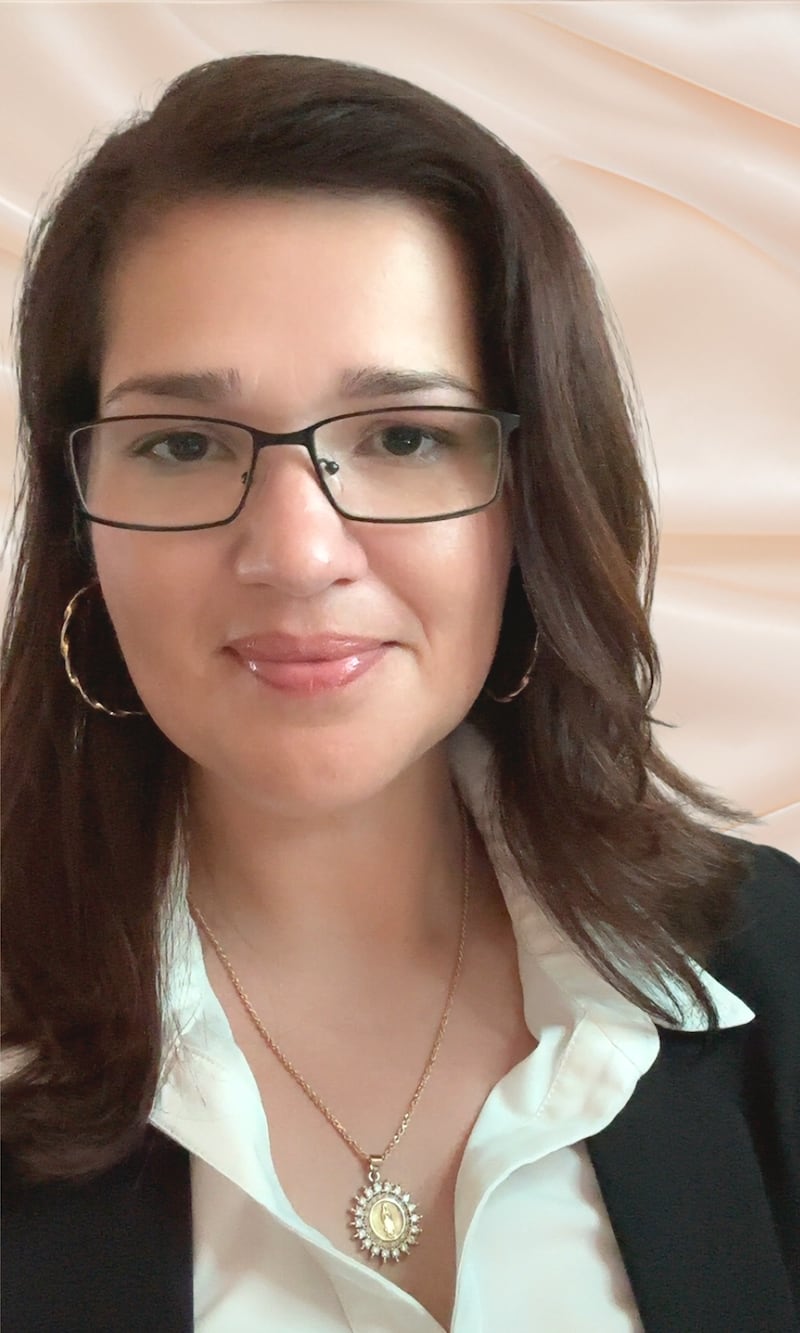
Name: Veronica Garcia-Martinez
What office are you seeking: IL State Representative, District 70
What is your political party? Democrat
What is your current age? 44
Occupation and employer: Teacher D428
What offices, if any, have you previously held? None.
City: Cortland
Campaign website: https://www.facebook.com/Veronica4Illinois/
Education: Bachelors degree Applied Sociology NIU 2007, Bachelor degree in Spanish language arts and literature NIU 2007, Masters of Arts in Teaching NIU 2024
Community involvement: Founder of Esperanza latina, Volunteer for the Cortland Lions club-former member
Marital status/Immediate family: In the process of divorce. Very amicable co parenting situation with Rodrigo Martinez Ramirez. Mother to three teenagers. Isaac is 18 years old and is a senior at Dekalb high school. Addison is 16 years old and is a sophomore at Dekalb high school and Roy is 14 years old and an eighth grade at Huntley Middle School in Dekalb.
What are your top three priorities for this district in Springfield?
My three priorities in Springfield begin with addressing the rising cost of living that is putting real strain on families across the district, including increasing utility costs for homeowners and renters and year-after-year tax hikes that are making it harder for people to stay in our communities. Second, I want to start where long-term stability truly begins: education. I will prioritize securing strong, reliable funding for bilingual learners and students with special needs, particularly at a time when changes at the federal level have created uncertainty around education support and accountability. These students cannot be an afterthought; they require intentional investment to ensure equitable outcomes. Third, I will work to reform Tier 2 pension plans, which currently discourage professionals such as teachers, firefighters, and other public servants from staying in the fields our communities depend on by forcing them to work until 67 without penalty for benefits that are not competitive. In addition, I will be a strong advocate for Illinois’ immigrant communities by countering misinformation about their economic impact and recognizing their essential contributions to our workforce, tax base, and local economies. Valuing their labor and presence is not only a matter of fairness, but of economic and community sustainability.
How will you support economic growth and development in your district?
I will support economic growth and development by strengthening pathways into the skilled trades and technical careers through partnerships between high schools, community colleges, and local employers. By expanding access to trade and apprenticeship programs, we can provide young people with affordable, practical education that leads directly to well-paying jobs here in our district. Keeping students educated locally and employed locally helps retain talent, stabilizes our workforce, and ensures that tax dollars invested in education are returned to the community through long-term employment and economic contribution. This approach also supports small businesses, reduces the need for out-of-state labor, and builds a sustainable local economy rooted in opportunity and skill development.
Do you support term limits for state representatives, and if so, what limits?
Yes, I support term limits for state representatives and believe no individual should serve more than five terms. Term limits help ensure equal representation, prevent entrenched political power, and create space for new leadership and fresh perspectives. When the same elected officials remain in office for extended periods, it can limit meaningful engagement with the evolving needs of the community. Regular leadership turnover encourages elected officials to stay connected, work closely with constituents, and remain accountable to the people they serve, ensuring that community voices, not political permanence, drive policy decisions.
How will you address the state’s long-term pension obligations?
Addressing the state’s long-term pension obligations requires balancing fiscal responsibility with the need to offer competitive, sustainable retirement plans that retain public-sector professionals. Illinois is losing teachers, firefighters, and other essential workers to out-of-state positions largely because current pension structures, particularly Tier 2, are not competitive or realistic for long-term retention. I support evidence-based reforms that strengthen pension sustainability while improving benefits enough to keep skilled workers in Illinois, including exploring adjustments to Tier 2, stabilizing funding commitments, and identifying responsible revenue strategies that do not overburden taxpayers. This is not a one-party issue, and I am committed to working across party lines with labor, fiscal experts, and community stakeholders to develop practical solutions that protect retirees, retain workers, and honor the state’s obligations for the long term.
How will you address property taxes and school funding reform?
Property taxes and school funding reform must be addressed through greater transparency, stronger oversight, and a more equitable distribution of resources. Homeowners and renters continue to feel the pressure of rising property taxes, yet many communities still question whether education dollars are being spent effectively. I support clearer accountability measures to ensure school funding is used appropriately and aligned with student outcomes. At the same time, Illinois must more fully commit to needs-based funding by reevaluating how state dollars are distributed. Wealthier districts with a strong local tax base should not receive the same level of state support as under-resourced districts that lack the means to fully fund their schools. This is a difficult but necessary conversation, and meaningful reform will require collaboration among lawmakers, educators, and communities to reduce the overreliance on property taxes while ensuring every child receives a fair and high-quality education.
What is your stance on the SAFE-T Act? What changes, if any, would you support?
I support the SAFE-T Act because it helps ensure that local law enforcement can focus on public safety rather than immigration enforcement, allowing officers to serve and protect all residents without fear preventing people from seeking help in emergencies. No one should hesitate to call the police or report a crime because of their immigration status, and immigration enforcement is properly handled at the federal level. At the same time, I recognize there is room for clarification and improvement within the law. Serious violent offenses such as rape or murder should be clearly defined exceptions, allowing coordination with federal immigration authorities after individuals have been held accountable through our criminal justice system. Any modifications should be narrowly tailored, clearly defined in statute, and designed to preserve community trust while maintaining accountability for serious crimes.
What legislation would you propose to address crime and public safety in your district?
To address crime and public safety, I would prioritize legislation that strengthens the connection between workforce development, education, and the criminal justice system. Communities with limited access to stable employment, job training, and education often experience higher rates of crime, and addressing these root causes is essential to long-term public safety. I support expanding accessible job training, apprenticeship, and reentry programs that provide individuals, especially those from low-income households or returning from the criminal justice system, with the skills and credentials needed to enter the workforce. By investing in prevention, economic opportunity, and successful reentry while maintaining accountability, we can reduce recidivism, strengthen public safety, and build safer, more stable communities across the district.
What is your stance on reproductive rights in Illinois?
I strongly support reproductive rights in Illinois and believe that decisions about reproductive health should remain between a patient and their doctor, free from political interference or judgment. Women deserve the autonomy to make informed decisions about their own bodies, guided by medical professionals and personal circumstances. Protecting access to reproductive health care is essential to ensuring dignity, privacy, and equitable health outcomes for all.
What is your opinion of the TRUST Act (sanctuary state protections)?
I support the TRUST Act because it reinforces Illinois’ commitment to ensuring that immigrant communities can live, work, and contribute without fear of unnecessary entanglement with immigration enforcement at the local level. The Act allows law enforcement and public institutions to focus on their core responsibilities while building trust with the communities they serve. Immigrants are a vital part of Illinois’ economy, workforce, and tax base, and public policy should reflect the reality of their contributions rather than misinformation. Upholding the TRUST Act strengthens public safety, supports economic stability, and affirms the dignity and value of immigrant families across the state.
Should the state expand Medicaid funding?
Yes, I support expanding Medicaid funding to ensure more Illinois residents have access to affordable, preventive, and ongoing health care. Expanding Medicaid strengthens public health outcomes, reduces long-term emergency care costs, and provides critical support for working families, seniors, people with disabilities, and low-income communities. Access to health care should not depend on income or employment status, and strategic investment in Medicaid helps stabilize families, supports hospitals and providers, and builds healthier, more resilient communities across the state.
Should local governments have more authority over solar farm development in their communities?
I believe local governments should have a meaningful voice and oversight in solar farm development within their communities. While I do not support allowing farmland or open fields to be overrun with solar panels, there are innovative ways to expand renewable energy that minimize impact on productive land. Solar installations can be prioritized on rooftops, parking structures, brownfield sites, closed landfills, and former mining areas,places that are underutilized or no longer productive. Giving local governments input ensures that renewable energy development aligns with community priorities, preserves valuable land, and promotes creative solutions for clean energy while respecting the character and needs of each community.
Should Illinois expand use of nuclear energy, including facilities like the Byron plant? What’s your vision for the state’s energy mix?
I am open to learning more about nuclear energy and its role in Illinois’ energy future, but at this time, I do not support building additional nuclear plants in the state. My priority is to focus on sustainable, renewable energy sources that can provide safe, reliable power while minimizing environmental risks. I believe Illinois should invest in solar, wind, and other emerging technologies, particularly in ways that utilize existing infrastructure, like rooftops, parking structures, and brownfield sites, to meet our energy needs. My vision for the state’s energy mix is a balanced, forward-looking approach that encourages innovation, supports local communities, and moves us toward cleaner, more resilient energy sources without expanding nuclear facilities.
What role should the state play in housing affordability?
Housing affordability is a critical issue driving residents out of Illinois, and the state must take an active role in addressing it through thoughtful, innovative solutions. Too often, red tape and outdated zoning laws limit the development of diverse housing options. I support policies that expand access to affordable housing, including allowing additional dwelling units, tiny homes, and “mother-in-law” units, which provide flexible, lower-cost living options within existing neighborhoods. The state should also incentivize the construction and rehabilitation of affordable housing, support community-driven development, and work across party lines to remove barriers that prevent people from finding safe, stable, and affordable homes. Ensuring housing affordability strengthens our workforce, retains families, and supports vibrant, sustainable communities across Illinois.
How should the state address rising energy costs from data centers? How do you balance water rights between communities and industry regarding data center development?
Rising energy costs from data centers, particularly AI and large-scale tech facilities, are placing significant strain on local communities, and Illinois must take a strong role in protecting residents from these impacts. Utility costs have already doubled or tripled in some areas, and this trend is unsustainable. I support carefully evaluating proposals for new data centers to ensure they do not overburden local infrastructure, drive up energy costs, or threaten critical resources like water. Protecting water rights is essential, and the state should prioritize the needs of communities over industry when balancing these demands. This includes enforcing strict limits on water usage, promoting energy-efficient technologies, and exploring alternative locations or renewable energy solutions that minimize the impact on residents. The state must ensure that economic development does not come at the expense of affordability, sustainability, or the well-being of our communities.
To what level should the state fund a new stadium for the Chicago Bears?
At this time, I do not believe state taxpayers should bear the cost of funding a new stadium for the Chicago Bears. While I value the team as an important part of our state’s identity and economy, I do not see sufficient justification for diverting public resources to build a new facility when the current stadium is functional. Any decision about a new stadium should prioritize private investment and partnerships rather than increasing the tax burden on Illinois residents. I want to support the Bears remaining in the state, but I also believe that public dollars should be directed toward essential services, infrastructure, and programs that benefit all residents.
Should the state regulate the use of AI in the classroom? To what extent?
I believe the state should regulate the use of AI in the classroom to ensure it is a limited, purposeful tool rather than a daily crutch for students. AI can be valuable for research-based projects and for teachers to develop curriculum or streamline instruction, but it should not replace the essential skills of reading, writing, and critical thinking that students develop through direct engagement with ideas and real-world problem-solving. Overreliance on AI risks undermining these skills and can reduce students’ ability to think independently. Additionally, AI relies on data centers that consume significant energy and water, creating environmental concerns that the state should consider when integrating technology into schools. Overall, AI should serve as a supplement to education, supporting teachers and enhancing learning without diminishing students’ ability to reason, create, and solve problems on their own.
Who are your top donors? How often do you speak with them?
At this time, I do not have any top donors. My campaign is grassroots, powered by community members contributing what they can, whether $2.50 or $100, because they believe in the vision we share for our district. These contributions mean more to me than any large corporate donation, as they reflect the voices and priorities of the people I aim to represent. I am confident that with continued community support and a few key fundraising efforts planned in the coming months, we can run a strong, people-powered campaign focused on the needs of our district rather than outside interests.