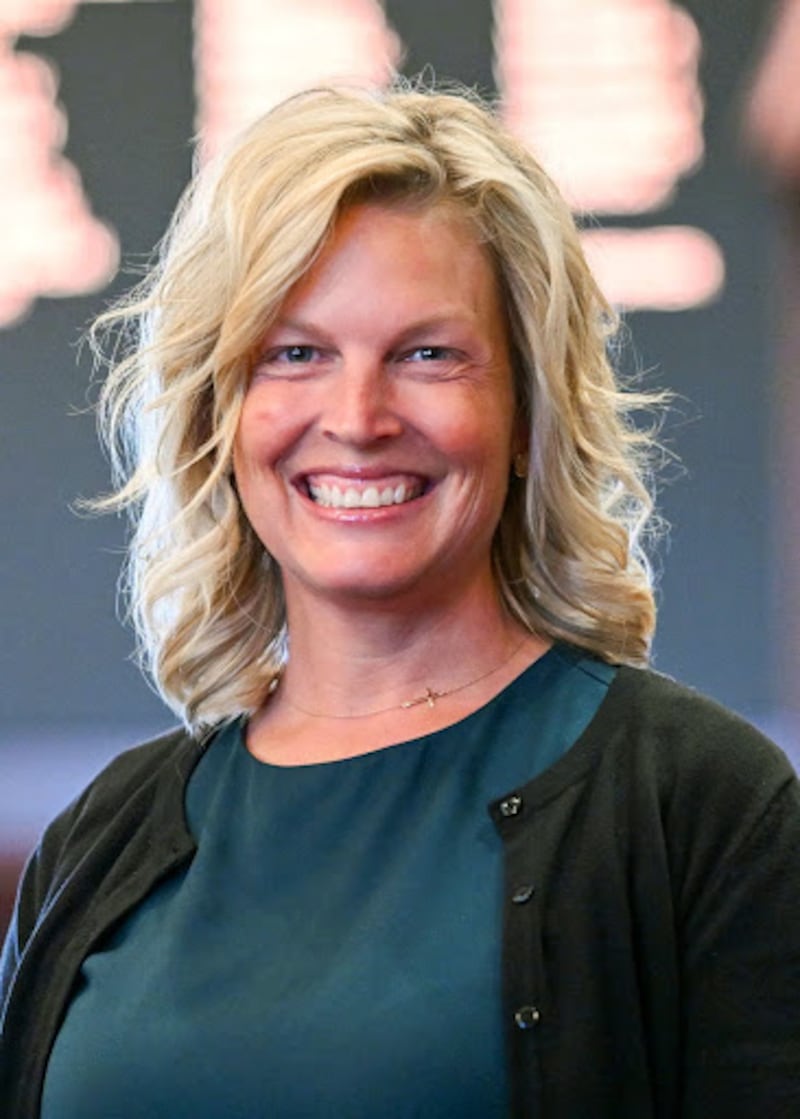
Name: Tony McCombie
What office are you seeking: State Representative, District 89
What is your political party? Republican
What is your current age? 53
Occupation and employer: State Representative, Realtor, Appraiser
What offices, if any, have you previously held? Alderperson, Mayor (Savanna, IL)
City: Savanna
Campaign website: McCombieforIllinois.com
Education: Bachelor of Arts from Western Illinois University
Community involvement: I am proud to be a member of many local service organizations throughout the 89th district and host a few annual events myself. I recently hosted a blood and food drive and rang the Salvation Army bell in a neighboring county.
Marital status/Immediate family: Married to Curt for over 20 years
What are your top three priorities for this district in Springfield?
My top priorities for the 89th district include growing our economy, lowering the cost of living, and keeping our communities safe. Through lowering taxes and reducing burdensome regulation, strengthening education and job training, and fiscal stability, Illinois can compete with its neighboring states to bring families back here. My job as Minority Leader is to expose and oppose majority Democrats’ harmful mismanagement and turn back toward commonsense fiscal sanity to achieve prosperity.
How will you support economic growth and development in your district?
Illinois has everything it needs to succeed - hardworking people, strong agriculture, manufacturing, and energy resources, but years of high taxes and overregulation have held us back. In my border district, I see businesses leave because it’s easier and cheaper to grow just across state lines.
I support economic growth by fighting for lower property taxes, smarter regulations, reliable and affordable energy, and strong workforce development tied to local jobs. We must grow our tax base, not raise tax rates. Better policy is the only sustainable answer. My focus is making Illinois affordable, competitive, and a place where families and businesses can thrive.
Do you support term limits for state representatives, and if so, what limits?
I support legislative leader term limits, and we are leading by example - our House Republican caucus has implemented 10-year limits. I also support executive term limits of 8 years.
How will you address the state’s long-term pension obligations?
Illinois’ worst-in-the-nation pension debt threatens the state’s long-term financial stability. We cannot tax or cut our way out of this crisis; we must grow our economy, make responsible payments, and stop policies that dig the hole deeper. That includes rejecting dramatic benefit expansions being pushed by the majority party that would increase liabilities and repeat the mistakes of the past.
I support multiple solutions to reduce pension obligations, including voluntary buyouts, reinvesting savings from paid-off bonds back into the pension systems, exploring a constitutional amendment to allow reforms, and negotiating a fair plan of shared sacrifice.
At the same time, we must always honor commitments to current retirees who depend on the benefits they earned.
How will you address property taxes and school funding reform?
Sky-high property taxes are pricing families out of homeownership, forcing seniors from homes they worked a lifetime to pay off, and making everyday life less affordable across Illinois.
We can lower the burden by cutting unfunded mandates, eliminating redundant layers of government through locally controlled consolidation, fully funding the Local Government Distributive Fund, and increasing transparency and accountability in school district reserves, including capping excessive surplus funds as proposed in House Bill 1321.
Long-term relief requires growing our tax base, not raising tax rates. Better policy that attracts jobs and investment is the only sustainable solution. I also support giving homeowners greater certainty by limiting levy growth and expanding the use of referendums so residents have a real voice.
On education funding, we should continually evaluate the funding formula for success. I support investing in classrooms and quality teachers, while tying funding to student outcomes, transparency, and real results so taxpayers and families know their dollars are making a difference.
What is your stance on the SAFE-T Act? What changes, if any, would you support?
The SAFE-T Act has made our communities less safe by putting dangerous criminals back on the street and limiting judges’ ability to keep repeat offenders detained. As House Republican Leader, I launched a public safety working group with law enforcement and legal professionals to identify real fixes to this law.
While I support repealing the SAFE-T Act, I am also advancing legislative reforms to expand the list of detainable offenses, restore judicial discretion, and increase transparency and accountability in pretrial release decisions. Public safety must always come first.
What legislation would you propose to address crime and public safety in your district?
In addition to SAFE-T Act reforms, I support reforming statutes that deal with habitual criminals, fleeing and eluding police officers, crimes against children, and more protection for victims.
I believe in a robust practice of the Second Amendment because taking law-abiding citizens’ guns makes us all less safe. I support police and first responders and seek to recruit and retain more officers.
Increasing education and job opportunities positively impacts communities, and pro-growth policies support safer communities.
What is your stance on reproductive rights in Illinois?
I am pro-life and support policies that strengthen families, including adoption, IVF, and resources for foster families. Illinois must also do a better job making adoption and foster care more accessible, efficient, and supportive for the families willing to step up and help children in need.
Illinois has moved to one of the most extreme abortion policies in the nation, allowing late-term abortions, expanding to taxpayer-funded abortions, and removing parental involvement rights. I am appalled that Illinois is turning into an abortion capital of the country and believe parents should have the right to be informed when a minor seeks an abortion.
We should focus on protecting life, supporting mothers, and building a culture that values families and responsibility.
What is your opinion of the TRUST Act (sanctuary state protections)?
The TRUST Act should be repealed. Dangerous situations have come from not allowing local, state, and federal law enforcement to coordinate and work together. President Biden’s failure to secure our border has led to American citizens in sanctuary states paying for the care of illegal immigrants. In Illinois, our tight budget situation makes it more difficult to fund our priorities of public safety, education, caring for our most vulnerable citizens, and economic development.
Governor Pritzker’s national ambitions put Illinois’ out-of-step policies on the national stage, but the General Assembly should roll back this terrible and dangerous public policy to keep our families safe.
Should the state expand Medicaid funding?
Medicaid should be used for its intended purpose, as a critical safety net for our most vulnerable citizens, including seniors, children, people with disabilities, and low-income families. I support regular Medicaid redeterminations in compliance with federal law to ensure benefits go to eligible recipients and that able-bodied adults who can work are encouraged to return to the workforce or classroom.
I strongly oppose using Medicaid funds to cover illegal immigrants while Illinois families struggle to afford care. Over $1.6 billion has already been spent, and audits have revealed waste, fraud, and abuse. That money should be redirected to the people Medicaid was designed to serve.
By cracking down on fraud, improving oversight, and restoring accountability, we can protect taxpayers while strengthening care for those who truly need it most.
Should local governments have more authority over solar farm development in their communities?
Yes, local governments should have control over zoning in their communities, especially when it comes to solar and wind farms. Solar companies in many communities have sold and installed panels and then have gone out of business, leaving residents without any way to upgrade technology or repair broken pieces.
I voted no on the energy legislation that stripped local governments from land use decisions on taxpayer-funded energy projects.
Should Illinois expand use of nuclear energy, including facilities like the Byron plant? What’s your vision for the state’s energy mix?
As the representative of Byron, I am proud to continue to support their efforts to provide our state with much-needed base load power. Nuclear power is clean and safe, and I am thankful for the skilled and dedicated workforce that supplies power to our homes and businesses.
I believe in an all-of-the-above energy strategy that includes nuclear, gas, coal, wind, solar, and hydropower. Illinois needs every energy avenue available to thrive in a next-generation economy fueling AI and future technologies. Rolling back the non-nuclear CEJA provisions will allow our residents to access reliable and cost-effective power.
What role should the state play in housing affordability?
As a licensed REALTOR, I have spent a majority of my professional life working to help families achieve the dream of homeownership. The General Assembly has a starring role in housing affordability, both in regulations for building and in taxation. In my role as state representative, I work to limit regulations in order to keep costs lower and give flexibility for local officials in land use and development.
For most people, buying their home is the largest investment they will ever make, and with the nation’s highest property taxes and unnecessary regulations like mandating electric vehicle charging stations, the Democratic majority is increasing the debt load and stress on every Illinois family. I will continue to advocate for lower costs and sensible reforms to give families more buying power with their hard-earned savings.
How should the state address rising energy costs from data centers? How do you balance water rights between communities and industry regarding data center development?
Illinois is facing serious and growing energy challenges, and at the same time the state has incentivized rapid expansion of energy-intensive data centers. That combination has created legitimate concerns about rising costs and strain on our power grid and water resources.
I support legislative proposals such as “Bring Your Own Energy,” which require large-scale users like data centers to generate or secure their own power, invest in grid upgrades, and reduce the burden on taxpayers and ratepayers, similar to recent agreements reached with ComEd.
Local communities must have a strong voice in these projects, with negotiated agreements that prioritize residents, emergency services, and protections against higher utility and water costs. I also support greater transparency through energy and resource audits so impacts are fully understood before projects move forward.
To what level should the state fund a new stadium for the Chicago Bears?
I support private-public partnerships that make sense and clearly benefit taxpayers and local communities. Infrastructure investments should be driven locally, not dictated by Springfield.
I would like to keep the Chicago Bears in Illinois, but any stadium deal must protect taxpayers and avoid shifting costs onto homeowners. The team should pay a fair share of property taxes, preserve local control, and ensure surrounding communities see real economic development, not higher taxes or unfunded obligations.
Public dollars should only be part of the conversation if there is transparency, accountability, and a clear return for residents.
Should the state regulate the use of AI in the classroom? To what extent?
There is a lot of enthusiasm in Illinois for over-regulation, and this is one area I believe legislators must restrain themselves. Of course we should ensure safety of students and teachers and respect privacy boundaries, but also should leave room for innovation. Local parents, school boards, faculty, and administration can navigate issues surrounding policies and curriculum. This approach allows schools to learn from each other in creative ways.
Who are your top donors? How often do you speak with them?
My votes are never influenced by donations; they are guided by what is best for the families and communities I represent. Campaign finance reports are public and fully transparent, and my supporters include individuals, small business owners, community leaders, and organizations who believe in lowering taxes, growing our economy, and restoring accountability in state government.
Fundraising is about building relationships, communicating priorities, and standing on principle, not trading contributions for influence. Whether I’m raising support for my campaign or for our House Republican Caucus, the goal is to unite people around better policy and a stronger future for Illinois.