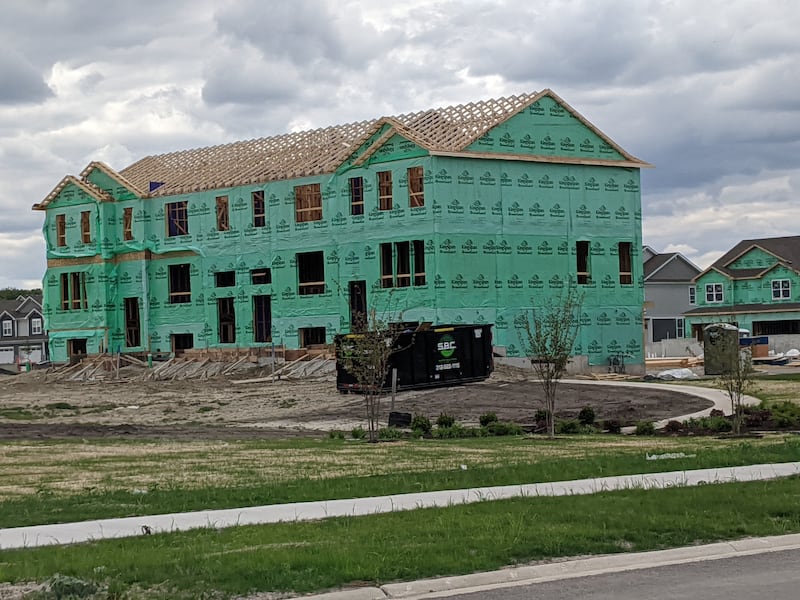
The Illinois Municipal League has come up with its own proposal to create more affordable housing statewide in the face of a plan by Gov. JB Pritzker to reduce the zoning authority that municipalities have.
“The Reducing Expenses and Advancing Local (REAL) Housing Act delivers real property tax relief, encourages real community input and provides real tools for local officials to implement housing solutions that will have real impacts on affordability,” Illinois Municipal League chief executive officer Brad Cole said in a letter to the members of the Illinois General Assembly.
“The REAL Housing Act is the kind of practical, results-driven approach that comes from working with municipalities, not against them,” the letter said.
Pritzker’s Building Up Illinois Developments proposal calls for relaxed restrictions on the development of multi-unit housing, allowing homeowners to build “granny flats” and cutting other forms of red tape that have slowed homebuilding in recent years.
In April, the Plainfield Village Board passed a resolution urging state leaders not to take zoning authority away from municipalities.
“The village recognizes that municipal authority of land use and zoning is a means to address separating incompatible land uses, protecting property values, managing traffic flow, ensuring adequate infrastructure and guiding orderly community growth,” the resolution reads in part. “Land use and zoning decisions are appropriately made at the local level by municipal officials familiar with the unique characteristics of the village.”
Other municipalities have also criticized the measure.
“It’s crazy,” Lockport City Administrator Ben Benson said in March when Pritzker’s plan was first proposed. “It’s trying to squeeze in a one-size-fits-all standard formula that doesn’t fit all communities.”
Oswego Village Administrator Dan Di Santo said he can appreciate the goals of the governor’s proposal, but expressed concerns over the loss of local control.
Among other things, the REAL Housing Act would:
• Establish a middle housing incentive fund to support voluntary local participation in expanding housing supply
• Preserve local authority to ensure housing growth aligns with infrastructure capacity, public safety and professional planning
• Promote adaptive reuse of existing structures and redevelopment of blighted areas to increase supply and reduce costs
• Lower the cost of purchasing a home by capping excessive real estate commission structures
• Establish local authority for the creation of overlay districts where middle housing is allowed by right
• Allow locally-determined housing stability policies to address affordability challenges
• Protect renters by limiting excessive and duplicative fees and reducing upfront housing costs
• Alleviate local property tax pressures by reimbursing local governments for state-mandated veterans’ property tax exemptions
“Local governments have the responsibility to provide well-planned, safe and affordable communities for residents while balancing short-term needs with long-term planning,” Cole said. “A one-size-fits-all approach to housing policy simply does not work in a state as vast and diverse as Illinois.”
:quality(70)/author-service-images-prod-us-east-1.publishing.aws.arc.pub/shawmedia/4874e1d5-91ae-4f41-9dee-92d8e733e407.jpg)
:quality(70)/s3.amazonaws.com/arc-authors/shawmedia/c957a8ff-14a0-492e-82d7-3c005b3cd732.png)