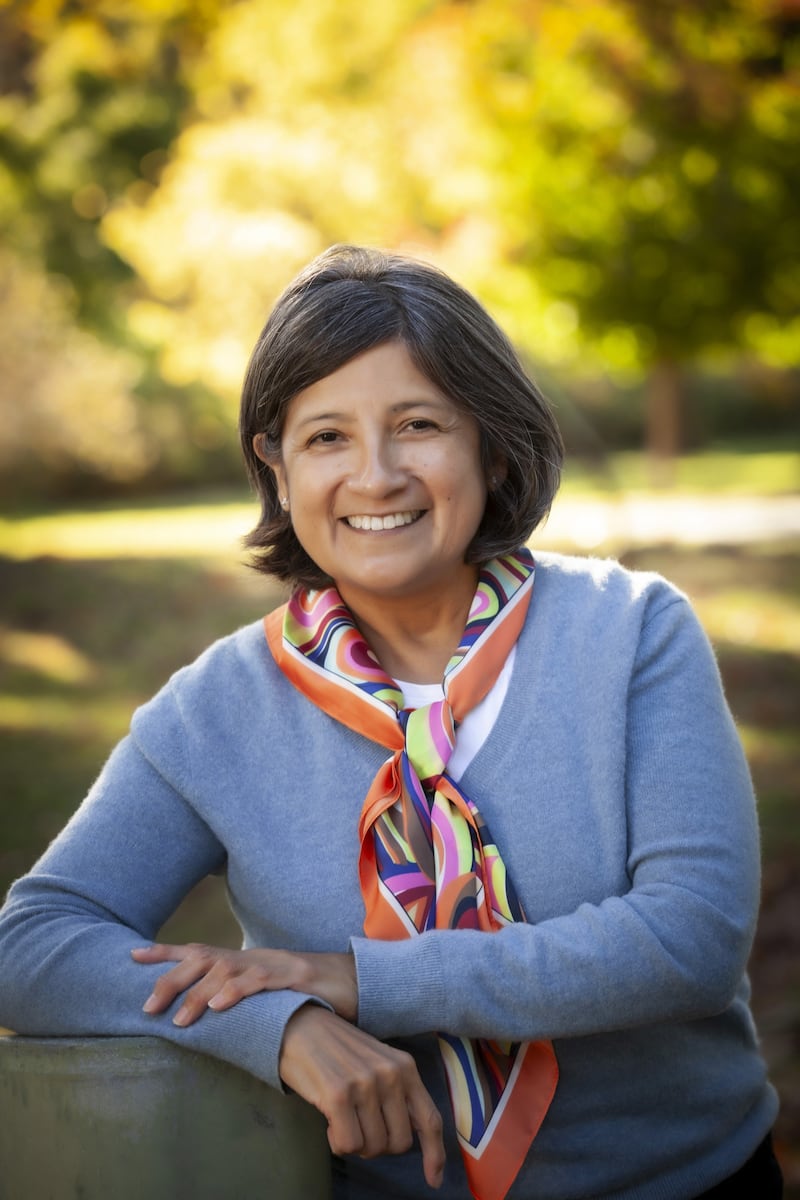
Name: Margaret DeLaRosa
What office are you seeking: Representative in the IL General Assembly - District 42
What is your political party?
What is your current age? 64
Occupation and employer: Legislator, State of Illinois
What offices, if any, have you previously held? Board Member - Glenbard Township High School District 87 2015-current
City: Glen Ellyn, IL
Campaign website: DeLaRosaforIllinois.com
Education: Bachelor of Science - Accounting - DePaul University
Society of Human Resource Management - SCP (Senior Certified Professional)
Community involvement: League of Women Voters - Glen Ellyn
Indivisible DuPage
Member, York Township Democrats
Member, Milton Township Democrats
Marital status/Immediate family: Married, 3 adult children
What are your top three priorities for this district in Springfield?
First, defending our values against federal overreach. As a Latina legislator and member of the Latino Caucus, I’ll stand with my colleagues as a firewall protecting immigrant families from ICE raids and federal intimidation. I’ll also fight federal cuts to Medicaid that would strip coverage from 3.4 million Illinoisans. Washington wants to undermine our healthcare, our safety net, and our immigrant communities. I’ll push back.
Second, protecting property taxpayers. Illinois relies too heavily on property taxes to fund education. I’ll fight for the state to take on a larger share of education funding, so homeowners and retirees aren’t crushed by tax bills. That means sustainable revenue sources and real property tax relief.
Third, ensuring excellent schools for every student. I spent a decade as a School Board member managing balanced budgets and delivering results. I’ll bring that experience to Springfield to ensure our schools have the resources they need without breaking taxpayers’ backs.
How will you support economic growth and development in your district?
I’ll work directly with municipal leaders, chambers of commerce, and local businesses to identify opportunities and remove barriers to growth. Economic development isn’t one-size-fits-all. What works in Lombard may not work in Lisle. I trust my fellow local leaders to listen to our constituents and know our communities’ needs.
I’ll support workforce development, infrastructure investment, and policies that help small businesses compete. As someone with an accounting degree and years in corporate management, I understand what businesses need to thrive: predictable costs, reliable infrastructure, and a skilled workforce. I’ll bring that perspective to economic development decisions.
Do you support term limits for state representatives, and if so, what limits?
The fact that state representatives must be reelected every two years functions as an effective term limit. Voters make the choice. Every two years, they decide if it’s time for new leadership or if they prefer to keep experienced, effective representatives who deliver results. I trust voters.
How will you address the state’s long-term pension obligations?
Illinois’ pension obligations are a serious challenge, placing real pressure on our budget and affecting education funding and property taxes. But the benefits earned by current employees and retirees are constitutionally protected, and I don’t support breaking promises to teachers, police officers, and public servants who earned these benefits.
The core problem is decades of state underfunding. My focus is stabilizing the system through disciplined budgeting, responsible revenue, and economic growth so we meet our obligations without shortchanging schools or essential services.
As School Board President managing a $170M budget for a decade, I know that long-term obligations require honest planning and sustained commitment.
We must address the persistent challenge of pension obligations by reviewing structural reforms, commit to predictable funding, and collaborate with bipartisan resolve to ensure the system is both solvent and fair for those who have their retirement dependent on the pension system and for the residents of Illinois.
How will you address property taxes and school funding reform?
Illinois relies too heavily on property taxes to fund education. I believe in fair taxation that protects working families, small businesses, and homeowners. I support increasing the state’s share of education funding, so homeowners and retirees aren’t crushed by property tax bills. That means balancing the funding of our schools with effective property tax relief initiatives. I support closing corporate tax loopholes and higher taxes on gambling, tobacco, and vaping.
I’ve managed a $170M school budget for a decade as Board President, maintaining balanced budgets with honest accounting and transparency. I’ll bring that fiscal discipline to Springfield. Every dollar we raise must be spent wisely on excellent schools, healthcare, and services that help families thrive. That’s fiscal responsibility in service of our shared progressive values.
What is your stance on the SAFE-T Act? What changes, if any, would you support?
I support the SAFE-T Act. Eliminating cash bail was the right decision. Detention should be based on public safety risk, not wealth. Detention decisions should be made based on the crime charged and the individual’s legal history, not their ability to pay. The law has increased police accountability while ensuring violent offenders can still be detained pretrial.
Like Governor Pritzker, I believe the law is working and I’m willing to review data and listen to input from judges, prosecutors and victim advocates. If evidence demonstrates that targeted refinements would improve public safety without undermining the core reforms, I am open to considering them. But I won’t support efforts to roll back criminal justice reform or return to a system where wealth determines pretrial freedom.
What legislation would you propose to address crime and public safety in your district?
What is your stance on reproductive rights in Illinois?
What is your opinion of the TRUST Act (sanctuary state protections)?
Should the state expand Medicaid funding?
Should local governments have more authority over solar farm development in their communities?
Should Illinois expand use of nuclear energy, including facilities like the Byron plant? What’s your vision for the state’s energy mix?
Yes. Nuclear provides over half of Illinois’ electricity and produces zero emissions. The Byron plant alone powers 1.7 million homes. When it was scheduled to close in 2021, Governor Pritzker and the legislature stepped in with support to keep it running, which was the right decision for reliability, jobs, and clean energy.
Illinois recently lifted our moratorium on new small modular reactors while maintaining restrictions on large-scale plants. This balanced approach allows innovation while avoiding costly mega-projects. Any expansion must include serious plans for safe, long-term waste management, which is a concern.
Our energy future will combine nuclear for reliable baseload power, expanding renewables like solar and wind, and improved battery storage and efficiency as coal phases out. We need all these tools to keep the lights on, create jobs, and meet climate goals.
What role should the state play in housing affordability?
Housing costs are squeezing essential workers, young families trying to stay in the communities where they grew up, and seniors on fixed incomes. When teachers, nurses, and police officers can’t afford to live near where they work, everyone suffers.
The state should support mixed-income housing development through tax credits and incentives, with local zoning decisions remaining with communities. What works in one neighborhood won’t work everywhere. I trust local governments to make smart decisions about their own development.
We also need to address the real problem: skyrocketing costs. That means eliminating unnecessary regulatory barriers that drive up construction costs, supporting first-time homebuyers, and ensuring housing policy doesn’t create windfalls for luxury developers while ignoring workforce housing.
How should the state address rising energy costs from data centers? How do you balance water rights between communities and industry regarding data center development?
The recent Clean and Reliable Grid Affordability Act (SB 25) addresses this by requiring data centers to supply their own energy through renewables and build closed-loop cooling systems. The state is developing a framework with clear regulations for responsible data center development that protects both energy supply and water resources. Working families in our communities shouldn’t bear the costs, whether through higher bills or strained resources, of private industry’s infrastructure needs.
To what level should the state fund a new stadium for the Chicago Bears?
The Bears are a profitable, privately-owned business, so taxpayers shouldn’t subsidize it. If the Bears Organization does decide to build in Illinois, the state can invest in public infrastructure that benefits everyone, such as roads, transit, and utilities, in the same manner it might support any other major development. Such investment also creates jobs, which really matters, but that’s different from paying for the stadium itself. As a lifelong Bears fan and longtime season ticketholder, I want to see the Chicago Bears stay in Chicago, but our priorities must be schools, healthcare, and affordability.
Should the state regulate the use of AI in the classroom? To what extent?
AI is in our classrooms and is part of the learning culture. The question is how we protect students while allowing innovation. Illinois should regulate AI broadly, in terms of data privacy, deepfakes, and age restrictions, and not just in schools. Trump’s recent executive orders appear to limit states’ ability to regulate AI, which raises serious constitutional concerns about states’ rights. Illinois must maintain authority to protect residents from AI harm, especially children. Technology changes fast; our protections need to keep pace.
Who are your top donors? How often do you speak with them?
I have well over 200 donors. These are my neighbors, teachers, parents from my years on the school board, longtime friends. I talk with them every day at the grocery store, community events, or when I knock on their doors. Some gave $10, some gave $100. Campaigns do need money for yard signs and postcards, but I support real reform, including lower contribution limits, public funding, and full transparency. But nobody’s buying access because access to me is free.
My campaign is run by volunteers who live here. They are eagerly knocking doors, writing postcards, distributing yard signs, and hosting coffees. I’ve been volunteering on Democratic campaigns for over 30 years myself, so I know this is how democracy should work. Neighbors supporting neighbors, not outside dark money. Until we fix the system, I’m running the campaign I want to see: people power, not special interests.