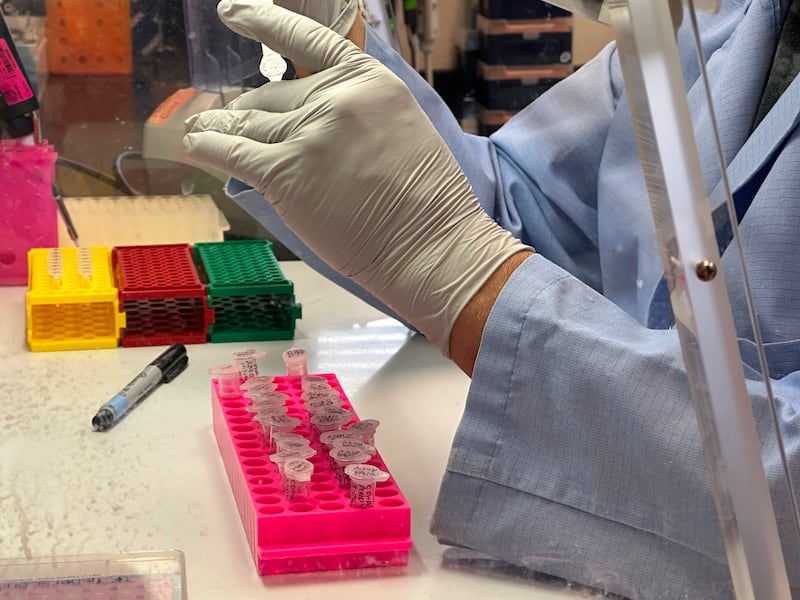
The Illinois Department of Public Health recently investigated a potential hantavirus case in a Winnebago County resident not connected to the MV Hondius cruise ship.
The Centers for Disease Control and Prevention performed confirmatory testing, which did not detect hantavirus, IDPH said on Tuesday.
And the risk of getting hantavirus remains very low for Illinois residents, according to IDPH.
In fact, officials at Will, Kendall or Kankakee counties have not identified any confirmed cases of hantavirus in the last five years.
Nor has Kendall County identified any recent trends or clusters of hantavirus, said Sara Karantonis, director of community health. The same is true in Will County.
“We may have investigated a few suspected exposures related to travel, or activities in the wild, but no cases have been confirmed in the recent past,” said Alpesh Patel, chief epidemiologist at Will County Health Department.
“Furthermore, locally, no suspected cases investigated were related to the recent cruise ship outbreak,” he said.
What is hantavirus?
Hantaviruses are a group of zoonotic viruses that infect rodents. The rodent transmits the virus to humans through their urine, droppings, saliva or – less commonly – their bites, according to the World Health Organization.
Only the Andes strain – the one associated with the MV Hondius cruise ship – can be spread from person to person. The North American strain of the Hantavirus is not spread from person to person.
Symptoms, which begin one to eight weeks after exposure, include:
• Abdominal pain
• Fever
• Headache
• Muscle aches
• Nausea
• Vomiting
Unfortunately, many these symptoms also occur in influenza, COVID-19, viral pneumonia and even sepsis, making an early diagnosis of hantavirus challenging.
Karantonis said coughing, shortness of breath, and chest tightness may occur four to 10 days in the virus’ initial phase.
“If you suspect hantavirus, see a physician immediately and mention potential rodent exposure,” she said.
Hantavirus may also affect the kidneys – hemorrhagic fever with renal syndrome – one to two weeks after exposure, Karantonis said.
Laboratory tests can confirm the diagnosis, according to WHO, and must be confirmed by the CDC, according to the IDPH.
Unfortunately, hantaviruses found in North America – including the Andes virus – may rapidly progress to hantavirus cardiopulmonary syndrome and cause cough, shortness of breath, fluid in the lungs and shock, according to WHO.
The Sin Nombre virus is the primary cause of cardiopulmonary syndrome in North America, according to the Centers for Disease Control.
And although cardiopulmonary syndrome is rare, the fatality rate is up to 50%, WHO said.
The Centers for Disease Control also said that some hantaviruses, particularly the Sin Nombre virus, naturally occur in the U.S., with infections increasing during spring and summer.
“These naturally occurring hantaviruses do not spread person-to-person,” a CDC spokesperson said. “As we approach these seasons, you may hear reports of hantavirus infections in the U.S. It is important to understand that these routine seasonal cases are separate from the MV Hondius outbreak.”
There is no vaccine to prevent hantavirus infection and no antiviral medication to treat it, so care is supportive, according to WHO.
How do people catch hantavirus?
In Illinois, the deer mouse is the primary transmitter of hantavirus, and people in rural areas are at the highest risk, since deer mice prefer fields and forests to “highly urbanized locations,” according to the communicable disease staff at the Kankakee Health Department.
“Houses and outbuildings in these settings are often under constant pressure from rodents in search of food and nesting places,” according to the communicable disease staff.
Still, any exposure with rodent urine and feces – in homes, campsites and workplaces – can put people at risk of contracting hantavirus, Karantonis said.
“Any activities or being in places or areas that are rodent-infested also increases risk by touching mice or rats, being in contact with their droppings or contaminated objects, or inhaling the air in those areas poses an increased risk,” said Dr. Dan Garganera, infectious disease specialist and medical director of the Will County Health Department.
Still, the risk of catching hantavirus is low in Illinois as compared with the southwestern part of the U.S., Garganera said.
How to avoid catching hantavirus
Residents should keep houses and outbuildings clean and uncluttered, according to the communicable disease staff at the Kankakee Health Department.
Mopping is preferred to sweeping, especially when cleaning unattended structures and/or where evidence of mouse infestation is apparent, according to staff.
Remember to wear rubber or plastic gloves and a mask – and ventilate the area, too, said Garganera.
“Droppings and contaminated objects or areas need to be cleaned using disinfectant or household bleach according to the manufacturer’s recommendations and rubber gloves need to be worn during this process,” he said.
If the area is “grossly contaminated and suspicious for possible presence of hantavirus-infected rodents,” don’t tackle the job yourself; hire professionals to do it, Garganera said.
What if I’ve been exposed?
Garganera said people who think they’ve been exposed to hantavirus should contact their local health department.
“Hantavirus testing can then be done related to the place or exposure or testing on the person if symptoms occur,” he said.
Although the local risk is low, Patel said raising awareness about hantavirus transmission is “crucial for community health and safety,” so that people understand how the virus spreads and what precautions to take.
But what if the Andes strain pops up locally?
“We have already reached out to hospital infection control staff to increase awareness within the hospital setting and ensure that front-line staff perform appropriate screening for anyone presenting with a travel history or illness consistent with hantavirus illness,” Patel said.
The hospital would then “notify the health department to ensure that the proper infection control protocol is followed to avoid any further exposure in the healthcare settings,” Patel said.
:quality(70)/cloudfront-us-east-1.images.arcpublishing.com/shawmedia/QAMETCKXUJC75HYJUDLQMCUXPA.jpg)
:quality(70)/s3.amazonaws.com/arc-authors/shawmedia/59304215-cb18-46db-bced-9941d9413236.jpg)