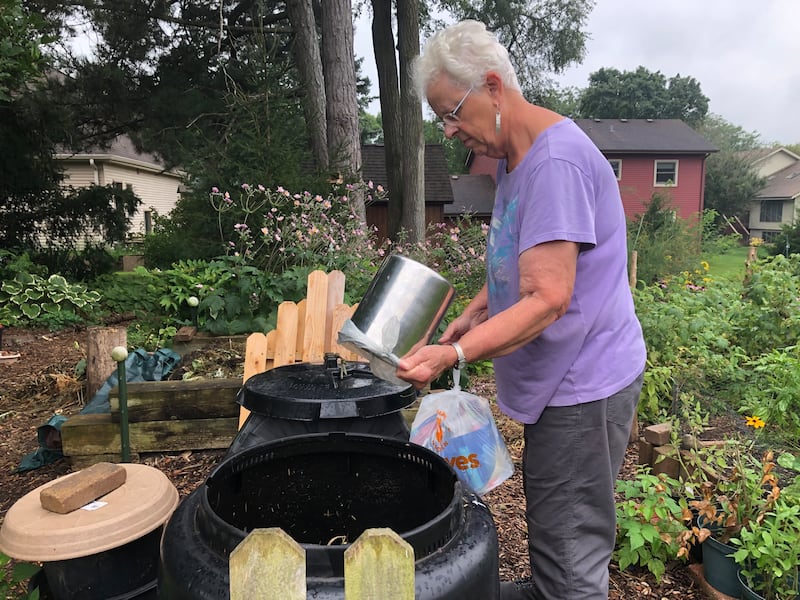
Want to keep food waste out of the trash even during the winter months? Try using the bokashi method to turn your food waste into a nutrient-rich fertilizer. The bokashi process is a fermentation method, similar to making sauerkraut. Unlike composting, oxygen isn’t used in the decomposition process. However, the method is commonly referred to as bokashi composting, as it yields a compost-like, nutrient-rich product. Acquiring microbes in an airtight container will get you started.
To make bokashi, add food scraps to a container, sprinkle them with a microbial additive, and compact the mixture. Seal the container and repeat these steps until full. Set the finished bin aside to ferment for several weeks, then transfer the contents to soil where they’ll break down into usable fertilizer.
Ready to give it a try?
• First, get a container to serve as the fermentation vessel. While commercially available bokashi bins exist, you can also make a DIY bin from a 5-gallon bucket with a tight-fitting lid. Use drain holes with the bucket placed inside another, or add a spigot near the bottom with a drain plate to keep food scraps raised above the liquid collection area.
• Second, acquire a mixture of microbes for fermentation. The microbes are typically a mixture of lactic acid bacteria, photosynthetic bacteria, and a yeast. A sugar source like molasses is added to the mixture, which is then dried onto a bran or sawdust. This is commonly called bokashi bran. The action of the beneficial microbes under anaerobic conditions maintains an environment that inhibits the growth of pathogenic organisms. Bokashi bran is also commercially available, but DIY recipes are available.
• To start the process, add chopped food scraps, including dairy and meat (no bones), to the vessel. Sprinkle with the bokashi bran.
• Compress the scraps with a weighted plate, and then seal the container until another layer is added. During the fermentation process, liquid will collect and must be drained periodically. The liquid can be used as a drain cleaner or diluted (4 Tbs. to a gallon of water) for use as a liquid fertilizer. After the container is full, set it aside for a few weeks to complete the fermentation cycle.
• At this stage, the fermented pulp is too acidic to be used directly. Another step is needed to complete the process. One option is to bury the pulp in a trench in the garden for decomposition. After a few weeks, depending on the weather, the area can be planted or the bokashi compost can be moved to other parts of the garden. If ground space is limited, the pulp can be mixed with soil or potting mix in the bottom of a planter and used immediately for planting. In winter, a lidded tote can be used to hold the pulp outside until transfer to the garden or planters in spring.
The composting process is complete. Use your nutrient-rich fertilizer to grow healthier plants from what was once kitchen waste.
Audrey Charles is a certified master gardener volunteer with the University of Illinois Extension serving DuPage, Kane, and Kendall counties.
For more information, check out:
Demonstration Washington State Master Gardeners: youtube.com/watch?v=mj5g-HxE_Ow
Other winter composting options: extension.illinois.edu/sites/default/files/winter_composting_infosheet_2024.pdf