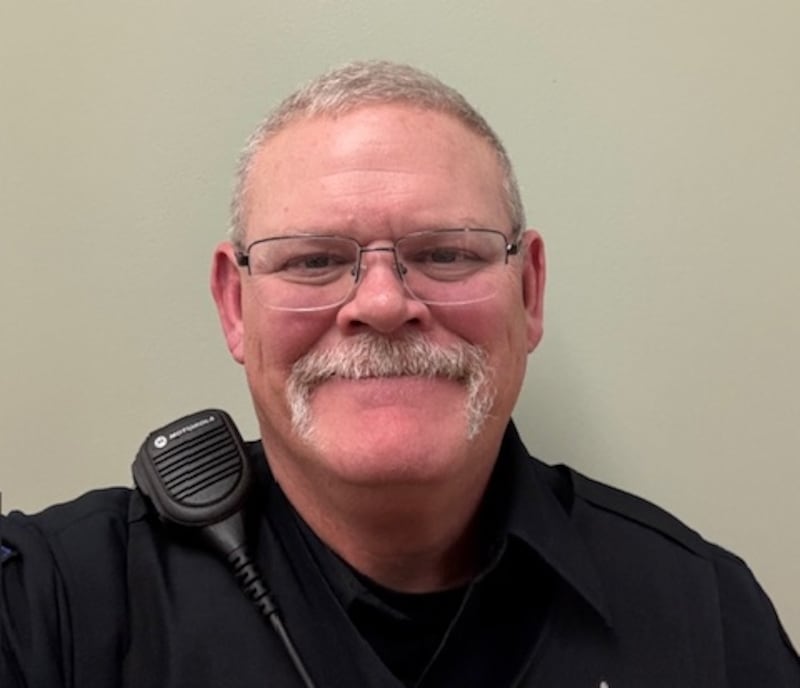
Name: Rob Russell
What office are you seeking: Kane County Sheriff
What is your political party?
What is your current age? 58
Occupation and employer: Owner-Russell Solutions LLC and Harper College PD Officer
What offices, if any, have you previously held? Kane County Coroner
City: Hampshire
Campaign website: www.russell4sheriff.com
Education: Master of Arts(MA)Governor’s State University- Political and Justice Studies (2007)
Bachelor of Science(BS) Northern Illinois University- Criminology (1990)
Community involvement: Hampshire Coon Creek Days Board Member
Eagles Club Member
Member of Chapelstreet Church-Geneva
Marital status/Immediate family: Wife, Susan (35 years)
4 Children
5 Grandchildren
Why are you running for this office?
This journey started 16 years ago. I ran then, and run today as well, to make a difference in Kane County Law Enforcement. I have 32 years of broad spectrum law enforcement experience, including Corrections (important as the Sheriff is the Warden of the County Jail), Court Security and Patrol. I was promoted through the ranks from Deputy to Corporal to Sergeant (retired). I was then elected as a Law Enforcement Administrator (Coroner) and held that office for 12 years. The Illinois statutes state that the coroner and the sheriff have the same powers (55ILCS 5/3-3007), so technically, this office better suits me to the next Kane County Sheriff. I am ready to continue building on the achievements already attained and bring my knowledge and experience to maintain, and hopefully continue progression at the Kane County Sheriff’s Office. I believe the KCSO as one of the best Law Enforcement agencies in the state, and feel that I am best positioned to continue to maintain the growth and find areas to improve where possible.
I like the compassionate leadership that is currently in place and hope to continue the progress of the office by getting the office accredited. It is my opinion that accreditation is the next logical step in the progression of the office, and I have extensive experience in getting offices accredited. I am the only candidate with accreditation experience. I helped with accreditation at the DuPage County Sheriff’s Office and led the charge on the Kane County Coroner’s Office (another Law Enforcement Office) by becoming the first accredited coroner’s office in Illinois.
What are your top three priorities for this position?
Top 3 priorities:
- Continue with the establishment and functionality of the Kane County Forensics Laboratory. This initiative was originated by me in 2015 and I would like to see it finished. We are uniquely positioned to be a regional lab with revenue potential in the future.
- Attain and maintain law enforcement accreditation certification. Becoming an accredited agency will insulate the office and the county from lawsuits, make the agency more grant friendly, and will assure the public that we are performing sheriff service in the most efficient, effective manner within the constraints of a budget, according to national standards.
- Maintain and grow opportunities to sustain less recidivism. When we reduce recidivism, we not only save money in incarceration and judiciary costs, but we also help keep the community safer. Diversionary programs give those who truly want to change the tools to do so. This in turn, will translate into making better citizens by creating an alternative to crime. Educating incarcerated individuals and helping them obtain degrees and or industry certifications is the number one means of rehabilitating former incarcerated individuals. Partnering with our community colleges and universities provides the engine of this change. I taught at College of DuPage and helped several incarcerated individuals obtain his and her GED. I have seen some of those individuals working and staying out of trouble, so I know this works. My goal is to grow this area by continuing to partner with relevant, appropriate advocacy groups, church groups and other religious organizations, as well as the community colleges. A great model of this is in DuPage County, which has a program called JUST of DuPage. This model not only collaborates volunteer personnel but also allows for churches and organizations to help fund the programs. Community colleges can also utilize Department of Justice Grants to fund the education of incarcerated individuals.
What is your assessment of the SAFE-T Act and its impact on the sheriff’s office and on justice more broadly? What, if any, reforms to the act would you seek?
As a current working police officer, I follow the terms and conditions of the Safe-T Act daily. Whether the changes were positive or negative, the state did not provide additional funding for the immediate changes they demanded. This created a budget issue with Illinois local law enforcement. Many of the budget shortfalls gave rise to additional tax burdens on the citizens of all jurisdictions, due to the immediate and intermediate demands.
The Safe-T Act has had both positive and negative effects. Almost all of the positive aspects were already being implemented by responsible organizations. Many agencies already had body cameras being implemented, as a means of documenting all incidents in a 21st century way. Many agencies were also training officers in de-escalation techniques, mental health awareness and appropriate use of force implementation. It is my belief that the unwarranted urgency of the establishment of the act was in response to the agencies that were resisting the change. This act forced those resistant agencies to change, as they needed to. I believe all reasonable people want the same things from the justice system; a system that keeps innocent people safe and holds violent offenders accountable. This is one of the reasons I believe in accreditation, as the solutions to complex problems are solved by the people who are in the arena, not in the stands watching. Accreditation utilizes examples and incidents across the nation, thus problem solving is not only relegated to regional trends. Having a diverse, macro outlook on problem solving is usually always beneficial. Accreditation offers that concept.
I believe a workable compromise can be achieved when all sides come together and political agendas are left at the door.
There are some obvious negative effects. Most of the negative impacts of the act could have been avoided, however, as it was pushed through the legislature without proper law enforcement vetting. For instance, the no cash bail (or catch and release) option was supposed to reduce jail population. We are finding out that it had no effect, and in many cases, jail populations grew. There are also circumstances where people who should have (and would have) been in jail, were conversely released out in the streets and committing more criminal activity. Also, the morale of the officers on the street doing positive things felt betrayed as being called dysfunctional, when many were doing great jobs.
What is your view on the Illinois TRUST Act, which limits local law enforcement cooperation with federal officers? Should the sheriff’s office have more leeway to cooperate with federal authorities performing immigration enforcement specifically? Should any further ICE enforcement activity occur on the grounds of the courthouse or other county property, how would you direct your staff to handle that? Should current federal immigration enforcement tactics continue, how would you balance between public safety and the restrictions of the TRUST Act?
Although it is technically a crime, illegal immigration is not a primary role of a county sheriff’s office. Sheriff’s offices and other local law enforcement do not have the resources to make this a primary mission and should not. The only leeway that would make sense is to allow local law enforcement to refer to ICE cases where someone has been arrested for another crime (especially an index crime). Here’s why: It is scientifically proven that most crime occurred is same race generated. In other words, removing the violent illegal immigrants is just as important (or more so) to the communities of the alleged offenders as it is to other populations. The violent illegal immigrants do not mostly commit crimes in communities that are different from them, rather will commit crimes amongst their own people. People should not be stopped, harassed or arrested merely on the suspicion of being an illegal immigrant, rather on the articulable facts of the suspect’s actions. Police officers who do not meet that threshold should suffer the same consequences as in any other civil rights violation. If an individual is arrested for having enough probable cause to be arrested, and later it is determined that this individual is an illegal immigrant, then ICE should be contacted. Currently the law does not allow that and should be adjusted to allow that. This should be done primarily to help those in the communities where the offender resides as well as those out in society in other areas.
Is the sheriff’s office, including the county jail, adequately staffed and funded? Would you be seeking more funding for the office and would that mean advocating for tax increases? How would you spend that? Do you advocate different spending priorities than currently exist?
I think most people would agree that public safety is and must continue to be a priority. Everything has gotten more expensive. Union contracts must be honored. We must, however, also find ways to remove the entire burden from the Kane County Taxpayer. My hope is to establish a regional lab and make it a source of revenue, so that increased taxes are off the table. Also by attaining accreditation status, we will become more grant friendly (Federal and State), which may also offset some local taxes.
What is your view on programs that bring social workers or other responders on mental health calls to aim to help de-escalate?
The frontline police officer has an incredible amount of responsibility. His or her job is to find ways to establish and maintain peace. That is our profession: Peace Officer. I have always tried to maintain that mindset. De-escalation techniques are being taught and performed on a daily basis. We even train doing using simulated incidents If appropriate (depending on the situation), I have no issue with bringing in mental health professionals to a scene. This is already happening in many cases. Also, many agencies already have officers that are trained in Critical Incident Team (CIT) concepts, and hold certification in (CIT).
Would you like to see changes in how the office responds to mental health crises?
There are unfortunately, some circumstances that are too dangerous for civilian personnel to be part of. That is the job of the command staff (to support the officers on the street) to discern which incidents are safe to include civilian personnel and which are not. Our world is hurting and the 21st century police officer must adapt and use means to de-escalate when possible (in the interest of keeping peace), but not at the cost of compromising safety of life.