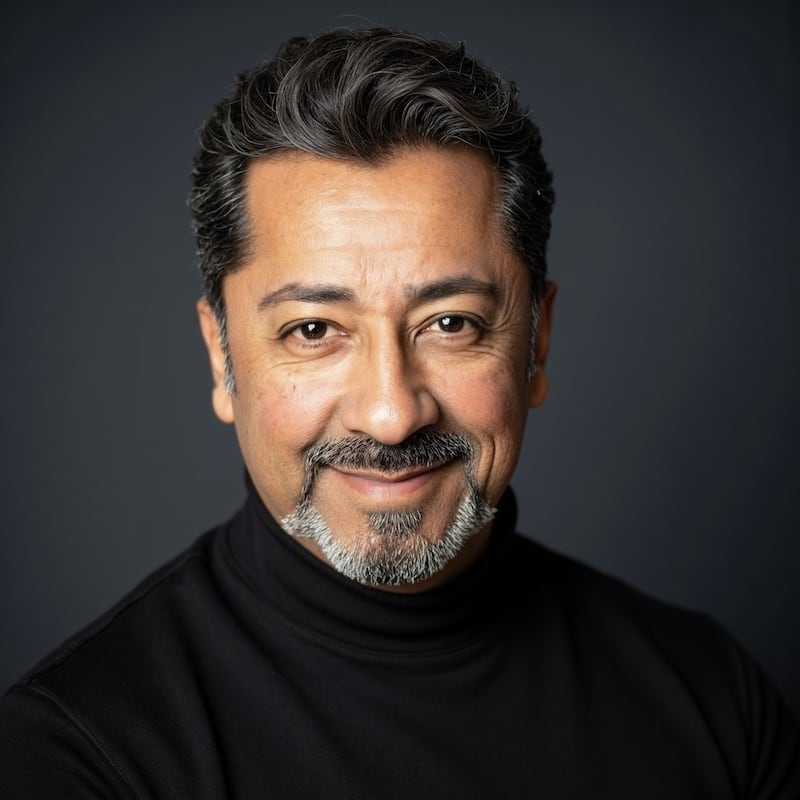
Name: Lou Santoyo
What office are you seeking: Kane County Sheriff
What is your political party? The candidate did not answer
What is your current age? 56
Occupation and employer: Assistant Warden - Illinois Department of Corrections
What offices, if any, have you previously held? Village of Elburn Trustee - Currently Serving
City: Elburn, Illinois
Campaign website: santoyoforsheriff.com
Education: Bachelor’s Degree - Interdisciplinary Studies (Psychology and US Government), Master’s Degree - Criminal Justice/Criminal Behavior
Community involvement: Prior to running for office, I was actively involved in the community as a youth wrestling and basketball coach. Coaching allowed me to mentor young people, work closely with families, and stay engaged at the grassroots level of the community.
Marital status/Immediate family: Yes. I am married and have five children.
Why are you running for this office?
When I was eight years old, living on 18th Street on Chicago’s West Side in Pilsen, I watched a man get shot to death just steps from where my family and I lived. I saw him fall to the ground. I stood frozen over him, my little brother next to me, my eyes locked with his as I watched him take his last breath. I was a poor immigrant kid in a dangerous neighborhood, completely powerless. I couldn’t help him. No one came to help him—no bystanders, no police, no ambulance. That man stayed with me. He became the ghost I could never outrun. Since I couldn’t walk away from that moment, I decided to run toward it. That experience shaped who I became and led me to a 28-year career in law enforcement, serving as a police detective in one of the largest police departments in the state. Every violent crime I investigated and every shooting I worked became a way to redeem that powerless child and to pursue justice for a man who never received it. Every case solved, every victim given a voice, felt like restoring something that was taken that day. That is why I believe law enforcement must be visible, responsive, and present—especially in the moments when people feel most alone. I’m running for Sheriff because I know what it feels like when justice doesn’t show up, and I’ve spent my entire adult life making sure it does. Kane County deserves a Sheriff who understands crime and violence not as an abstraction, but as a human cost—and who leads with urgency, humility, and resolve when systems fail real people. This is not a political ambition. It is a calling that began on a sidewalk on 18th Street, and it has guided every decision I’ve made since.
What are your top three priorities for this position?
My top three priorities are responsible stewardship of public funds, equitable and transparent public safety services, and strong, accountable leadership built on real partnership.
First, the Sheriff’s Office must use the people’s moneywisely and respectfully. Every dollar should directly support public safety—putting deputies on the street, ensuring safe and effective jail and court operations, and providing proper training and equipment. Taxpayers deserve efficiency, transparency, and accountability, not unnecessary spending or administrative excess.
Second, public safety services must betransparent and reach every resident. That means cities, neighborhoods, and rural areas alike—especially those that too often feel forgotten. Everyone deserves visibility, timely response, and clear communication, regardless of where they live. Consistent service and transparency are essential to public trust.
Third, leadership meansrestoring and strengthening real partnerships. Effective law enforcement depends on cooperation—not silos. As Sheriff, a top priority would be rebuilding strong, working relationships with every law enforcement agency in Kane County and with surrounding counties. Information sharing, joint operations, and mutual support are among our most powerful tools against crime. When agencies truly work together, communities are safer and resources are used more effectively.
These priorities reflect a simple belief: respect the public, serve every corner of the county, and lead through collaboration, accountability, and results.
What is your assessment of the SAFE-T Act and its impact on the sheriff’s office and on justice more broadly? What, if any, reforms to the act would you seek?
The SAFE-T Act is a major change, and my view is shaped less by theory and more by real-world experience. I understand the goals behind increased transparency, training standards, and body-worn cameras, and when those are properly funded and implemented, they can strengthen accountability and trust. Where I have serious concerns is with the Pretrial Fairness Act and the move away from cash bail. In practice, I’ve seen too many situations for example, where individuals come into custody under the influence, are released quickly, and reoffend—sometimes within hours. That creates real risks for victims, deputies, and the public. A system that prioritizes speed over careful assessment while treating indigence as a primary deciding factor doesn’t always serve justice or safety. I believe we can do better by refining the process so detention decisions are timely, evidence-based, and truly focused on risk, especially for repeat and violent offenders. SAFE-T is the law, and it must be enforced professionally, but laws should improve when experience shows where they fall short. My approach would be to apply it responsibly, speak honestly about its impacts, and push for practical reforms that better protect communities while preserving fairness.
What is your view on the Illinois TRUST Act, which limits local law enforcement cooperation with federal officers? Should the sheriff’s office have more leeway to cooperate with federal authorities performing immigration enforcement specifically?
My view of the Illinois TRUST Act is shaped less by ideology and more by real-world experience. After nearly three decades in law enforcement, working complex investigations alongside local, state, and federal partners, I know that lawful cooperation and information-sharing are among our most effective tools for protecting the public. The TRUST Act is the law in Illinois, and the Sheriff’s Office has a responsibility to follow it. At the same time, public safety must remain the priority. I have serious concerns about releasing individuals who have committed violent crimes back into our communities, regardless of immigration status. In practice, situations like this undermine confidence in the system and create real risks for residents and victims. While the Sheriff’s Office must operate within the boundaries of current state law, I believe there is room for improved lawful communication and coordination with federal authorities where permitted, particularly in cases involving violent crime, human trafficking, or organized criminal activity.
Should any further ICE enforcement activity occur on the grounds of the courthouse or other county property, how would you direct your staff to handle that?
Regarding any federal immigration enforcement activity on courthouse or county property, my direction would be clear: deputies would maintain safety, order, and neutrality, ensure court operations are not disrupted, and follow established legal protocols without initiating or obstructing civil immigration enforcement beyond what the law allows.
Should current federal immigration enforcement tactics continue, how would you balance between public safety and the restrictions of the TRUST Act?
Looking forward, I would advocate for Illinois legislators to listen carefully to the concerns of law enforcement professionals and to sit at the table with us to refine and adjust existing laws based on real-world experience. Thoughtful collaboration can lead to more effective, harmonious enforcement strategies that respect the law, preserve community trust, and keep the safety of our communities first.
Is the sheriff’s office, including the county jail, adequately staffed and funded?
I don’t believe the Sheriff’s Office, including the county jail, is consistently staffed or funded at the level residents expect, particularly when you consider concerns about response times, visibility in unincorporated areas, and the ongoing demands of jail and court operations. At the same time, I recognize that Kane County is operating under real financial pressure, with limited flexibility and increasing strain on its overall budget. That reality means we cannot simply spend our way out of problems.
Would you be seeking more funding for the office and would that mean advocating for tax increases? How would you spend that?
My first approach would not be to seek additional funding or advocate for tax increases. I would push for a comprehensive review of staffing, deployment, and spending priorities to ensure existing resources are being used as effectively and responsibly as possible. That includes closely examining administrative overhead, specialty equipment purchases, and whether high-cost acquisitions truly align with the everyday public safety needs residents are raising—such as faster response times, visible patrols, and safe, well-staffed jail and court operations.
If additional funding were ultimately justified, it would need to be targeted, transparent, and tied directly to measurable outcomes. Any new resources should go first to frontline priorities: improving patrol coverage in unincorporated areas, stabilizing jail staffing and safety, strengthening court security and transport, and supporting recruitment, retention, and training for deputies.
Do you advocate different spending priorities than currently exist?
Yes, I do advocate for different spending priorities. Public safety dollars should be focused onboots on the ground and core operations,not unnecessary layers of administration or investments that don’t clearly improve service. In a challenging fiscal environment, leadership means making hard choices, respecting the taxpayers’ money, and ensuring every dollar spent delivers real, visible public safety benefits for Kane County residents.
What is your view on programs that bring social workers or other responders on mental health calls to aim to help de-escalate?
I have serious concerns about sending non-law-enforcement personnel—regardless of their professional background—into active or in-progress calls. These situations are often volatile and unpredictable, and they require tactical awareness, command presence, and the ability to make rapid safety decisions. De-escalation, particularly in the early moments of a crisis, must remain a law-enforcement responsibility. My view is shaped by both my academic training, including a master’s degree in criminal behavior, and decades of personal experience responding to these calls. In reality, many individuals in crisis are not in a position to meaningfully engage in dialogue when officers arrive. Expecting immediate therapeutic interaction at that stage misunderstands how crises actually unfold on the street.
Would you like to see changes in how the office responds to mental health crises?
Where I see real opportunity is in strengthening how deputies are trained. I would prioritize in-depth on-going instruction and training from mental health professionals—not only in de-escalation techniques, but in practical, on-scene mental health identification. Deputies need to recognize what they are dealing with, stabilize the situation, and ensure safety first. Once the scene is secure and the immediate danger has passed, that is when social workers and clinicians can be most effective—participating in the investigative and follow-up process, helping guide appropriate charging decisions, diversion options, and long-term treatment pathways. That sequence matters. This approach respects public safety, acknowledges the realities deputies face, and uses mental health expertise where it has the greatest impact—after control is established, not before. It’s not about theory or ideology; it’s about what actually works.