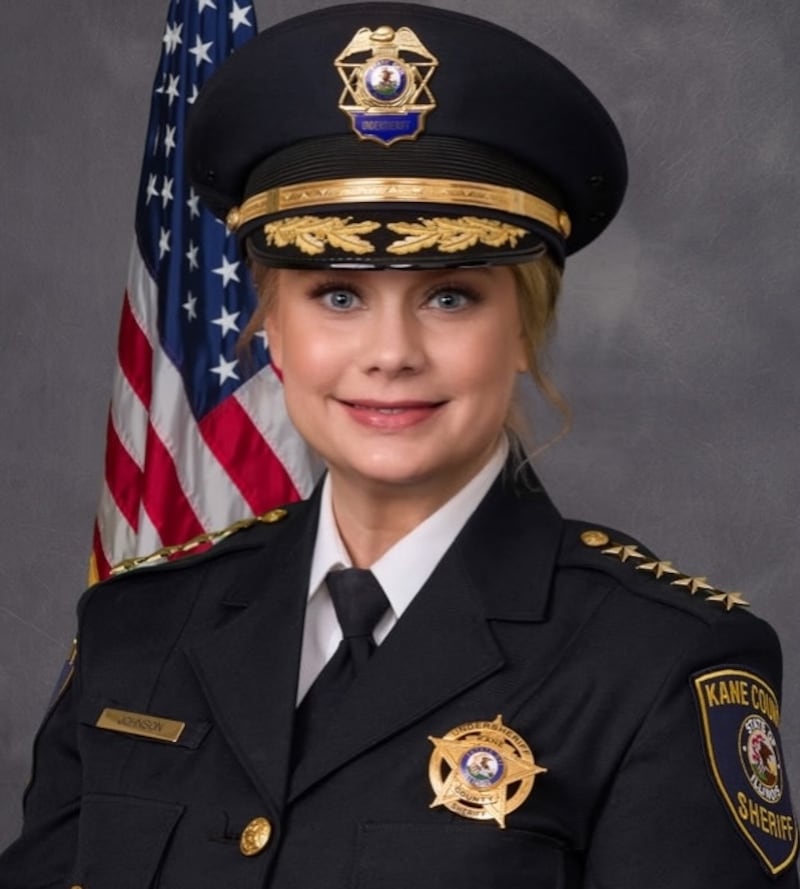
Name: Amy Johnson
What office are you seeking: Sheriff of Kane County
What is your political party? The candidate did not answer
What is your current age? 44
Occupation and employer: Undersheriff (law enforcement), Kane County Sheriff’s Office
What offices, if any, have you previously held? None
City: Sugar Grove, Illinois
Campaign website: https://www.amyjohnsonforsheriff.com/
Education: Rosary High School - High School Diploma, Illinois State University - Bachelor of Science, Kaplan University (now Purdue Global University) - Master of Science, Emphasis in Policing, Walden University - pending Ph.D. dissertation submission, Public Policy and Administration, Northwestern University - Graduate of Staff and Command
Community involvement: Volunteer at VSW in Batavia for events, Board member for Kane County CASA, Board member for Boys and Girls Club (Batavia Chapter), Board member for Safety Committee for Boys and Girls Club, Board member for Illinois Division International Association for Identification, Community member and parishioner at Holy Cross Church in Batavia, Citizen Sheriff’s Academy instructor, Instructor at Aurora University for Criminal Justice, Instructor at Northwestern University for Staff and Command, Previous Instructor at Elgin Community College for Criminal Justice, Instructor at St Xavier for Criminal Justice, Participation/Organization for Kane County National Night Out (NNO), Support for multiple youth sports, schools, and service organizations within Kane County, Special Olympics, Kane County Specialty Courts volunteering/involvement for events
Marital status/Immediate family: Candidate did not answer
Why are you running for this office?
I am running for Kane County Sheriff because I have spent my career serving the community I was raised in. I believe experience and steady leadership matter, especially at a time when public safety is increasingly complex.
I began my career with the Kane County Sheriff’s Office more than two decades ago and have served in nearly every role, from intern and civilian staff to deputy, detective, Major Crimes supervisor, field training officer, Chief of Staff, and now Undersheriff. That experience has given me a comprehensive understanding of law enforcement operations, corrections, budgeting, court security, and victim services, as well as the importance of collaboration with the courts, mental-health providers, and community partners.
As Undersheriff, I am already helping lead the organization through evolving legal requirements, staffing challenges, and fiscal pressures while maintaining professionalism, accountability, and public trust. I am running for Kane County Sheriff, our community deserves a Sheriff who is prepared to lead on day one, values transparency, and is committed to balancing public safety with fairness and responsible use of taxpayer resources.
What are your top three priorities for this position?
Fiscal responsibility and sustainable funding
Personnel support and resource allocation
Community engagement, mental health and youth outreach
What is your assessment of the SAFE-T Act and its impact on the sheriff’s office and on justice more broadly? What, if any, reforms to the act would you seek?
The SAFE-T Act has significantly changed how law enforcement, courts, and correctional systems operate in Illinois. The assessment is shaped less by ideology and more by day-to-day impact on public safety, victims, and the justice system as a whole.
From an operational standpoint, the Act has increased responsibilities for sheriff’s offices, particularly in pretrial services, detention operations, training, and compliance. These changes require substantial coordination with courts, the state’s attorneys, public defenders, and social-service partners, as well as additional staffing and technology to meet statutory mandates.
Broadly, the Act reflects a shift toward reducing unnecessary detention and emphasizing due process and transparency. Those goals are important. However, implementation has not been without challenges. In some cases, the Act has limited judicial discretion, created confusion during rollout, and placed unfunded mandates on local agencies. Sheriffs are often responsible for carrying out court orders but have limited influence over the policies that drive them.
If reforms were pursued, I would support clarifying statutory language to reduce inconsistencies across jurisdictions, restoring greater judicial discretion in detention decisions involving repeat or violent offenders, and ensuring the state provides adequate funding for the expanded responsibilities placed on sheriff’s offices. I would also support continued evaluation of outcomes using data, particularly regarding public safety, court appearance rates, and victim impact, so adjustments are based on evidence. Ultimately, effective justice reform requires balance: protecting individual rights, supporting victims, ensuring accountability, and giving local justice partners the tools and flexibility they need to keep communities safe.
What is your view on the Illinois TRUST Act, which limits local law enforcement cooperation with federal officers?
The Illinois TRUST Act establishes clear boundaries between federal civil immigration enforcement and the role of local law enforcement, with the goal of preserving community trust while maintaining public safety. As Sheriff, my responsibility is not to set immigration policy, but to ensure the law is followed consistently, professionally, and in a manner that keeps our courts and communities safe. The Kane County Sheriff’s Office operates in accordance with Illinois law and long-standing legal guidance. We do not engage in civil immigration enforcement.
Should the sheriff’s office have more leeway to cooperate with federal authorities performing immigration enforcement specifically?
No. Under Illinois law, civil immigration enforcement is a federal responsibility, and the Sheriff’s Office does not have the authority to take on that role. My responsibility as Sheriff is to follow the law as written and ensure it is applied consistently and professionally.
That said, the Sheriff’s Office will continue to cooperate with federal authorities on legitimate criminal public-safety matters, including when there is a valid, judicially authorized criminal warrant or court order. This approach protects due process, maintains community trust, and ensures law enforcement resources remain focused on keeping people safe.
Expanding local involvement in civil immigration enforcement would undermine trust between law enforcement and the communities we serve and could deter victims and witnesses from coming forward. Public safety is best served when residents feel safe reporting crimes and appearing in court without fear that local law enforcement is acting beyond its legal authority.
Should any further ICE enforcement activity occur on the grounds of the courthouse or other county property, how would you direct your staff to handle that?
With respect to ICE activity at courthouses or other county property, my direction to staff would be clear and consistent: maintain safety and order, do not participate in civil immigration enforcement prohibited by the TRUST Act, and follow established legal and facility protocols. The Sheriff’s Office’s role in these settings is court security and public safety, not immigration enforcement.
Should current federal immigration enforcement tactics continue, how would you balance between public safety and the restrictions of the TRUST Act?
If federal immigration enforcement tactics continue, the balance must remain clear: comply with Illinois law, protect victims and witnesses, and preserve trust so residents feel safe reporting crimes and appearing in court. That trust is essential to effective law enforcement.
If reforms to the TRUST Act are considered, I would support efforts that provide clearer statutory guidance and consistency across jurisdictions, particularly for courthouse and detention-related scenarios, so local agencies are not left navigating gray areas without sufficient clarity or resources.
Is the sheriff’s office, including the county jail, adequately staffed and funded?
The Kane County Sheriff’s Office and jail are meeting their core public safety responsibilities, but staffing and funding remain ongoing challenges, especially as recent county budgets reflect tighter spending. As Sheriff, my focus would be on stabilizing staffing, using taxpayer dollars responsibly, and working collaboratively with county leadership to meet public safety needs now and into the future.
Would you be seeking more funding for the office and would that mean advocating for tax increases?
My approach would be to first make sure the Sheriff’s Office is using existing resources as efficiently and responsibly as possible. Before seeking additional funding, I would focus on improving recruitment and retention, reducing unnecessary overtime, pursuing grant funding, and working collaboratively with county leadership to align resources with public safety needs.
If additional funding were ever needed, I would advocate for a transparent, data-driven discussion focused on specific public safety needs, not automatic tax increases. Kane County has a strong history of fiscal discipline, and any request for new funding would carefully consider taxpayer impact, alternative funding sources, and long-term sustainability.
Public safety and fiscal responsibility are not mutually exclusive, and my goal would be to balance both without placing unnecessary burden on taxpayers.
How would you spend that? Do you advocate different spending priorities than currently exist?
Any additional funding would be spent strategically and tied directly to public safety outcomes. My priorities would focus on strengthening the areas that have the greatest impact on safety, efficiency, and long-term cost control.
First, I would invest in people: recruitment, retention, training, and wellness. That includes reducing vacancy and overtime, expanding training and professional development, and supporting mental-health resources for staff. Stabilizing staffing improves safety inside the jail and on the street while reducing long-term costs.
Second, I would prioritize technology and infrastructure that improve efficiency and accountability, such as modern jail management systems, evidence and records technology, and tools that reduce administrative burden on deputies so they can focus on more of their essential duties.
Third, I would continue investing in programs that reduce repeat involvement in the justice system, including diversion, reentry support, and coordination with treatment and community partners. These efforts improve outcomes for individuals while saving taxpayer dollars over time.
What is your view on programs that bring social workers or other responders on mental health calls to aim to help de-escalate?
I support programs that bring trained mental-health professionals (social workers), into the mix where mental health is the primary concern. When used appropriately, these co-responding models can help de-escalate situations, connect individuals to services, and reduce repeat calls, while allowing deputies to focus on public safety.
These programs work best when they are well-defined and collaborative. Deputies remain responsible for safety and enforcement when needed, while social workers provide expertise in assessment, de-escalation, and follow-up care.
My view is that this should not be an either-or approach. Public safety and mental-health response must work together. When implemented thoughtfully, the co-responder programs can improve outcomes for individuals in crisis, enhance safety for first responders, and strengthen trust between law enforcement and the community.
Would you like to see changes in how the office responds to mental health crises?
While the Sheriff’s Office already responds to mental health crises with professionalism and care, I believe there is always room to improve how we respond to these calls. My focus would be on expanding and refining approaches that emphasize de-escalation, coordination with mental-health professionals, and connecting individuals to appropriate services whenever possible.
Any changes would be data-driven and focused on safety for the individual in crisis, the public, and our deputies. The goal is not to replace law enforcement, but to strengthen responses so we reduce repeat calls, improve outcomes, and ensure people in crisis receive the help they need while maintaining public safety.