The Princeton City Council received an update on the recently approved business development district during their meeting on Monday night.
A BDD serves a similar role to a tax increment financing district by providing funding for business and redevelopment projects in Princeton, although it relies on sales tax revenue instead of property taxes.
If created, the district would be paid for through an additional sales tax on certain retail purchases made within the district.
Notably, the tax would only apply to items meant for “immediate consumption,” such as meals at a restaurant, snacks or drinks, but would not apply to groceries, prescription drugs or titled items such as vehicles.
The city would use the money to support projects inside the district, such as infrastructure/building improvements and new business development.
With the district getting officially approved in March, the city is still in the early stages of implementing both the business development district and its overall plan going forward.
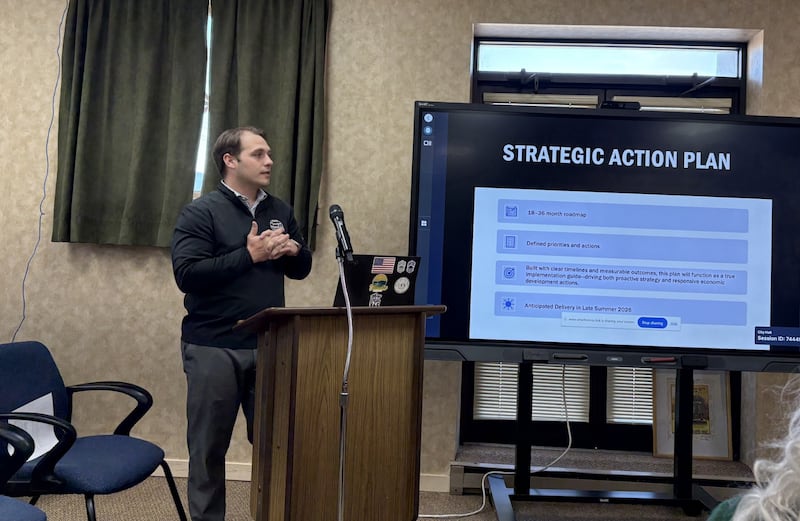
Cole McDaniel, with Hometown Consulting, gave a presentation to the council on how the city plans to move forward, outlining a strategic action plan along with introducing other tools the city will utilize to make Princeton a more attractive option for future businesses.
“We didn’t just want to create a business development district- we wanted to set goals and have active plans for how we’re going to implement this funding going forward,” McDaniel said.
He said that groundwork has included identifying the district’s boundaries, gathering community feedback and outlining priorities, but the city is now shifting toward how projects will actually be selected and funded.
“It’s one thing to have ideas- we also want to understand how we’re going to fund them and measure whether they’re actually working,” he said.
That includes developing a formal application process for businesses and a scoring system to evaluate proposals, along with tools to track how funds are spent and what impact they’ll have over time.
At the same time, McDaniel said a five-year strategic action plan is being built to guide those decisions, using input from community meetings, business owners and local officials.
“Our goal is to have a true five-year strategic action plan with priorities, the timeline and how we accomplish them,” he said. “We want to understand in order to implement this, here’s how we’re going to have to pay for it.”
McDaniel said his goal is to have a draft of that by “sometime in the middle of the summer,” with the intent for the council to review and adopt the plan later this year.
Once completed, the plan will serve as both a local roadmap and a tool for securing outside funding.
“It’s going to be one of the most important scoring metrics when we go after grant funding,” he said. “We want to make sure it’s there, it’s adopted and we can include it with our grant applications.”
McDaniel emphasized that the effort is designed to ensure results are measurable over time.
“I don’t want to just hand you a plan and help you implement a BDD and then never see you again,” he said. “I want to be here by your side to help you implement these things and be a part of the progress.”