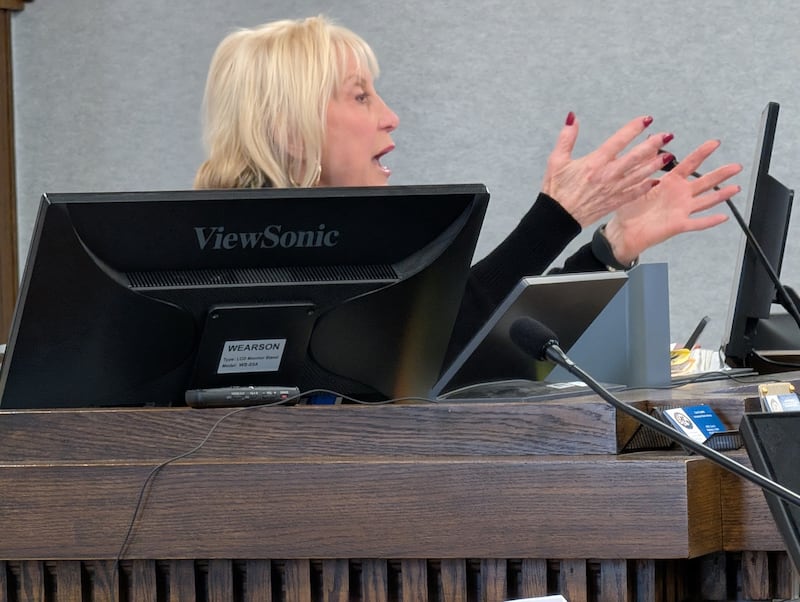
Kankakee County Circuit Judge Kathy Bradshaw-Elliott ruled TV cameras will not be allowed to broadcast live in the courtroom during the trial for Xandria Harris.
Bradshaw-Elliott made the decision during a motion hearing on the matter Friday.
Still photography will still be allowed, the judge said.
Kankakee County State’s Attorney filed the motion due to incidents that occurred during the trial of Harris’ co-defendant, Darius Sullivan.
Sullivan was convicted of the murder of Bradley Police Sgt. Marlene Rittmanic and the attempted murder of now-retired Sgt. Tyler Bailey in December 2021.
Harris is also charged with the same offenses. Her trial is set to begin Feb. 23.
During the Sullivan trial, the TV feed from Chicago television coverage broadcast parts of the video from the officers’ body cam footage the night of the shooting.
“Extended media coverage can materially interfere with the right to a fair trial by affecting jurors, witnesses counsel and trial decorum,” Rowe argued in his motion.
:quality(70):focal(2846x1453:2856x1463)/cloudfront-us-east-1.images.arcpublishing.com/shawmedia/HRENGPAWDNF4FHS5UCAPKRI7OA.jpeg)
“In this case, local media attention is already substantial; allowing television cameras may invite an even larger broadcast or media pool, further increasing exposure and risk of juror contamination, biased external commentary, or commentary by individuals not bound by courtroom restraints.”
Rowe continued, “Pretrial publicity has been extensive; television cameras increase the risk of compounding this prejudice in real time.
“Media personnel movements and the need for the court, court staff and counsel for the parties to police the media, their video camera angles and dissemination of evidence or proceedings outside the presence of the jury could disrupt testimony, startle witnesses, distract the jury or unfairly prejudice the defendant.”
According to state law, a trial judge can refuse, amend or terminate media coverage at any time if the judge finds that doing otherwise would interfere with the administration of justice.
“The bulk of Mr. Rowe’s motion is what-ifs, except we don’t need to determine what-ifs.” Harris’ attorney Cierra Norris argued in court Friday.
:quality(70):focal(1896x881:1906x891)/cloudfront-us-east-1.images.arcpublishing.com/shawmedia/OTYWAIXEZVBK5DCOE2AIRKFH5A.jpg)
“We had a previous trial. I see that that motion is without an affidavit on how it would affect, if it did affect. There’s no oral testimony to how it would negatively affect the evidence, or how it would startle witnesses, or how it would bias jurors.
Norris added: “It’s our position that she should get the same exact coverage that [Mr. Sullivan] got, and that because of the constraints that have already been put on the defense, why would we close the blinds to something like this?
“Justice should stand in light, and if Ms. Harris is going to be found not guilty or she’s going to be found guilty, then it should be done in the light, not the dark.”
:quality(70)/author-service-images-prod-us-east-1.publishing.aws.arc.pub/shawmedia/56d71ceb-065f-4b89-a313-e8a4268a29ca.png)