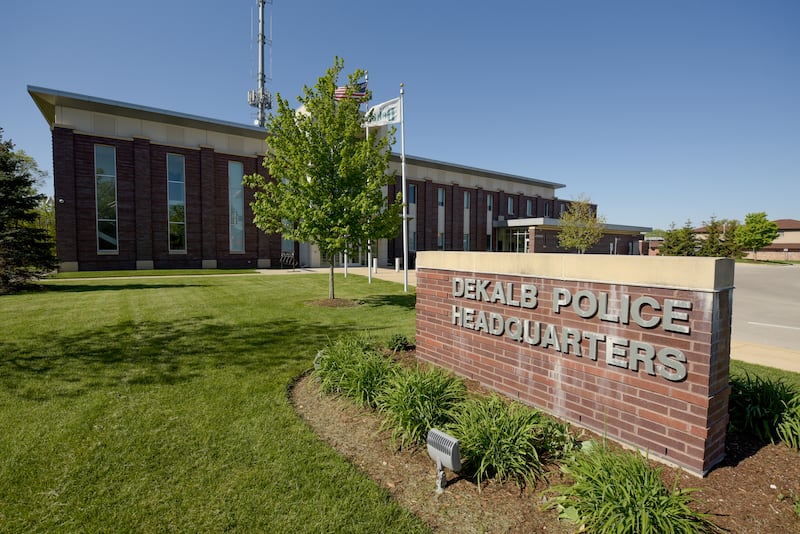
A Shaw Local records search shows that DeKalb County-area police agencies are in compliance with Illinois law that regulates how law enforcement is and isn’t allowed to participate in noncriminal-related immigration enforcement.
The Illinois TRUST Act is a civil immigration enforcement accountability reporting measure for local and state police agencies that affirms how law enforcement agencies are prohibited from participating in noncriminal immigration enforcement.
The Illinois VOICES Act sets procedures for Illinois law enforcement officers to support immigrants victimized by violent crime or human trafficking who help law enforcement investigate or prosecute criminal activity and who are seeking U- or T-visa certification.
Although up to date now, the DeKalb Police Department was almost a year late in filing records to the Illinois Attorney General’s Office to help demonstrate the agency’s compliance with the Illinois TRUST Act and the Illinois Voices of Immigrant Communities Empowering Survivors Act for calendar year 2024.
DeKalb Police Chief David Byrd said the city’s late submission was because of a staffing change.
“That at the end of the day was due to the transition of that supervisor in the records division,” Byrd said.
Byrd said the emails had probably gone to the old records supervisor’s email. He said the DeKalb Police Department’s new records supervisor wasn’t getting emails alerting officials to late notices from the attorney general.
Once DeKalb police realized it had not filed for calendar year 2024 on time, Byrd said the department rectified the matter.
The two state laws were enacted under former Gov. Bruce Rauner in 2017 and 2019, respectively. It wasn’t until another related measure, dubbed the Illinois Way Forward Act, went into effect in 2021 that a mechanism was established to help ensure accountability in reporting, however.
Under the Illinois TRUST Act, the Illinois VOICES Act, and the subsequent Illinois Way Forward Act, the Illinois attorney general is tasked with collecting these submittals annually from local and state law enforcement agencies for each previous calendar year, beginning Jan. 1 and ending Dec. 31.
These documents usually come in a spreadsheet highlighting, among other things, whether an agency can certify and attest to not receiving any requests for immigration detainers or civil immigration warrants; whether they can certify and attest to not participating, supporting or assisting in any immigration agents’ civil enforcement operation; and whether they can certify and attest to not receiving any U- or T-visa certification requests.
The first of any documents submitted by local or state law enforcement authorities to help demonstrate their compliance with the law were collected by the Illinois Attorney General’s office for calendar year 2022.
Law enforcement agencies from across the state have a rolling annual deadline from Jan. 1 through March 1 to submit the required yearly documentation. Failure for local and state law enforcement authorities to submit a report or submit an incomplete report makes for a violation of state law, which could lead to an investigation or lawsuit to compel compliance.
According to public records requests through the Freedom of Information Act filed by Shaw Local, the DeKalb Police Department provided documents showing the agency had submitted documentation to the attorney general’s office for 2022, 2023, 2024 and 2025.
In separate but similar public records requests, the attorney general’s office provided documents showing DeKalb police had submitted the required documentation each year, but it was filed late in at least one instance.
In an email dated Jan. 14 between DeKalb Police Department administrative assistant Melissa Neblock and the attorney general’s office, the police department provided its annual report submittals for both calendar years 2024 and 2025. The agency’s 2024 documents were submitted nearly one year late.
In a statement, a spokesperson for the attorney general’s office stressed the importance of law enforcement agency cooperation.
“The TRUST and VOICES Acts are vital safeguards that help ensure all Illinois residents — regardless of immigration status — can confidently and safely interact with state and local law enforcement without fear of unlawful detention or discrimination,“ according to the statement. ”By promoting cooperation between immigrant communities and local authorities, these laws strengthen public safety, encourage crime reporting, and reinforce constitutional protections for everyone in our state.”
The attorney general’s office would not confirm or comment on current or contemplated investigations into potential violations of the TRUST, VOICES, or Way Forward acts.
As of July 1, 2025, however, the attorney general’s office included the DeKalb Police Department among a list of 131 nonreporting municipal police departments for calendar year 2024. Byrd said that has since been rectified.
Neighboring law enforcement agencies for Sycamore, Genoa and Northern Illinois University police are up to date in their reporting to the attorney general’s office, records show.
A spokesperson for the attorney general’s office emphasized that reporting is all about trust.
“Collaboration between the attorney general’s office and law enforcement partners is essential to building stronger, safer communities and maintaining the public’s trust in our justice system,” according to the statement.
:quality(70)/author-service-images-prod-us-east-1.publishing.aws.arc.pub/shawmedia/670e1b81-921a-4140-9c50-69b66cad217c.jpg)