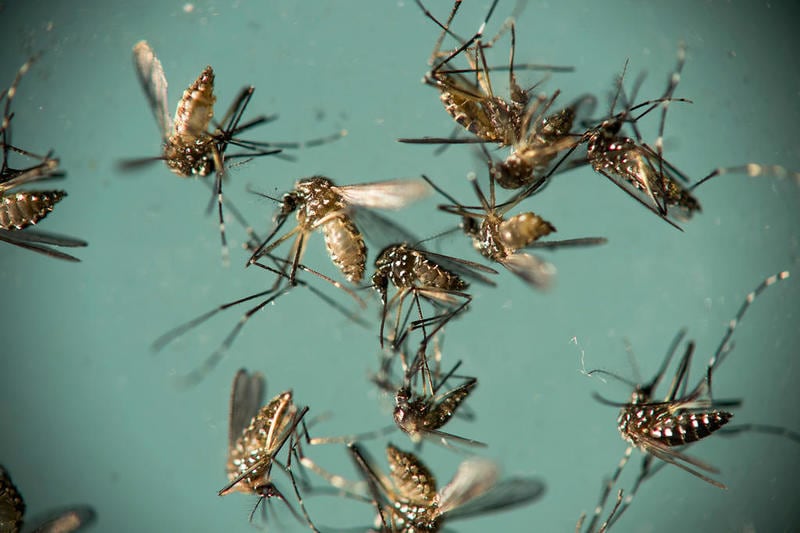
The first mosquitoes that tested positive for West Nile virus in Will County were collected in Mokena.
The test results for the West Nile virus were announced Friday by the Will County Health Department’s environmental health division. The virus can causes mild, flu-like symptoms.
County health officials are asking residents to protect themselves from mosquito bites and mosquito-borne diseases.
“Because there is no vaccine available to prevent West Nile virus, it is important to avoid mosquito bites,” county health officials said.
Will County had eight human cases of West Nile virus in 2025, the most in the past nine years, according to data from the Illinois Department of Public Health.
In 2024, Will County had only two human cases. In 2022 and 2019, the county had none.
Last year, there were 150 human cases of the virus in Illinois, the highest since 2018, when the state had 176 cases, according to state data.
:quality(70)/cloudfront-us-east-1.images.arcpublishing.com/shawmedia/ZZDPP42N6EXAAUFITS6A63KHZE.jpg)
The county health department recommends the following precautions:
• Make sure doors and windows have tight-fitting screens.
• Each week, eliminate or refresh all sources of standing water, such as bird baths, ponds, flower pots and containers.
• Wear shoes, socks, long pants and light-colored, long-sleeved shirts when outdoors.
• Use insect repellent containing DEET, IR3535, picaridin or oil of lemon eucalyptus.
• Report locations containing water that has been sitting stagnant for more than a week, such as roadside ditches and flooded yards.
Stagnant water is considered a primary breeding ground for mosquitoes. The local health department or city government may add larvicide to the water to kill any mosquito larvae, county health officials said.
No human cases of West Nile virus have been reported in Will County or statewide so far this year, county health officials said.
:quality(70)/cloudfront-us-east-1.images.arcpublishing.com/shawmedia/XBFJW7B3TDAIM5V4SZU7EXZGHQ.jpg)
About 80% of people who are infected with the virus do not develop any symptoms. About 20% of people who are infected develop a fever with other symptoms such as headache, body aches, joint paints, vomiting, diarrhea or rash, county health officials said.
Most people who develop symptoms from West Nile virus recover completely but fatigue and weakness can last for weeks or months, county health officials said.
Less than 1% of people who are infected can develop severe illness that affects the central nervous system, leading to encephalitis or meningitis, county health officials said.
The virus has a greater risk of causing severe illness for people who are 60 and older.
The virus is a high risk to people with medical conditions such as cancer, diabetes, hypertension, kidney disease or those who have received organ transplants.
:quality(70)/s3.amazonaws.com/arc-authors/shawmedia/7a2e8311-fc10-4849-8481-ab8459fa3039.png)