Demand for ag labor through the H-2A temporary visa program in Illinois and the nation continues to rise.
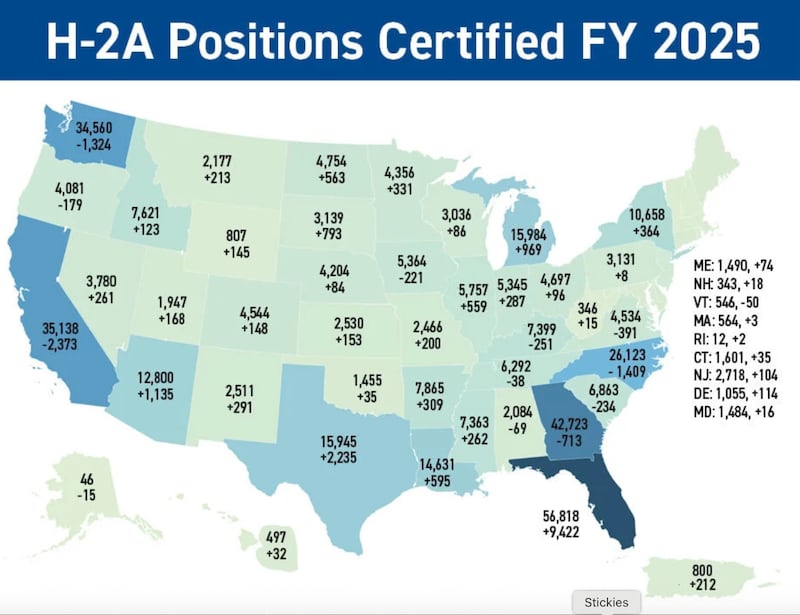
During fiscal year 2025, 559 more positions were certified in Illinois over fiscal 2024, bringing the total to 5,757, according to an American Farm Bureau Federation Market Intel report.
Nationwide, 398,258 positions were certified in fiscal year 2025 – 13,358 more positions than in 2024. The H-2A program has grown 185% in the past 10 years.
Data also shows it was the first year in program history during which more than 400,000 workers were requested, highlighting the continued domestic labor shortages American farmers face.
Nearly 50% of the certifications in 2025 work in just five states: Florida, Georgia, California, Washington and North Carolina. Florida far outpaces all other states, accounting for more than 14% of 2025 certifications alone and adding more than 9,000 additional workers from 2024.
On the flipside, four H-2A leader states decreased in certifications, with California certifying more than 2,000 fewer workers in 2025 than in 2024, the third straight year of decline in H-2A use there.
Thirty-eight states increased the demand for H-2A workers, including the remaining five states that round out top 10 usage. Declines in H-2A use were concentrated in the Southeast and on the West Coast.
The primary requirement of any H-2A certification reaffirms that no domestic workers desire the position. Low unemployment, falling labor participation rates and general disinterest in agricultural work all continue to strain domestic labor shortages, according to the Market Intel. Only 182 positions out of more than 415,000 advertised (less than 0.04%) received a domestic applicant in fiscal year 2025.
“The H-2A program remains the pinnacle program for meeting seasonal agricultural worker demand. However, it is far from meeting the needs of all of U.S. agriculture,” AFBF economist Samantha Ayoub wrote in the Market Intel. “Nonseasonal industries like dairy, mushrooms or greenhouses are largely unable to use the H-2A program due to regulatory contract limits. Additionally, only 80% of positions certified receive visas to work in the United States. So, even farmers with proven labor shortages may not be able to meet their peak employee needs via the H-2A program.”
The costs of using this program, from unpredictable wage increases to application costs and nonwage benefits, have also long been a barrier for many farmers. Recent changes to the adverse effect wage rate methodology seek to correct years of uncontrolled wage inflation and recognize the large nonwage costs of utilizing the H-2A program.
“These changes, along with additional flexibility in work contract timelines and job duties, will hopefully make the H-2A program more accessible to other farmers, leading to continued growth of the program,” Ayoub wrote.
The need for a reliable ag workforce was a theme throughout AFBF’s Annual Convention in January, with delegates adding and amending policy related to the H-2A temporary visa program.
Two H-2A proposals submitted by Illinois Farm Bureau also were approved, including streamlining the H-2A application process by using electronic application filing and lengthening the term of stay for H-2A workers.
During the convention, congressional ag leaders told attendees ag labor reform would likely be considered by Congress during the first quarter of this year.
House Ag Committee Chair Glenn “GT” Thompson, R-Pennsylvania, said at the time he plans to soon release a discussion draft on H-2A reform for review, with legislation possibly being introduced during the first quarter.
This story was distributed through a cooperative project between Illinois Farm Bureau and the Illinois Press Association. For more food and farming news, visit FarmWeekNow.com.