After developers announced in December that they’re looking to build a battery energy-storage facility by Prairie Grove, hundreds of residents have organized against the project, with concerns over the potential effects on safety and wildlife.
California-based Eolian Energy is considering a stand-alone energy-storage facility, which would use batteries to store excess power from the electrical grid and discharge it back when needed, Eolian Development Vice President Sam Lines said during a presentation to the Prairie Grove Village Board last month.
The company is eyeing about 52 acres to build on off Behan Road near Snap-On Tools.
Residents have organized a grassroots effort against the project by creating a Facebook page called “Prairie Grove rural neighbors against the lithium battery project,” which had over 400 members as of Wednesday.
The residents also are planning a billboard along Route 176, have started a petition and have created yard signs to raise awareness. The signs feature an illustration of a skeleton holding a bottle marked “poison.”
Eolian’s plan is to connect the 600-megawatt battery energy-storage system to a nearby ComEd substation, Eolian CEO Aaron Zubaty said in an emailed statement. The project is called the Monarch Grid, and Eolian is looking to have a portion of the land currently in unincorporated McHenry County annexed to the village.
The proposed facility would be near homes, Prairie Grove Elementary School and the Prairieview Education Center, resident Terri Rybicki said in a news release representing concerned neighbors. Residents also question the possible effects on private wells, air and soil quality, and the potential risk of fires and chemical leaks.
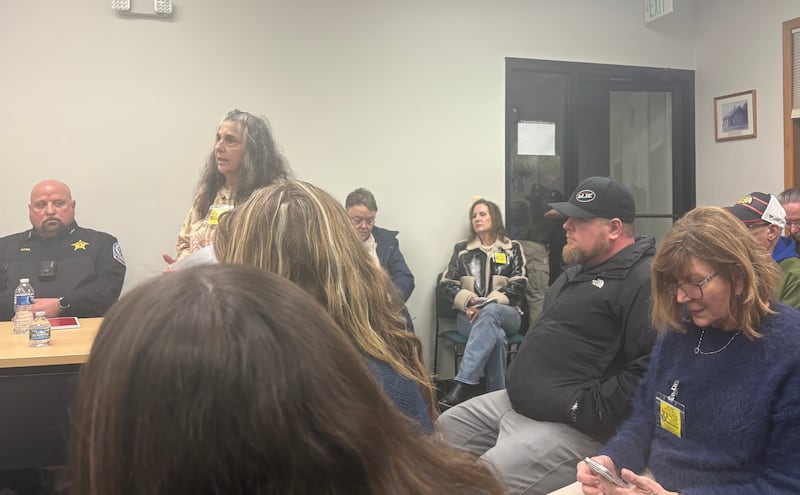
During Tuesday’s Village Board meeting, residents packed the room that was capped at a capacity of 40 people due to fire codes. Dozens of people waited outside, watching the livestream of the meeting posted on the village’s Facebook page.
Nothing on the agenda was related to the project, but residents came out to speak during the public comment portion with concerns about fire risks; noise pollution; and the possible effects on soil, groundwater and wildlife.
One of the speakers was McHenry County Board member Terri Greeno, who said there are “real safety concerns” involving toxic fumes and hard-to-extinguish fires.
“When these facilities are proposed near homes, schools, farms and natural areas, it naturally raises questions about emergency preparedness, public health, property values and environmental protection,” she said.
But a major hurdle could be in the way of Prairie Grove and other local municipalities on how much authority they have to say “no” to proposed battery-storage facilities. Illinois legislation called the Clean and Reliable Grid Affordability Act requires counties to allow for facilities in most zones and not regulate them.
The new law was passed in October and was signed by Gov. JB Pritzker Thursday. It aims to add at least 3,000 megawatts of cumulative energy-storage capacity by 2030.
“In Illinois, we are pursuing every available option to produce affordable, efficient, clean and abundant energy. We are leaving no stone unturned in the work to produce more electricity, lower prices for our people and secure our long-term energy future,” Pritzker said in a news release. “The Clean and Reliable Grid Affordability Act sets a national standard in the effort to lower energy costs and marks a historic step forward in our clean energy vision. Once again, Illinois is stepping up where the federal government is failing.”
Prairie Grove Village President David Underwood said prior to the governor signing the bill into law that it poses a “serious problem.” If Eolian goes forward with the proposal, it may be in the best interest of the village to annex the land in order to have more control over the project, he said.
“We’re in uncharted territory,” he said. “If Senate Bill 25 gets signed into law, our hands are going to be tied.”
The law will go into effect June 1, according to the governor’s office news release.
According to a statement by Underwood posted on the resident-run Facebook group, he personally wrote a letter to Pritzker opposing the bill.
“If you want to direct your energy where it can actually have impact, it should be directed to lawmakers in Springfield,” Underwood wrote in the statement.
Greeno recommended working with the McHenry County Council of Governments to push back against the bill and to “protect local control.”
Concerns of fuzzy or withheld information have been buzzing in the community. But Underwood said he took “some offense” to residents suggesting that there were “backdoor secret meetings” with Eolian. He and Village Administrator Michael Freese were first introduced to Eolian in September 2024, he said in the statement.
He added: “The first time the Village Board, and the first time I as village president, saw a presentation depicting the proposed project concept and [had] any discussion of potential revenue was at that December 2025 meeting.”
Distrust also stems from some neighboring residents reporting that Eolian was making offers to buy their properties. Freese said he was “not happy with Eolian for doing that,” and only heard it was happening from residents coming to the village about it.
No one from Eolian was present at Tuesday’s meeting to address the matter.
Eolian Energy is an “investor in energy projects,” including energy storage as well as solar- and wind-generating developments, according to its website. The company, financially backed by BlackRock’s Global Infrastructure Partners, has similar facilities in Texas and California.
The company intends to use lithium-ion batteries with a lithium iron phosphate chemistry, which Zubaty said is “the current industry standard with a long track record of safe operation in communities across the country.”
Underwood and Freese continued to emphasize that no proposal had yet been made by the petitioners to the village or the McHenry County Board. Freese said his guess is that Eolian is waiting to see what happens with Senate Bill 25.
“I hope you understand that we are your representatives,” Underwood told residents. “We want to work for you. We’re not working against you. We’re not doing anything in secret.”