Small increases in input costs or shifts in commodity prices can significantly impact farm profitability, given the narrow share producers receive.
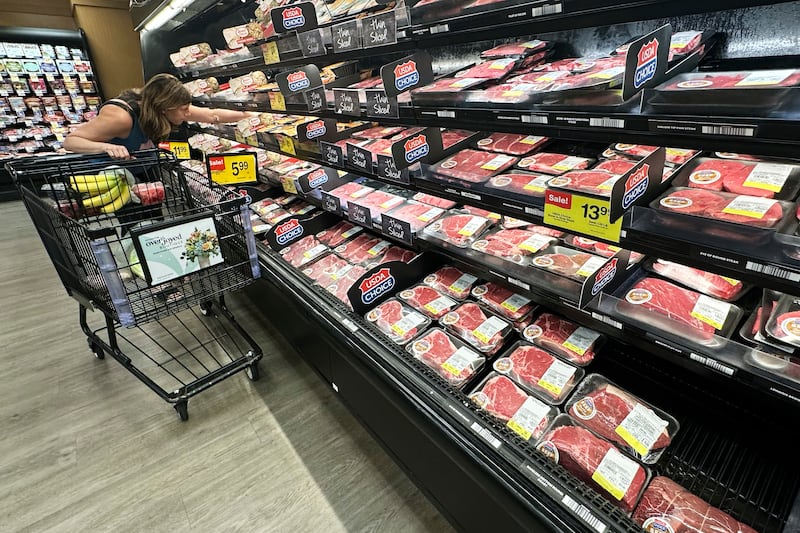
Data from the U.S. Department of Agriculture’s Economic Research Service shows that farmers’ portion of the money consumers spend on food continues to decline. So, while prices may be up at the grocery store, most farmers’ paychecks are shrinking.
Farmers and ranchers produce the raw commodities that make food production possible, but most of the economic value associated with food spending — the price at the grocery store or restaurant — is tied to what happens after those products leave the farm.
The ERS Food Dollar Series tracks how each dollar spent by consumers on food is divided among the industries that contribute value along the supply chain. These industries include farming, food processing, transportation, packaging, wholesaling, retail and food service.
As food moves through these stages, additional services, labor and infrastructure add value — and, in turn, increase costs — to the final product.
According to recently released estimates, farmers and ranchers combined received 5.8 cents of every food dollar after accounting for expenses, down from 5.9 cents in 2023.
Within that total, crop producers captured about 2.5 cents of every food dollar, down from 2.9 cents a year earlier, while livestock producers garnered roughly 3.3 cents, up from 3 cents.
Much of the value in the food system is generated beyond the farm gate, as supply chain costs dominate final food prices.
The gap is obviously smaller for minimally processed foods. Products like beef, eggs and milk return a larger share to producers, while highly processed goods, including snacks and soft drinks, return only a few cents per dollar.
Despite higher grocery store prices, and despite inflation, this report shows that farmers are still price takers, not price makers.
Even modest swings in commodity prices or increases in expenses can quickly strain farmers’ finances to the breaking point.
Bankruptcies Rise As Farming Losses Grow
The latest farm bankruptcy data serves as another indicator of a struggling farm economy. Chapter 12 bankruptcies increased for the second year in a row in 2025, reaching 315 filings — that’s up 46% from 2024.
This unfortunate statistic shows that the farm economy is really struggling and excessive debt loads are starting to hit family farms.
Farmers are now facing another season of low prices, high costs and difficult decisions about how — or whether — to keep operating.
Families must earn the majority of their income from farming to qualify for Chapter 12, which was designed to help farmers restructure debt and stay in business.
But as off-farm income becomes more important for family benefits and supporting farms during economic downturns, many family farms are not eligible for Chapter 12 bankruptcies and may have to close altogether when debt and operating expenses become too great.
The Midwest and Southeast filed 121 and 105 cases, respectively, far outpacing any other regions. This is a 70% increase in filings for the Midwest and a 69% increase in the Southeast.
According to the Federal Reserve Bank, farmers are taking more larger operating loans and taking longer to repay them.
USDA estimates that total farm debt will rise 5.2% to a record $624.7 billion in 2026, highlighting the financial backing farmers need under current conditions.
Strain inside the U.S. farm economy is mushrooming across rural America — from unsold tractors sitting on dealer lots to agribusiness companies reporting shrinking earnings, as abundant grain supplies weigh on markets.
Banks are cutting off some growers just as they urgently need cash. Thousands of workers are losing jobs as meatpacking plants close and farm equipment makers scale back.
Tractor sales last year were down nearly 10% from a year earlier, while combine sales plunged more than 35%, according to the Association of Equipment Manufacturers.
Any turnaround now rests on a fragile chain of events, including a resolution of the Trump administration’s trade wars, renewed buying from China and more favorable domestic biofuels policies.
:quality(70)/cloudfront-us-east-1.images.arcpublishing.com/shawmedia/AEGCJZQGUJBDNNCPGD4KQA6QVI.jpg)
James Henry is the executive editor of Illinois AgriNews and Indiana AgriNews.
:quality(70)/author-service-images-prod-us-east-1.publishing.aws.arc.pub/shawmedia/QOH4LBSDHNBCRCBZXMJR7UHSYA.png)