SPRINGFIELD — Insurers are not necessarily required to pay out on pollution-related claims to companies with a standard liability policy, even if the company has a state permit for pollutants, the Illinois Supreme Court ruled last week.
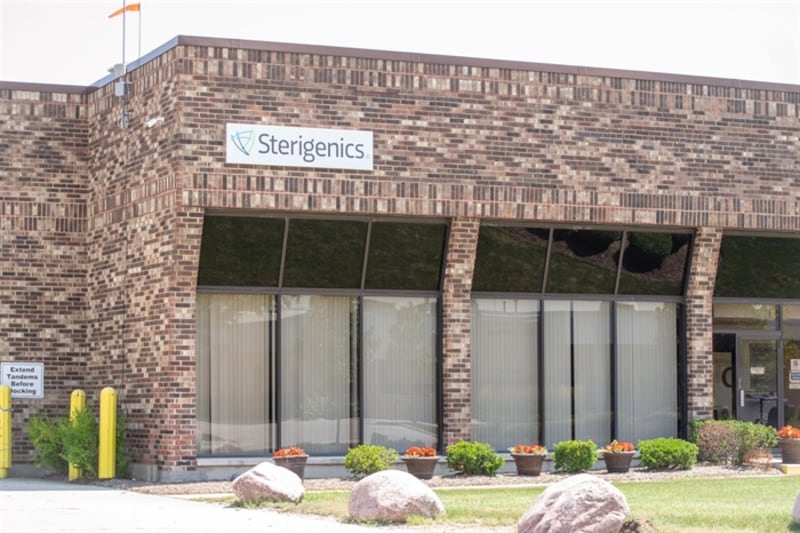
The case involved Sterigenics, a medical supply sterilization company that operated in the Chicago suburb of Willowbrook and was tied to elevated cancer rates in the area.
Several hundred lawsuits filed against Sterigenics and its one-time parent company Griffith Foods claimed that long-term exposure to ethylene oxide emissions led to Willowbrook residents contracting cancer. One case resulted in a $363 million award to one resident, Susan Kamuda, the largest jury verdict for a single plaintiff in Illinois history.
In a unanimous decision released Friday, the court ruled that state emissions permits had no relevance to Griffith Foods’ general liability insurance policy, because that policy excluded injury caused by pollution.
Just because the state permitted the pollution, the court ruled, doesn’t mean the insurer has to cover it.
Ethylene oxide emissions
Sterigenics used ethylene oxide to sterilize medical equipment at its Willowbrook facility since it first received an emissions permit from the Illinois Environmental Protection Agency in 1984.
Ethylene oxide was first linked to cancer in the 1980s, and confirmed to be a carcinogen in 2000, although the U.S. EPA did not classify it until 2016, according to the National Library of Medicine.
A 2018 report from the U.S. Department of Health and Human Services showed disproportionately high rates of cancer among Willowbrook residents.
In February 2019, the IEPA issued an order to pause operations at the factory, determining that ethylene oxide emissions were causing the high rates of cancer. A spring 2019 report from the U.S. EPA also found that residents were between two and 10 times more likely to contract cancer than if factory emissions had been more controlled.
Later that year, Sterigenics closed the factory altogether.
In April 2025, Sotera Health, Sterigenics’ current parent company, settled 97 ethylene oxide claims against it for a combined $30.9 million. It settled another 129 claims for $34 million in July.
Griffith Foods v. National Union
The U.S. Seventh Circuit Court of Appeals had asked the Illinois Supreme Court to provide clarification on the issue due to conflicting decisions in preceding cases.
National Union argued that they were not liable for coverage because of a clause in their commercial general liability insurance policy that states the insurers would not cover injury or property damage from the release of pollutants.
A previous decision in American States Insurance v. Koloms held that pollution exclusions like National Union’s are ambiguous and should be applied only to “traditional environmental pollution.”
Sterigenics and Griffith Foods argued that their practices should not trigger the pollution exclusion clause because of their permit, based on a 2011 Illinois appellate court decision in Erie Insurance Exchange v. Imperial Marble Corp.
The Imperial Marble decision found in favor of the policyholder, stating that it was unclear whether the emission of pollutants allowed by a permit counted as “traditional environmental pollution,” which would be excluded under the insurance policy as previously established in Koloms.
The U.S. District Court for the Northern District of Illinois found in favor of Sterigenics, and National Union then appealed to the Seventh Circuit Court.
With the conflicting cases in Koloms and Imperial Marble, the Seventh Circuit asked the Illinois Supreme Court to clarify what relevance IEPA emissions permits had in the case. They found it was “irrelevant.”
“As explained by this court in Koloms, the pollution exclusion in CGL (commercial general liability) policies was drafted in response to the insurance industry’s concerns about increasing, costly environmental litigation,” Justice Joy Cunningham wrote in the opinion. “Declining to apply the pollution exclusion simply because the pollution was permitted by the State would undermine the pollution exclusion’s very purpose.”
Cunningham also noted that insurance companies have “entirely separate” pollution liability policies available, which would provide coverage for the type of environmental lawsuits that were brought against Griffith Foods.
The case will now return to the appeals court.
Chief Justice P. Scott Neville Jr. and Justices Mary Jane Theis, David Overstreet, Lisa Holder White and Mary O’Brien concurred on the opinion. Justice Elizabeth Rochford did not take part in the decision.
Capitol News Illinois is a nonprofit, nonpartisan news service that distributes state government coverage to hundreds of news outlets statewide. It is funded primarily by the Illinois Press Foundation and the Robert R. McCormick Foundation.